Learn what really happens during cross-border customs clearance when importing from China. Get practical tips to avoid delays, reduce fees, and keep your shipments moving — with insights from YdaExpress.
You’ve been tracking your package for days. It left China, flew halfway around the world, and then—nothing. The status just says “customs clearance” and you’re stuck waiting. No one likes that feeling.
Customs is the big, scary word in international shipping. But honestly, it doesn’t have to be a mystery. Once you understand the basics of cross-border customs clearance, you can plan ahead, avoid expensive surprises, and get your stuff faster.
Let’s walk through how it works, what often goes wrong, and how to make it right—especially when you’re importing from China.
What Cross-Border Customs Clearance Actually Means
Every country wants to know what’s coming in. Cross-border customs clearance is simply the process where government authorities check, approve, and sometimes tax the items you’re importing. It’s not a punishment—it’s a border control function.
When your package arrives at the destination country’s airport or port, it goes straight to customs. Officers review the paperwork, assess duties and taxes, and decide if the goods can enter. Most packages clear in hours or days, but some get flagged for inspection, and that’s when delays start.
Here’s the thing: customs isn’t just one big machine. Each country has its own rules, thresholds, and paperwork requirements. U.S. policy has changed: CBP states that duty-free de minimis treatment for shipments valued at or below $800 was suspended effective August 29, 2025, and the suspension continues in 2026. A U.S.-bound parcel below $800 is not automatically duty-free. Duties, taxes, fees and entry requirements depend on the product, origin, customs value, classification, shipment method and current rules. Check current CBP guidance before dispatch. But in the EU, the threshold is just €150 for duty-free imports, and VAT still applies almost from the first euro. Canada recently raised its de minimis to CAD $150, but only for courier shipments. These details matter.
Step by Step: What Happens When Your Shipment Hits Customs
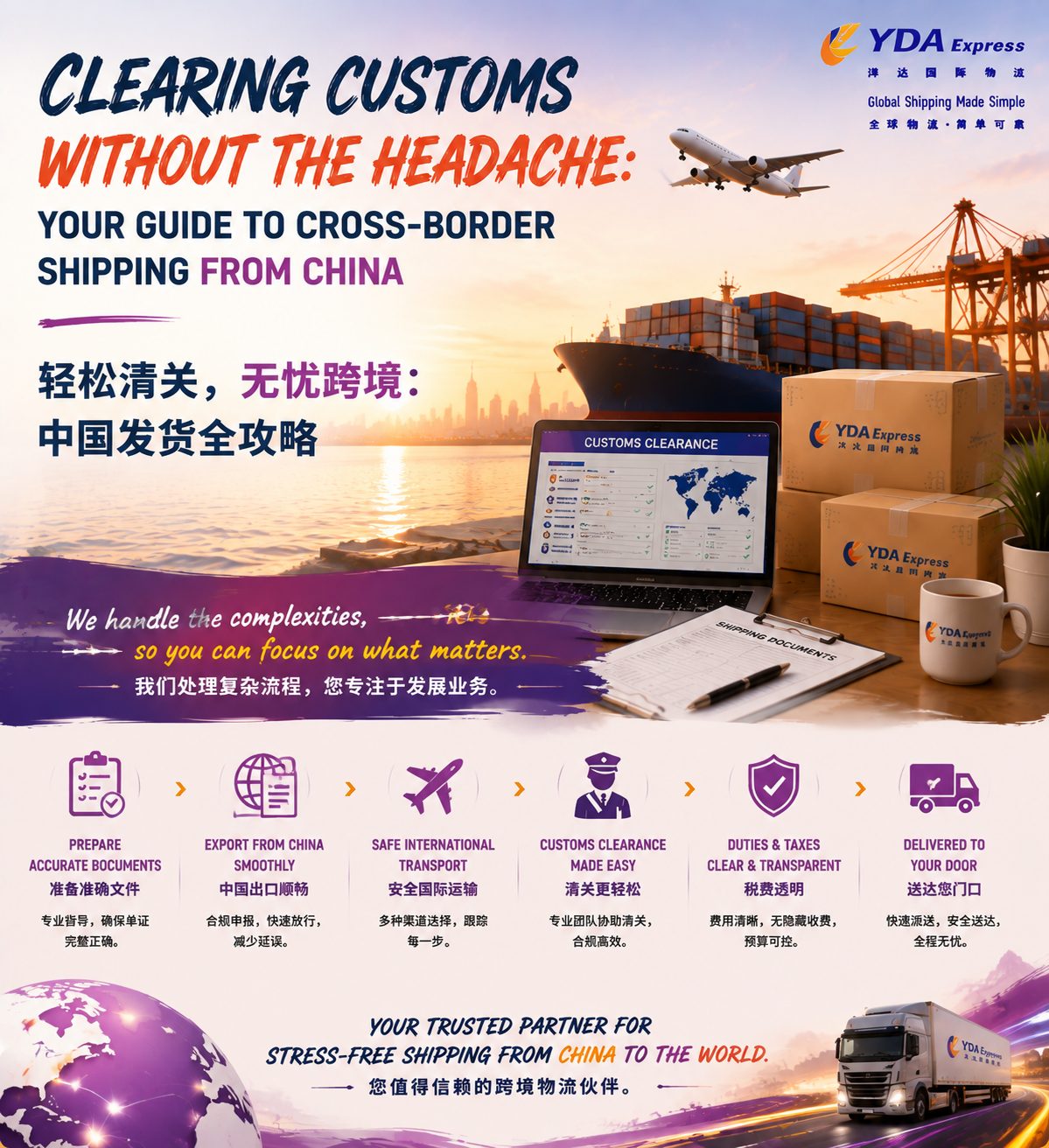
Understanding the flow can help you prepare better. This is a typical journey for a small package sent via express (DHL, FedEx, UPS) from China to the US or UK:
- Data is sent ahead – The courier transmits your shipment details electronically before the plane lands. This includes the commercial invoice, waybill, and sometimes a packing list.
- Automated risk assessment – Customs systems scan the data. If everything looks routine (low value, common goods, no red flags), the shipment is cleared automatically in minutes.
- Formal examination (if selected) – A small percentage of packages get pulled for physical inspection. This can happen randomly or because something in the paperwork looks off.
- Duty and tax assessment – The officer calculates any import duties and taxes based on the item’s value, HS code, and country of origin. For the US, duties are often zero on low-value consumer goods, but you might still owe a processing fee from the carrier.
- Release or hold – Once cleared (and any payment made), the package is released to the carrier for final delivery.
If you’ve ever received a text or email from a courier asking you to pay import charges before delivery, that’s step 4 in action. Carriers like DHL and FedEx often front the customs fees and then collect from you later, adding a small service charge.
Why Packages Get Stuck in Customs (and How to Avoid It)
Most delays aren’t random. They happen for predictable reasons:
1. Vague or Incorrect Paperwork
A commercial invoice that just says “gift” or “clothing” won’t fly. Customs needs a clear description: “women’s cotton t-shirt” is better. The value must be realistic—declaring a $200 jacket as $20 raises flags. Match the invoice to the actual contents.
2. Restricted or Prohibited Items
Every country bans certain things. Lithium batteries, perfumes, food, and laser pointers often cause trouble. If you’re shipping electronics, check if the battery is properly installed. Even brand-name goods can be held if customs suspects counterfeits.
3. Missing Documentation
Some products need permits: FDA forms for medical devices, FCC declarations for wireless gadgets, or EPA requirements for certain chemicals. If you’re importing something unusual, research ahead.
4. Undervalued Shipments
This one trips up a lot of small businesses. You buy wholesale from a Chinese supplier and ask them to put a lower value on the invoice to save duty. Customs officers aren’t fools—they know market prices. If they suspect undervaluation, they’ll hold the package and may demand bank statements or PayPal receipts. Penalties can be harsh.
5. High-Volume Periods
Think late November to January. Customs gets flooded with ecommerce packages around holidays. Delays happen simply because of volume. Ship early if you can.
How to Prepare Your Shipment for Smooth Clearance
Honestly, a little homework goes a long way. Here’s what works:
Get a proper HS code. The Harmonized System code classifies your product for tariffs. You don’t need to be an expert, but a quick search on your country’s customs website gives you a 6-digit code. Adding this to your invoice shows you’ve done the work.
Use detailed invoices. List each item separately with a short description, quantity, unit value, and total value. If you bought different things from Taobao and 1688, don’t just bunch them as “miscellaneous goods.” Break it down.
Know the de minimis threshold for your country. For personal shipments, staying under the duty-free limit can save money and time. But don’t split orders just to dodge duties—that’s illegal in many places.
Be honest about value. This simple rule prevents 90% of problems. If you’re a reseller, the value on the invoice should match what you paid, not what you’ll sell it for. Customs uses transaction value.
Pack smart. Fragile items need protection, but wooden pallets or untreated wood packing materials may require fumigation certificates. Standard cardboard boxes and bubble wrap are safest.
Let Someone Else Deal with It: The Forwarding Service Advantage
If all this sounds like a lot of work, that’s because it can be. That’s where a dedicated forwarding service steps in.
A good China parcel forwarder doesn’t just consolidate your orders and ship them—they handle the customs side too. At YdaExpress, we’ve seen thousands of packages cross borders. We know which descriptions raise red flags, how to structure invoices for different countries, and when to split or consolidate shipments to stay under thresholds legitimately.
For small business owners buying from 1688 or Pinduoduo, we consolidate multiple supplier orders into one shipment, apply the correct HS codes, and prepare paperwork that customs can process quickly. For individual shoppers, we remove Chinese domestic packaging, check for obvious import restrictions, and label everything clearly.
Our warehouse team inspects items before shipping, catches obvious issues like missing English labels or damaged boxes, and repacks for safety and discretion. You get the benefit of experience without having to become a customs expert yourself.
Final Thoughts
Cross-border customs clearance isn’t magic. It’s a system with rules you can learn—or outsource. The key is to treat it seriously from the start. Don’t guess on your invoice. Don’t hide value. And if you’re shipping regularly, find a logistics partner who knows the ropes.
If you’re tired of customs surprises and want a smoother way to import from China, we’re here to help. Reach out to YdaExpress on WhatsApp at +8616666169028 or visit our website at https://www.ydaexpress.com. We’ll make your next shipment simple, reliable, and affordable.
📦 China Parcel Forwarding & International Shipping Already placed your order? Send your purchases to our China warehouse for parcel receiving, photo inspection, up to 180 days of free storage, package consolidation, international shipping, and real-time tracking.
📲 Download the YDA Express App One app for shopping, purchasing assistance, package management, consolidation, international shipping, and worldwide delivery.
🌍 More Helpful Guides Explore practical guides on shopping from China, parcel forwarding, shipping costs, and customs clearance.