Before buying from Taobao, Pinduoduo, 1688 or another Chinese seller for New Zealand, sort food, wood, seeds, outdoor gear and ordinary goods into go, verify or stop decisions using current MPI and Customs rules.
Policy checked: 28 September 2026.
If you are buying from Taobao, Pinduoduo, 1688, Xianyu or another Chinese seller for delivery to New Zealand, check the product's biosecurity risk before you pay. A product can be accepted by an international carrier and still be stopped, treated, returned or destroyed at the New Zealand border.
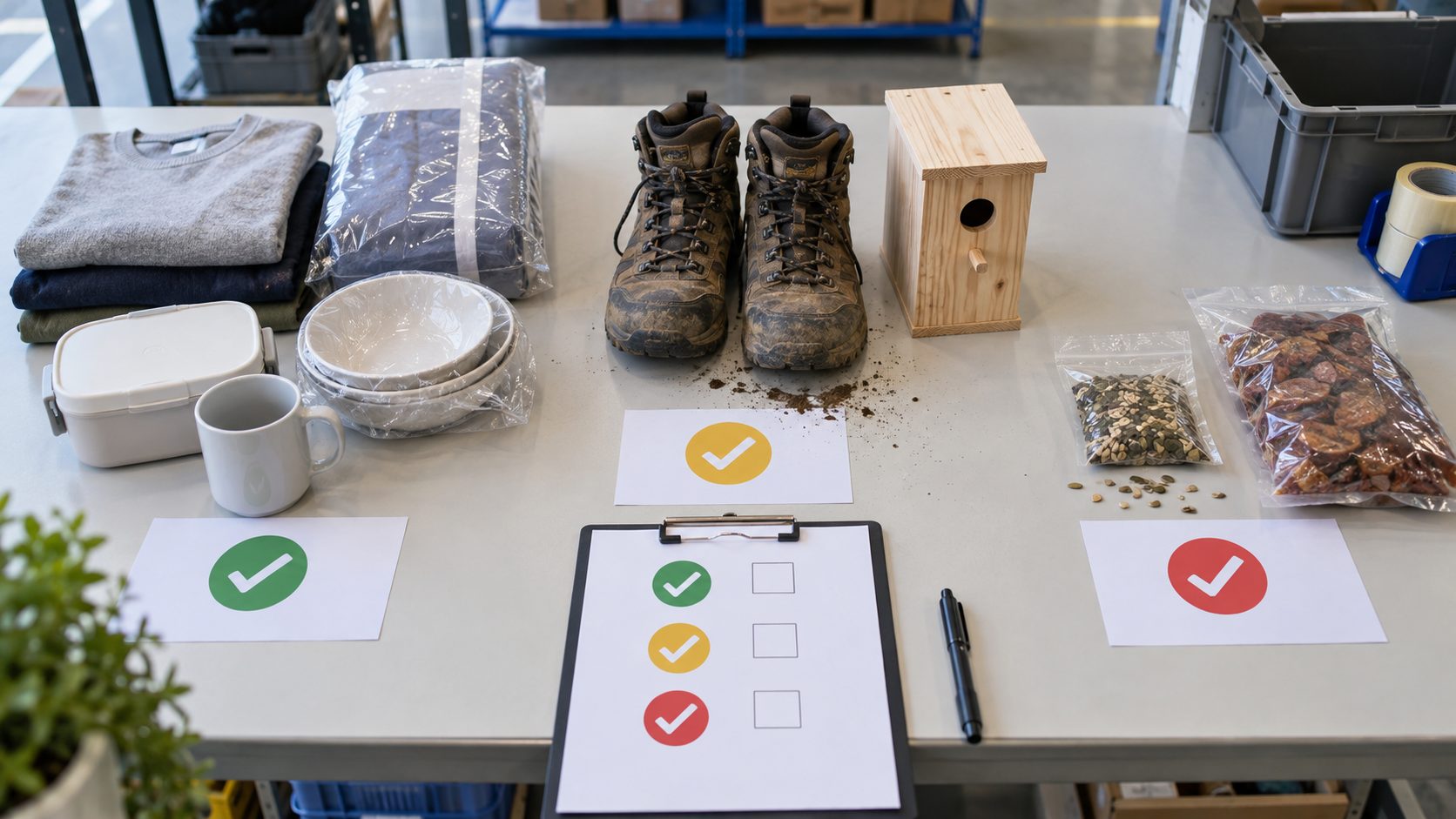
This guide is a purchasing decision tool. It helps you sort an item into one of three outcomes:
- Green — continue: an ordinary, clean, fully described manufactured product;
- Amber — verify first: an item containing food, plant, animal, wood or outdoor-use materials; or
- Red — stop the order: the seller cannot identify the material, species or ingredients, cannot provide required evidence, or the item cannot meet New Zealand requirements.
New Zealand's Ministry for Primary Industries (MPI) makes the final biosecurity decision. A seller, marketplace, buying agent or freight forwarder cannot guarantee entry.
Start with the product, not the marketplace
The same risk check applies whether the listing comes from Taobao, Pinduoduo, 1688, Xianyu or a factory. Before approving payment, record:
- the exact product name and intended use;
- new or used condition;
- full materials or ingredients;
- whether it contains wood, bamboo, seeds, dried plants, food or animal material;
- the scientific name for seeds or plant products when required;
- whether it has been used outdoors or exposed to soil or water; and
- the seller's product photos and packaging description.
Do not use a vague declaration such as “gift,” “accessory” or “sample” to hide the real product. Accurate descriptions help the carrier assess the route and help the importer prepare for New Zealand border checks.
For purchases placed through an agent, use the China buying-agent quote checklist to lock the model, material, quantity and inspection request before payment.
Green: ordinary manufactured goods that are clean and identifiable
Typical lower-risk examples may include new clothing made from ordinary textile fibres, sealed household items, metal accessories and other fully manufactured goods with no plant, animal, food or soil contamination.
Green does not mean automatic clearance. Before payment, still confirm:
- the exact material and function;
- whether the product includes a battery, liquid, powder, magnet or other carrier-sensitive component;
- whether the listing hides unfinished wood, feathers, shells or other natural material; and
- whether the quantity still looks like a personal purchase rather than commercial stock.
Carrier acceptance and legal importability are separate questions. YDA Express may help compare available routes for eligible goods, but it does not issue New Zealand import permits or determine the final border outcome.
Amber: pause and check MPI before paying
Treat the item as amber if it falls into any of these groups.
Used footwear, camping gear and outdoor equipment
MPI says footwear, clothing and equipment must be clean and free from bugs, soil and disease. Used hiking boots, tents, fishing equipment, saddles, tools and other outdoor goods deserve special attention because dirt can remain in seams, tread or fabric.
Ask the seller for clear close-up photos of soles, seams and cavities. Request cleaning before domestic shipment. A warehouse photo can show visible dirt, but it is not a laboratory test and cannot prove biosecurity clearance.
Wood, bamboo and natural decorative products
Unfinished wood, bamboo, bark, straw and similar materials may carry insects or plant disease. A product title such as “wooden ornament” is not enough. Ask for the wood type, whether bark is present, the manufacturing treatment and close-up photos of holes, dust or live insects.
Check the product in MPI's official Can I Bring or Post It? guidance before payment. If the seller cannot identify the material, do not assume that repacking will solve the problem.
Seeds, dried plants and gardening products
Seeds and plant material are not ordinary parcels. MPI may require the scientific name, an applicable Import Health Standard and supporting documents. A Chinese common name or marketplace title may not identify the species precisely enough.
Do not buy first and investigate later. Obtain the scientific name and intended use, then check the applicable requirements. If the seller cannot provide reliable identification or required documents, stop the order.
Food and products containing animal material
Food, supplements, dried ingredients, meat, dairy, honey, feathers, shells, leather and other animal-derived goods can be subject to specific conditions. “Factory sealed” does not automatically mean admissible. Check the exact ingredients, processing and packaging against current MPI guidance.
Red: reasons to stop before the item reaches a China warehouse
Stop or postpone the purchase when:
- the listing or seller cannot provide a complete ingredient or material list;
- a seed or plant item has no reliable scientific name;
- used outdoor equipment is visibly dirty and the seller will not clean it;
- wood or natural material shows bark, insect holes, soil or contamination;
- required evidence or an import permit cannot be obtained;
- the seller proposes a false product description or low declared value; or
- no compliant international route is available for the product.
Receiving an item at a China warehouse does not make it legal to import into New Zealand. Returning it domestically is usually easier to discuss before the seller's return window closes.
The evidence pack to request before payment
For an amber item, build a small evidence pack:
- listing URL and seller name;
- exact product name, model and intended use;
- new or used condition;
- materials or full ingredients;
- species or scientific name where relevant;
- clear product and packaging photos;
- cleaning or treatment information;
- any permit, certificate or Import Health Standard evidence required by MPI; and
- the intended quantity and shipment plan.
Send the product link, destination and this information to YDA Express before ordering if you need a preliminary route check. YDA Express may help communicate with the seller, receive eligible goods, provide agreed visible photos, consolidate compatible parcels and compare shipping options. It cannot authenticate documents, perform professional contamination testing, obtain an import permit, decide the final HS classification or guarantee New Zealand clearance.
If several eligible purchases will arrive from different sellers, review how package consolidation from China works. Do not mix a questionable biosecurity item into a general-goods carton merely to reduce the number of parcels.
Customs and GST are a separate checkpoint
Biosecurity clearance is not the same as Customs and tax clearance. New Zealand Customs generally treats imported goods valued at NZ$1,000 or less as low-value goods for border collection purposes, while GST may be collected by an overseas supplier, marketplace or redeliverer. Multiple orders from the same supplier on the same day may be treated as one shipment.
For consignments over NZ$1,000, an individual importer may need a Customs Number, proof of purchase, transport documents and an import entry such as form NZCS 263. GST is generally 15% and can be calculated on the goods value plus applicable duty, freight and insurance. Read the current New Zealand Customs duty and GST guidance and IRD low-value imported goods rules for the current treatment.
Do not split or misdescribe purchases to avoid tax or regulatory checks. Final tax, duty, levy and classification decisions belong to New Zealand authorities and the importer.
Your final go / verify / stop decision
Continue when the item is fully identified, clean, eligible for an available route and does not require missing MPI evidence.
Verify first when the item contains natural, food, plant or animal material, has been used outdoors, or needs a permit, treatment record or precise species information.
Stop when the seller cannot provide the information or evidence needed to make that decision.
The best time to solve a New Zealand biosecurity problem is before payment—not after the parcel has reached the warehouse or the border.
📲 Download the YDA Express App
Use the YDA Express App to place China purchasing orders, view product check photos, manage packages, and arrange consolidation and international forwarding.