Before buying wooden décor for the USA, confirm the actual material, finishing, natural plant parts and manufacturer information, then check the applicable import path.
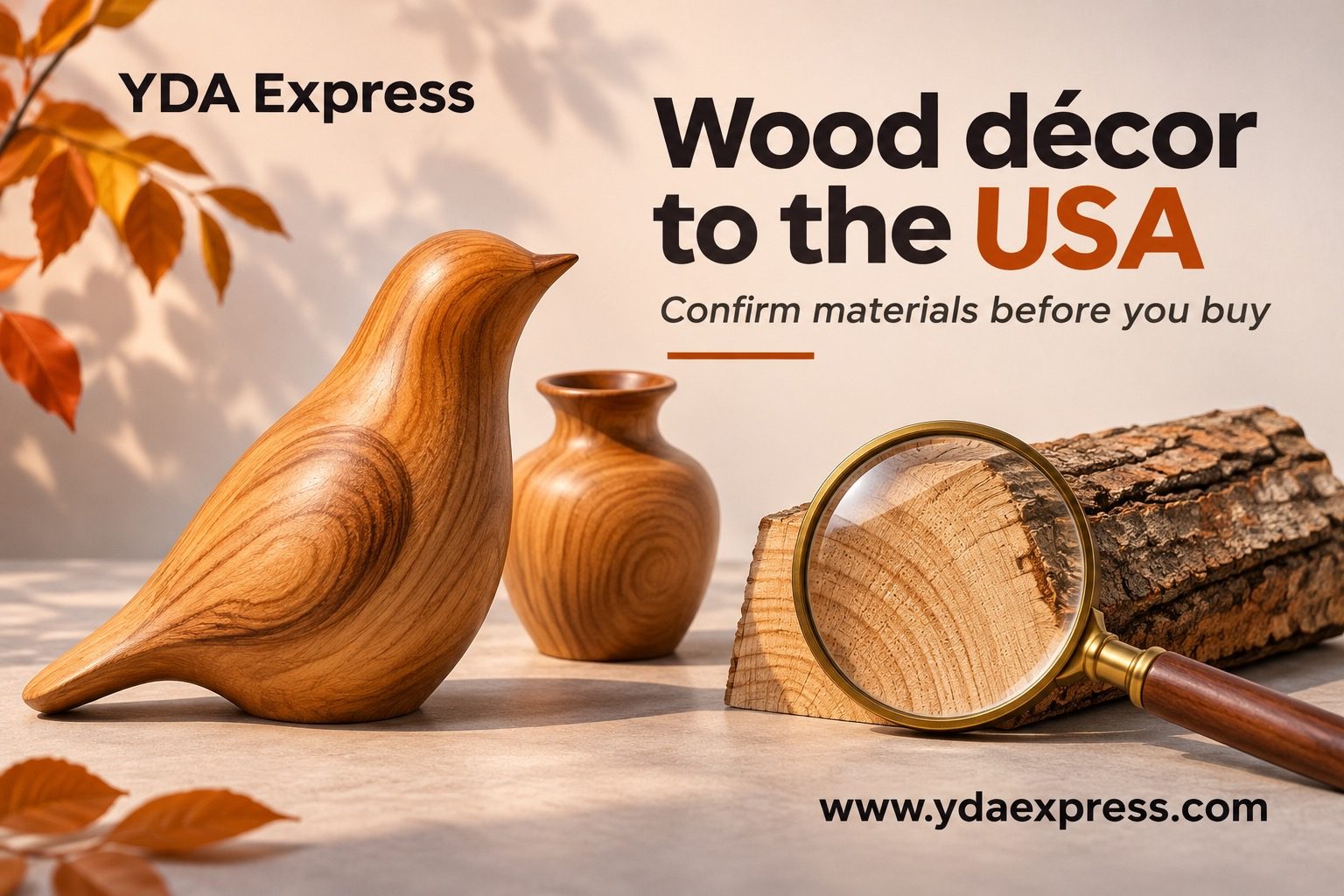
AI-generated editorial illustration.
Before ordering wooden décor from Taobao or Pinduoduo for the USA, find out what the actual item contains and how its wood has been processed. A smooth finished ornament, a bark-covered branch sculpture and a resin object with a wood base should not receive the same purchase decision.
You do not need to treat every finished wooden ornament as prohibited or automatically requiring fumigation. You do need enough product information to check which US requirements apply before paying.
Official information checked: 15 November 2026. This guide concerns decorative purchases from China; recheck the item and entry arrangements before dispatch.
Which of these descriptions matches the item?
Finished wood, machined smooth on every side
Ask for photographs of the back, underside, edges and joints, not only the attractive front. Confirm whether the body is solid wood, plywood, MDF or a non-wood material with a wooden part, and whether all wooden surfaces are finished as described.
APHIS's generally authorized product list includes wooden handicrafts machined smooth on all sides and specified finished wood products, generally without a plant import permit or phytosanitary certificate. Exceptions, protected species and arrival inspection still matter. “Painted” alone does not establish that the actual object fits this description.
When the evidence is clear, send it for the product and route check. This is a possible route forward, not an automatic shipping approval.
Bark, rough branches or other natural plant parts
A rustic sculpture may contain a rough trunk, twigs, moss, seeds or straw that the seller has not counted as part of its material description. Ask about every natural component, including decorative fillings.
APHIS identifies Chinese wood-containing handicrafts as a category needing commodity-specific checks. The current Chinese wooden-handicraft provision includes treatment and manufacturer-identification conditions for the regulated articles it covers. A seller's packing-treatment document does not necessarily establish treatment of the ornament itself.
Pause the purchase while the US importer or qualified adviser checks the exact commodity through APHIS requirements. Do not assume a small order, personal use or a “decoration” label removes the requirement.
The seller cannot identify the material
“Natural wood,” “wood colour” and “wood-look” are different descriptions. If the seller cannot say whether the actual variant is timber, engineered board or resin, you cannot yet make a reliable plant-health or tariff check.
Ask again with a precise picture and selected option. If the information remains unavailable, consider a better-documented alternative instead of paying and hoping the warehouse can identify the species later. A photograph cannot authenticate a botanical species or prove lawful harvest.
Send one useful request to each seller
Keep the answers attached to the exact order. A practical message is:
Please confirm the material of this selected item and every natural decorative part. What wood is used, and is there any bark, seed, moss or straw? How is the wood processed? Please provide photos of the whole item, back, underside and edges, plus the manufacturer's name and any product-specific documents needed for US import review.
If a declaration or protected-species check requires a scientific wood name or harvest origin, obtain those details from the supplier before ordering. Do not invent them from the seller's marketing name.
On Taobao, save the shop's answer against the selected size and material option. On Pinduoduo, keep the actual store, variant and final order/payment record; another seller's similar photograph does not confirm this purchase. Check the current after-sales terms for each order and agree whether an unclear material answer should stop an agent from paying. There is no universal return window stated here for either platform.
For help authorizing the purchase, use the US buying-agent guide. Keep this material file separate from payment instructions so that a payment problem does not obscure an unresolved product question.
Does “personal use” settle the paperwork?
No. Plant admissibility, protected-species requirements, customs entry and a Lacey Act declaration are separate checks.
APHIS's Lacey Act guidance links declaration requirements to plant material, covered HTS classifications, formal entry and specified entry types. Informal entries are currently outside that declaration requirement, but this does not waive plant-health controls or legal-harvest rules. Its plant-material “de minimis” exception is also different from CBP's former low-value duty allowance.
Ask the declarant which entry type will actually be used. The ordinary informal-entry rule generally covers shipments not exceeding US$2,500, but includes exceptions for certain Chapter 99 articles over US$250; CBP can also require formal entry. Value alone does not settle the entry type. This filing distinction is not a tax exemption, and purchases for resale should be described truthfully.
Ask for the entry cost before the low price decides for you
The June 2026 CBP rule continues the suspension of ordinary low-value duty-free treatment. Do not budget on “under US$800 means tax-free.”
There is no single applicable duty rate for all wooden décor. The exact article, use, origin, HTS classification, current additional measures and entry date determine the calculation. An old ruling's base duty percentage is not today's total China-import rate. Have the declarant check the current US tariff against the material file rather than accepting an unexplained percentage.
Request separate lines for merchandise, packing, international freight and insurance, applicable duty, entry/brokerage charges and delivery. Keep the actual payment evidence so customs value can be established correctly; the declarant must determine any required additions. CBP distinguishes duties and fees from state taxes. Carrier processing charges and any state tax question need their own explanation. Never understate the value or split orders artificially to seek an exemption.
The final decision belongs to this item
At arrival, request the agreed photos of the real ornament, natural additions and manufacturer information. Compare them with the seller's file before combining the item with other parcels. Missing documents, unexpected bark or signs of pests are reasons to hold for clarification and discuss any available domestic return before export.
YDA Express can help relay questions, receive the parcel, record visible details and compare available transport options under its current purchasing and forwarding services. It does not identify wood species from photographs, conduct official pest inspection, issue permits or decide final customs classification.
Proceed only after the material question, required documentation and route are resolved. Recheck current plant, tariff and carrier requirements before dispatch; a check date cannot guarantee future acceptance, a fixed tax bill or delivery time.
📲 Download the YDA Express App
Use the YDA Express App to place China purchasing orders, view product check photos, manage packages, and arrange consolidation and international forwarding.