The Smarter Way to Buy from China: A Practical Guide to Proxy Shopping

管理员
2026年8月2日
20 阅读
0 喜欢

A practical guide to China proxy shopping from YDA Express. Learn how daigou services work, save on shipping, and avoid common pitfalls when buying from Chinese websites like Taobao and 1688.

You’ve found the perfect item on Taobao—maybe it’s a custom dress, a rare gadget, or bulk supplies for your business. But the seller doesn’t ship overseas, the website is in Chinese, and you’re not sure if your credit card will work. Frustrating? That’s where a China proxy shopper comes in.

Proxy shopping, often called “daigou,” is basically hiring a local expert to purchase, store, and ship goods from China to your doorstep. It’s not just for individuals—small businesses use it to source products from platforms like 1688 or Pinduoduo without setting up a Chinese bank account or dealing with factories directly.

I’ve been in logistics for years, and honestly, the demand for China proxy services has exploded. Whether you’re an overseas Chinese craving hometown snacks or an eBay seller restocking inventory, a good proxy can save you time, money, and a ton of stress. But not all services are created equal. This guide breaks down how it works, what to watch out for, and how to choose a reliable partner.

Why Bother with a Proxy Shopper?

Many international buyers think they can just buy directly from Chinese websites. Sometimes you can—platforms like AliExpress cater to global customers. But here’s the thing: the best deals, the most unique items, and the widest selection are often on domestic-only platforms like Taobao, JD.com, and 1688. These sites are designed for the Chinese market: language, payment methods (Alipay, WeChat Pay), and shipping addresses are all local.

Even if you manage to navigate them with a translator, you’ll likely face other hurdles:

  • Payment rejection: Your Visa or Mastercard might not be accepted.
  • Sellers refuse international shipments: They don’t want the headache of customs forms or returns.
  • No consolidation: If you buy from ten different shops, each ships separately—and you pay ten separate shipping fees, often at high retail rates.
  • Quality guesswork: Without a local inspector, you’re relying on stock photos. I’ve seen too many buyers receive the wrong size, color, or a completely fake item.

A proxy handles all of this. They buy on your behalf using local payment, receive the goods at their warehouse, check them, and then repack everything into one box to send internationally. It’s like having a trusted friend in China who also understands logistics.

How China Proxy Shopping Works (Step by Step)

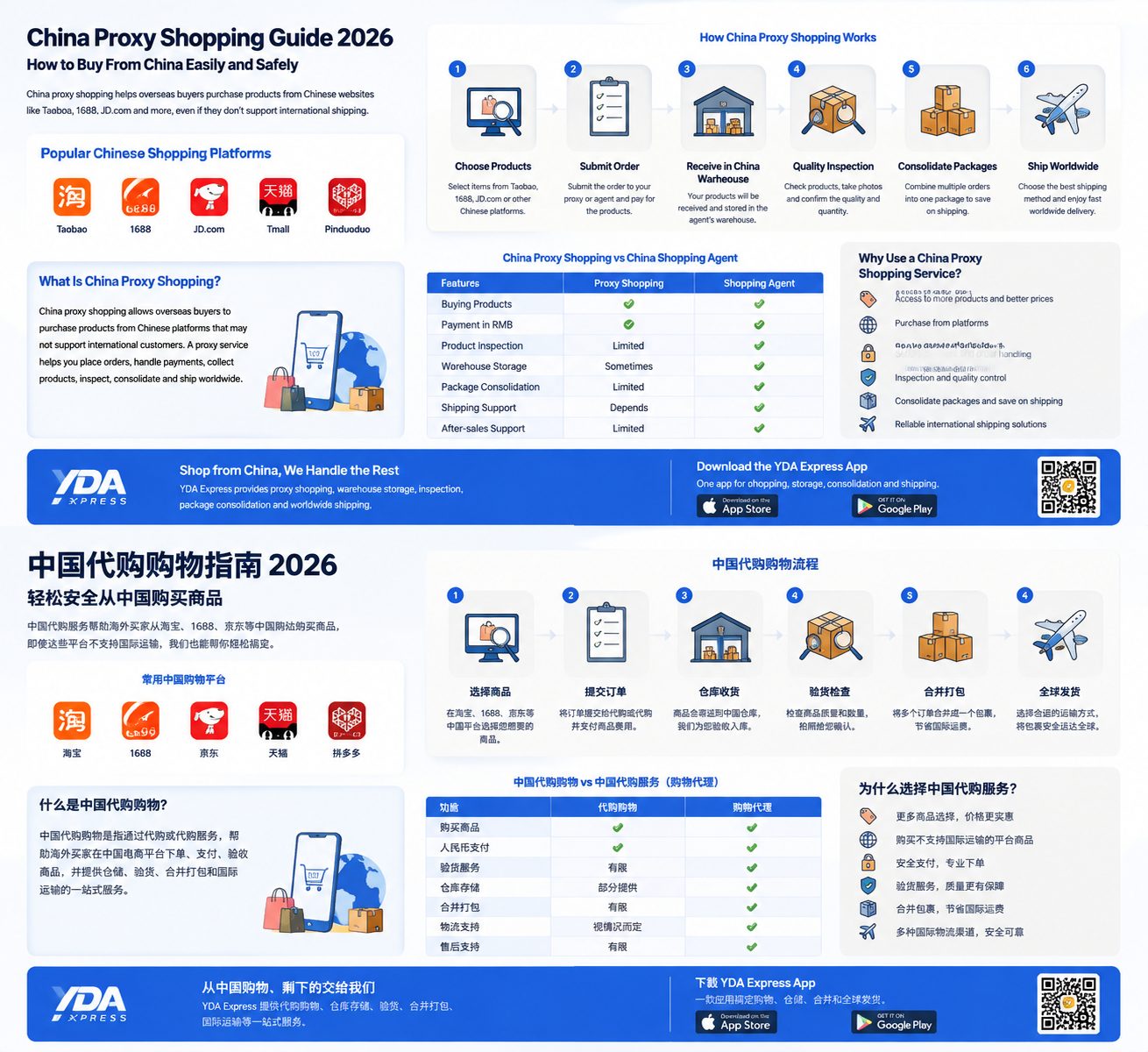
The process is straightforward, but details matter. Here’s a typical flow:

  1. You find what you want: Browse Taobao, 1688, JD, or even WeChat sellers. Copy the product links.
  2. Submit to the proxy: Most proxies have a website or app where you paste links and set quantities, sizes, etc. You’ll prepay a deposit or the full amount via PayPal, credit card, or bank transfer.
  3. The proxy buys it: They place the order using their Chinese account, communicating with the seller if needed.
  4. Warehouse receipt and inspection: When the package arrives at the proxy’s warehouse, they check the item against your order. A good service will send you photos—maybe even a video—so you can confirm before shipping. At YDA Express, we always take clear pictures and note any visible defects. If something’s wrong, we can return it to the seller right away, saving you a cross-border return nightmare.
  5. Consolidation and repacking: Many buyers order from multiple stores. The proxy waits for all items to arrive, then combines them into fewer boxes, removing excessive packaging to reduce weight and volume. This is a huge money saver. For example, shipping 5 separate parcels of 1kg each costs way more than one 5kg box—even if the total weight is the same, the base charges add up.
  6. International shipping: You choose a carrier (usually air express, air freight, or sea freight) based on speed and budget. The proxy arranges everything, handling customs documentation.
  7. Customs and delivery: The package ships to your country, clears customs (you may owe duties), and gets delivered to your door.

Sounds simple, but the devil’s in the details. Let’s dig into shipping choices and costs.

Choosing the Right Shipping Method

Shipping from China isn’t one-size-fits-all. Your choice depends on what you’re sending, how fast you need it, and your budget.

  • International express couriers (DHL, FedEx, UPS, SF International): Fastest, usually 3–7 business days to most countries. Expensive, especially for heavy or bulky items. Best for documents, electronics, or urgent orders. DHL and FedEx have excellent tracking but calculate shipping based on volumetric weight (box size) as well as actual weight—so if your box is big but light, you could pay a lot more. I’ve seen a 2kg box of clothes charged as 6kg because the box was oversize.
  • Air freight: Slower than express, typically 7–15 days, but much cheaper for medium weights (10–100kg). It’s a good middle ground for small business shipments. Often handled by freight forwarders, with less precise tracking.
  • Sea freight: Economical for heavy or bulky loads (over 50kg). Takes 25–40 days to the US and Europe, plus port handling. LCL (less than container load) lets you share container space with others. Suits non-urgent restocking. But factor in customs clearance fees and inland delivery—sometimes the savings vanish if you’re not careful.
  • Postal services (EMS, China Post): Inexpensive but slow (10–30 days) and less reliable tracking. Can work for small, low-value items.

A good proxy will advise you based on your specific order. At YDA Express, we often recommend air freight for ecommerce sellers shipping 20–30kg of mixed goods—fast enough to keep customers happy, cost-effective enough to maintain margins. And we always explain volumetric weight upfront to avoid bill shock.

The Real Costs (Beyond the Price Tag)

Proxy shopping fees are usually transparent: a percentage of the item cost (5–10%) or a flat per-order fee, plus shipping. But there are extras:

  • Service fees: Some proxies charge for inspection, photography, repacking, or long-term storage. Check their policy.
  • Currency conversion: You might lose a few percent on exchange rates if the proxy uses a less favorable rate than your bank.
  • Customs duties and taxes: When your package arrives, customs may charge import duties, VAT/GST, or handling fees. The amounts vary by country and item value. For the US, informal entry under $800 is duty-free; in the EU, VAT kicks in from the first euro. Your proxy can usually declare a value on the invoice—but honesty is critical. Undervaluing can lead to fines or package seizure. I always tell clients to declare the actual purchase price and budget for duties if applicable.
  • Volumetric weight surcharges: As mentioned, lightweight bulky items (pillows, shoes in boxes) can be charged based on size. A smart proxy will compact them as much as possible.
  • Return costs: If a seller sends the wrong item, domestic returns are cheap. But if you’ve already shipped it abroad, returning it is expensive. That’s why pre-shipment inspection matters.

One mistake I see often: buyers fixate on item price but ignore shipping. A $10 T-shirt can cost $30 to ship if it’s in a big box. Always get a shipping estimate upfront. At YDA Express, we calculate shipping cost before you pay for the service, so you know the total cost before committing.

Tips for a Smooth China Proxy Shopping Experience

Over the years, I’ve seen what works and what trips people up. Here’s some practical advice:

  • Start small: If you’re new to a proxy, test with a small order first. It builds trust without much risk.
  • Be specific: Provide exact SKU, color, size, and any notes in Chinese if possible (or ask the proxy to translate). Screenshots help.
  • Ask for real photos: Don’t settle for the listing’s stock images. Request actual photos of your items in the warehouse. A transparent proxy will provide them without fuss.
  • Consolidate intelligently: Wait for all items to arrive before shipping, unless one is extremely time-sensitive. Consolidation saves money and reduces packaging waste.
  • Check prohibited items: Every country has restrictions—liquids, batteries, food, seeds, brand-name goods. Your proxy should warn you, but it’s your responsibility to know. A lithium battery can’t go by air express unless it’s in the device and properly labeled.
  • Plan for delays: Chinese holidays (Chinese New Year, Golden Week) shut down sellers and logistics. Expect slower processing around these times.
  • Communicate: A good proxy replies within 24 hours and speaks clear English. If they’re vague about costs or timelines, walk away.

Also, don’t assume all proxies are equal. Some are individuals with no warehouse, just using their home address. If they go on vacation, your packages sit. Choose a company with a real warehouse, consistent staff, and a proper tracking system.

Why YDA Express Stands Out

There are hundreds of proxy services out there, from individual freelancers on WeChat to large platforms. YDA Express is a professional logistics company that built its proxy service from the ground up for international buyers. We’re not just a middleman—we own our warehouse in Yangjiang, China, which means we have direct control over inspection, storage, and packing.

Our team checks every order, sends free photos, and consolidates parcels to minimize shipping costs. We’ve shipped to over 200 countries, handling everything from plush toys to industrial parts. Whether you need a single tea set from Jingdezhen or a pallet of phone cases for your online store, the process is the same: submit your links, pay, and we handle the rest. We’ve had clients cut shipping expenses by 40% simply by using our consolidation advice.

A client of ours in Australia wanted to buy 50 custom yoga mats from a 1688 supplier. The supplier didn’t speak English and only shipped within China. We placed the order, inspected the mats, and shipped them via sea freight. Total cost including our fee was still 30% less than buying locally. That’s the kind of advantage a good proxy provides.

Plus, our global shipping network includes DHL, FedEx, UPS, SF Express, and sea freight options, so we’re not tied to one carrier. That means we can always find the best rate for your destination and timeline.

Ready to Try China Proxy Shopping?

Proxy shopping opens up a world of products that were previously out of reach. It’s not complicated—with the right partner, it’s as easy as shopping on Amazon, just with a few extra days for delivery.

If you’re curious, head over to YDA Express’s website at www.ydaexpress.com and explore our proxy service. Or drop us a message on WhatsApp at +86 16666169028. We’ll walk you through your first order, give personalized shipping advice, and help you get exactly what you want from China—without the hassle.