Entiende cómo funciona el despacho de aduanas cuando compras en China a través de agentes o daigou. Desde los impuestos que realmente pagarás hasta cómo preparar la documentación y elegir al transportista adecuado. Todo explicado con ejemplos concretos para que no te lleves sorpresas.
Si llevas tiempo comprando ropa en Taobao, electrónicos en 1688 o snacks en JD, ya sabes lo fácil que es hacer clic y esperar. Pero cuando el paquete llega a la aduana, de repente todo se vuelve menos divertido: notificaciones confusas, tasas inesperadas, retrasos de días o semanas.
El despacho de aduana para compras por proxy —también conocido como daigou— no es un misterio, pero sí tiene sus reglas. Y entenderlas marca la diferencia entre recibir tu pedido sin problemas o acabar pagando más de lo previsto. Aquí vamos directo al grano.
¿Qué es exactamente el despacho de aduana en una compra por proxy?
Cuando compras en China usando un agente —ya sea un amigo, un familiar o un servicio como el de YdaExpress—, ese agente compra en tu nombre y te envía los productos. El momento en que el paquete cruza la frontera y entra en tu país es donde actúa la aduana.
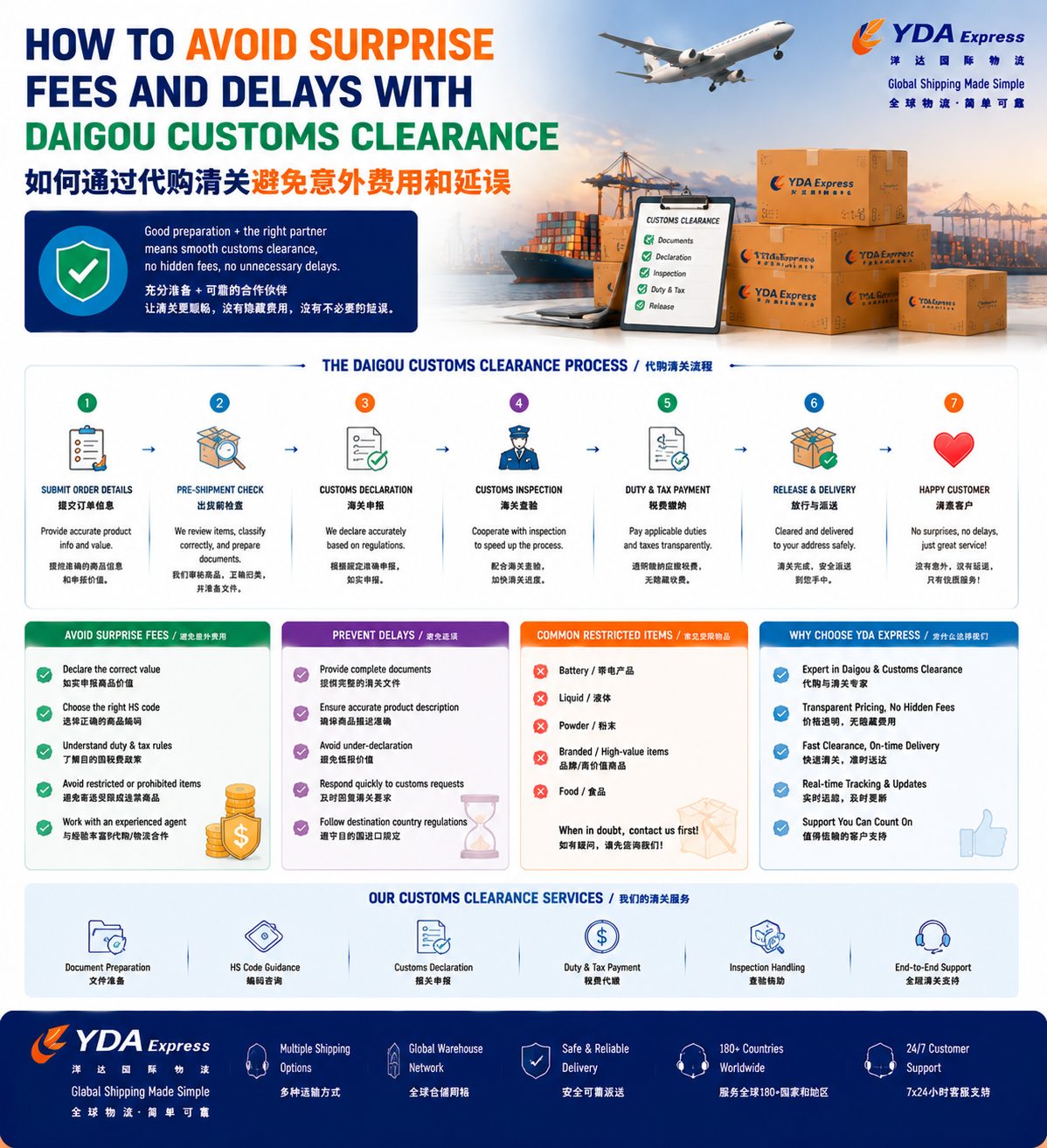
Básicamente, la aduana revisa:
- Si la mercancía está permitida (nada de falsificaciones, productos peligrosos o restringidos).
- Si el valor declarado coincide con lo que realmente pagaste.
- Si toca pagar IVA, aranceles u otros impuestos.
Mucha gente cree que cualquier paquete pequeño pasa sin revisión. Falso. Cada día las aduanas de España, México, Chile o Argentina revisan miles de envíos, y con la entrada en vigor de normativas como la IOSS en Europa o el límite de importación en Latinoamérica, el control es cada vez más automático y riguroso.
El valor declarado: no lo subestimes (literalmente)
Aquí es donde la mayoría mete la pata. Declarar un valor muy bajo para intentar esquivar impuestos puede salir caro: si la aduana sospecha, detendrá el paquete, exigirá justificación de compra (captura del pago, invoice real) y hasta podría imponer una multa.
En España, por ejemplo, si el valor total del envío supera los 150 euros, hay que pagar arancel además del IVA. En México, el límite para importar sin impuestos ronda los 50 USD cuando usas mensajería privada. En Argentina, la famosa franquicia de 50 USD solo aplica una vez por mes y con ciertos requisitos de puerta a puerta.
Consejo de quien ha visto lotes retenidos: declara siempre el precio real de compra. Tu agente de confianza —como YdaExpress— puede asesorarte sobre cómo hacerlo sin disparar los costos de forma legal. Por ejemplo, si varios artículos son para uso personal y no comercial, a veces se pueden consolidar en un solo envío con una declaración detallada que evite el sobrecoste arancelario.
Documentos que casi siempre necesitas
No te asustes: la mayoría de las veces no hace falta ser un experto. Pero ten a mano:
- Factura comercial o proforma: con descripción clara de cada producto, cantidad, precio unitario y total.
- Número de seguimiento del envío.
- Comprobante de pago (si te lo piden, aunque no siempre).
- En países como Chile o Argentina, RUT o CUIT del destinatario.
Si el envío viene por mensajería privada (DHL, FedEx, UPS, o la red de YdaExpress con SF International), el transportista suele contactarte para pedirte estos documentos y gestionar el despacho a tu nombre. Con Correos tradicional es más lento y a veces tienes que presentarlos tú personalmente en la oficina de aduanas.
Impuestos y tasas: un dolor de cabeza evitable
Cada país es un mundo, pero la lógica es parecida:
- En la Unión Europea, desde julio de 2021, todos los paquetes extracomunitarios pagan IVA, aunque el valor sea inferior a 22 euros. Si el vendedor o agente se registra en el sistema IOSS, paga el IVA en origen y el cliente lo abona junto con el precio de compra. Así el paquete pasa rápido. Si no, toca pagar en destino más una gestión de aduana.
- En México, si utilizas empresas de mensajería privada, el límite libre de impuestos es de 50 USD. Por encima, pagas un 19% de IVA y, según el producto, aranceles de hasta el 25%. Los envíos por SEPOMEX suelen tener menos control pero son más lentos.
- En Argentina, el régimen de pequeños envíos permite hasta 3 envíos al año con franquicia de 50 USD cada uno, siempre que uses Correo Argentino y el peso no supere los 2 kg. Excedido eso, tributas el 50% del excedente.
- En Chile, importaciones hasta 41 USD (valor FOB) están liberadas. Entre 41 y 2,200 USD pagas solo IVA (19%) y una tasa de gestión.
Aquí la clave es elegir bien el canal de envío. En YdaExpress, por ejemplo, ofrecen opciones con despacho simplificado en las que ellos se encargan de tramitar el IOSS o de buscar la modalidad más económica según el país de destino. Si eres de Colombia y cruzas los dedos para que Aduana no te cobre, mejor pregúntales antes: te dirán si conviene enviar por carga expresa o por mensajería regular con valor declarado ajustado a la norma vigente.
Experiencia real: por qué a veces el envío económico sale caro
Hace poco acompañé a un cliente de YdaExpress que quería enviar seis pares de zapatillas a Perú. Eligió el servicio más barato, sin tracking detallado. El paquete quedó retenido en Lima porque la descripción era ambigua y el valor declarado no coincidía con lo que SUNAT estimó para esas marcas. Resultado: una semana extra de espera, gastos de almacenaje, multa por subdeclaración y un mal rato. Al final pagó casi el doble que si hubiera usado un envío gestionado con etiquetado correcto y asesoría aduanera.
Y no es culpa del agente: muchos taobao agents solo compran y envían, pero no saben de logística internacional. Por suerte, servicios como el de YdaExpress integran almacén, consolidación y envío con conocimiento aduanero. Esto significa que antes de despachar, revisan si la combinación de productos podría disparar alarmas y te sugieren cómo dividir o declarar para evitarlas.
Cómo preparar tu compra para un despacho suave
- Compra en sitios de confianza: si los productos son réplicas o infringen propiedad intelectual, la aduana los frenará sí o sí.
- No mezcles riesgos: evita enviar alimentos y productos electrónicos juntos. Cada categoría tiene sus reglas.
- Pide fotos reales en el almacén: en YdaExpress, al recibir tu compra, sacan fotos de cada paquete para que veas el estado, las etiquetas y puedas decidir si lo envías tal cual o con embalaje extra.
- Documentación en inglés o en el idioma del país destino: si envías a Alemania, la factura debe estar en alemán o inglés; si es a Arabia Saudí, en árabe. Parece obvio, pero muchos agentes chinos solo emiten facturas en chino. Busca uno que se adapte.
Los detalles que marcan la diferencia
- Peso volumétrico vs. peso real: el transportista cobra por el mayor de los dos. Un abrigo de plumas puede pesar 500 gramos pero ocupar mucho espacio, así que el costo de envío se dispara. Tu agente debe saber optimizar el embalaje para reducir volumen. En YdaExpress usan bolsas al vacío para ropa y eliminan cajas innecesarias.
- Seguro de envío: pocos lo piden, pero si tu paquete vale más de 200 €, tiene sentido asegurarlo. Las pérdidas y roturas pasan, y las reclamaciones sin seguro son casi una pérdida segura.
- Horarios y días hábiles: las aduanas no trabajan fines de semana ni festivos. Un paquete que llegue un viernes por la tarde puede tardar varios días en ser procesado solo por el calendario.
¿Vale la pena hacer el despacho por cuenta propia?
En países como España, si el envío llega por Correos y necesitas presentar documentación, puedes hacerlo tú mismo con el justificante de ADTpostales. Pero si no tienes experiencia, es fácil equivocarse en el código arancelario o en el cálculo del IVA, y entonces toca pedir ayuda a un agente de aduanas particular, que cobra desde 25 hasta 60 euros por gestión.
Muchos usuarios prefieren que el transportista o el agente en origen se encargue de todo. De hecho, al utilizar YdaExpress, tú solo compras online, ellos reciben, almacenan y cuando todo está listo, gestionan el envío puerta a puerta con despacho incluido. Si surge algún problema, el equipo de atención al cliente —con WhatsApp directo— te explica los pasos.
代购清关: una palabra que resume un proceso
El término 代购清关 une dos conceptos: “compra por proxy” y “despacho aduanero”. Muchos emprendedores que empiezan trayendo productos de China para revender en su país chocan con esta realidad: no basta con encontrar el mejor precio en 1688; hay que calcular cuánto se pagará de impuestos en destino y cómo asegurar que la mercancía llegue sin parar durante semanas en el depósito aduanero.
En YdaExpress vemos a diario clientes que al principio piden ayuda solo para comprar unos zapatos, y al tiempo están moviendo pedidos de 20 kg para su tienda online. El salto no es tan grande si tienes claros los números aduaneros.
El papel de un buen agente: más que solo comprar
Un forwarding confiable no solo te ahorra tiempo: te evita dolores de cabeza legales. Imagina que importas maquillaje a México. Necesitas cumplir con la COFEPRIS, que regula esos productos. Si el agente chino no sabe, el paquete será rechazado. En cambio, un servicio con experiencia como YdaExpress te alertará antes de comprar: “Oye, este producto requiere registro sanitario; mejor busquemos alternativas o lo enviamos con etiquetado de muestra sin valor comercial”.
Pequeñas asesorías así no las encontrarás en un agente que solo manda capturas de pantalla y cobra comisión.
Cuánto cuesta realmente el despacho de aduana
La gestión aduanera en sí puede tener un costo fijo (de 5 a 30 € según el país y el transportista). Pero la mayor parte del gasto son los impuestos. Por eso antes de comprar, usa calculadoras de importación online o pregunta a tu agente por simulaciones: en YdaExpress, al cotizar tu envío, te desglosan los posibles cargos de aduana basándose en el tipo de producto y las tarifas actualizadas del país.
Un ejemplo concreto: enviar una chaqueta de marca china valorada en 80 € a España por mensajería con IOSS. Pagas el IVA (21%, 16,80 €) en el momento de la compra y no tienes que abonar nada en la aduana. Sin IOSS, la mensajería te cobraría en destino 16,80 € de IVA más 20-25 € de gastos de gestión. La diferencia es de casi 20 €, que pueden ser la mitad del beneficio si revendes.
Consejos finales (y una llamada a la acción)
Si estás empezando en el mundo de las compras por proxy, resumo lo esencial:
- Declara siempre el valor real.
- Usa mensajería privada con gestión aduanera incluida.
- Asegúrate de que la factura esté en el idioma correcto y con descripciones detalladas.
- Apóyate en agentes que sepan de aduanas, no solo de compras.
- Antes de hacer un envío grande, haz una prueba con productos de bajo riesgo.
En YdaExpress llevamos años ayudando a particulares y pequeños negocios a mover sus compras desde China sin sustos. Tenemos almacén en Shenzhen, servicio de consolidación, fotos de verificación y envíos por las principales líneas (DHL, UPS, SF International, carga marítima y aérea). Y lo más importante: un equipo que conoce las aduanas de España, Latinoamérica y mercados exigentes como Alemania o Arabia Saudí.
Si tienes dudas sobre cómo enviar tu próximo pedido sin que se quede atrapado en la aduana, escríbenos por WhatsApp al +8616666169028 o visita nuestra web en https://www.ydaexpress.com. Analizamos tu caso sin compromiso y te damos una cotización clara. Porque al final, hacer bien el despacho de aduana es menos una ciencia oculta y más una cuestión de experiencia.
🛍️ Compra en China en un solo lugar No necesitas comprar por separado en Taobao, 1688, JD.com, Tmall o Pinduoduo. Con YDA Express puedes buscar productos, realizar pedidos, solicitar inspecciones con fotos, disfrutar de hasta 180 días de almacenamiento gratuito, consolidar paquetes y enviarlos a cualquier parte del mundo.
👉 Empieza a comprar 📦 Reenvío de paquetes y envíos internacionales ¿Ya realizaste tu compra? Envía tus productos a nuestro almacén en China. Ofrecemos recepción de paquetes, inspección con fotos, hasta 180 días de almacenamiento gratuito, consolidación, envíos internacionales y seguimiento en tiempo real.
👉 Explora todos nuestros servicios 📲 Descarga la app de YDA Express Una sola app para comprar en China, gestionar pedidos y paquetes, consolidar envíos, organizar el transporte internacional y seguir tus compras.
🌍 Más guías útiles Descubre consejos prácticos sobre compras en China, reenvío de paquetes, costes de envío y trámites aduaneros.