Descubre cómo funciona la declaración de exportación al comprar en China, qué datos necesitas y cómo evitar retrasos en aduanas. Con ejemplos prácticos y el soporte de YdaExpress.
Comprar en China ya es algo cotidiano. Ropa, electrónica, repuestos, gadgets raros que solo encuentras en tiendas como Taobao o 1688. Pero en cuanto el paquete pasa la frontera china, el proceso deja de ser solo un clic. Ahí empieza la declaración de exportación, un trámite que a muchos compradores les suena lejano pero que puede definir si tu pedido llega en una semana o se queda atascado en la aduana de Shanghái.
Si alguna vez te has preguntado por qué un vendedor chino te pide datos concretos o por qué tu agente de compras insiste en describir bien los productos, este artículo es para ti. No hace falta ser experto en comercio internacional. Con entender lo básico y tener el socio adecuado, la exportación desde China se vuelve mucho más simple.
¿Qué es exactamente la declaración de exportación?
Es el documento oficial que se presenta ante la aduana china para informar qué mercancías van a salir del país, a dónde se dirigen y bajo qué condiciones. En español lo llamamos también despacho de exportación. Básicamente, es la manera en que el gobierno chino controla lo que sale de su territorio: por motivos fiscales, de seguridad y de estadística comercial.
Toda mercancía que abandona China necesita esa declaración, ya sea un contenedor completo o un pequeño paquete enviado por mensajería. La diferencia está en quién la elabora y cómo se presenta.
¿Por qué es tan importante para ti como comprador?
Aquí va lo que muchos no saben: si la declaración de exportación no se hace correctamente, tu envío puede ser retenido, devuelto o incluso confiscado por la aduana china. Y no hablamos solo de grandes cargamentos. Un paquete con ropa de marca falsa, baterías mal declaradas o productos sin la documentación adecuada puede quedarse en el limbo durante semanas.
Además, una mala declaración puede disparar los costes. Si el valor declarado no coincide con la factura comercial, las autoridades pueden imponer multas o exigir documentos adicionales. Por eso, un despacho de exportación limpio no es solo un requisito legal: es la base para que tu pedido llegue sin sorpresas.
Los elementos clave de una declaración de exportación
Para que entiendas lo que tu proveedor o agente debe gestionar, estos son los datos que toda declaración debe incluir:
- Datos del exportador: nombre, dirección y número de registro en China.
- Datos del destinatario: tu nombre, dirección completa y datos de contacto.
- Descripción de la mercancía: qué es exactamente, material, uso, marca y modelo si aplica.
- Código arancelario (HS Code): un número internacional que clasifica el producto. Por ejemplo, la ropa de algodón tiene un código distinto al de la ropa sintética.
- Valor en aduana: el precio real pagado por los productos, normalmente reflejado en la factura comercial.
- País de origen: China.
- País de destino: España, México, Colombia… el que corresponda.
- Peso bruto y neto, número de bultos, tipo de embalaje.
Junto con la declaración, casi siempre se adjuntan la factura comercial, la lista de empaque (packing list) y, según el producto, licencias de exportación, certificados de origen o permisos especiales.
¿Cómo funciona el proceso en la práctica?
Honestamente, la burocracia aduanera china puede sonar intimidante, pero en el día a día el proceso sigue más o menos estos pasos:
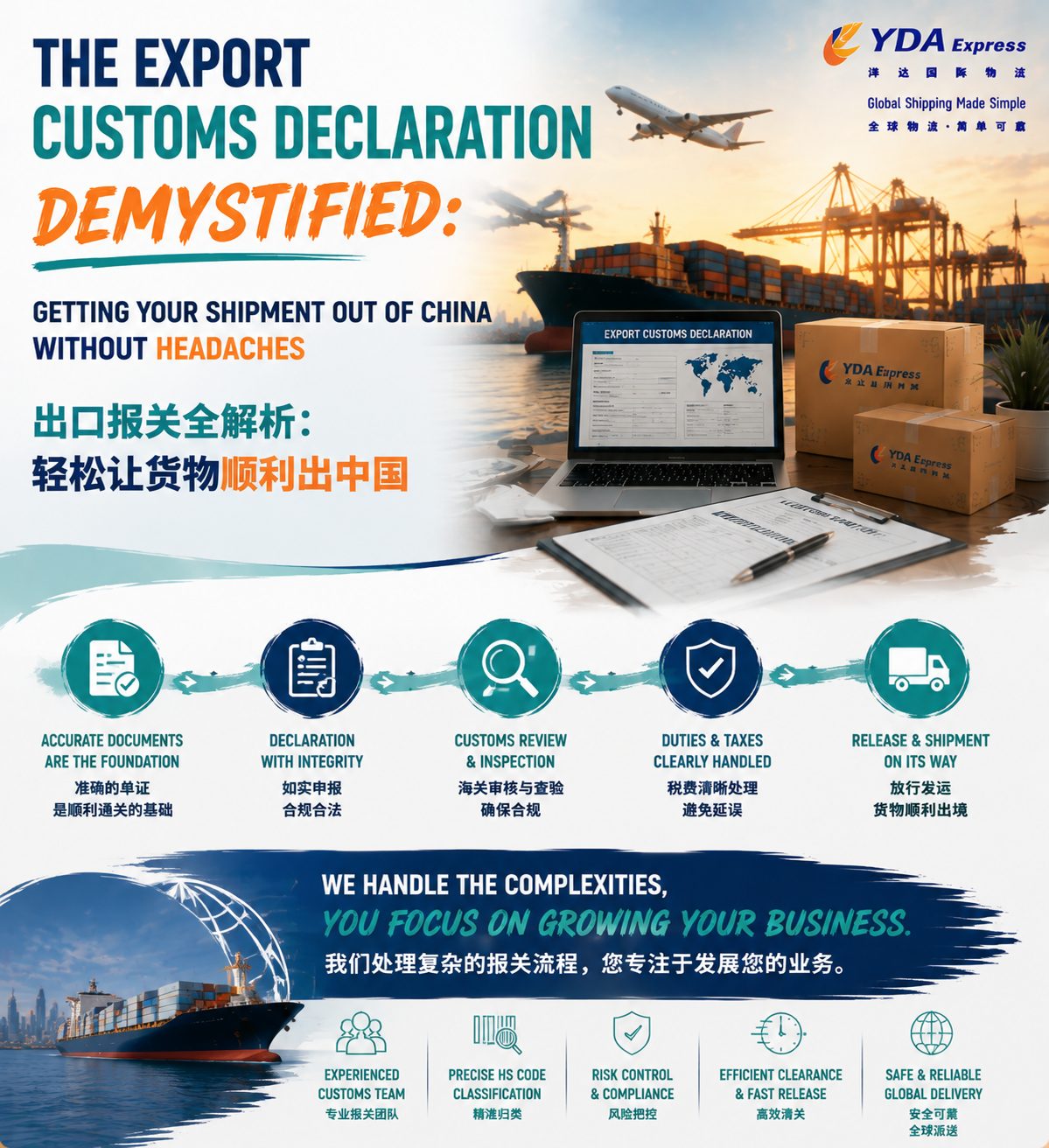
1. Preparación de la documentación
El exportador (o su agente) reúne la información del pedido: productos, cantidades, valores. Si has comprado a través de un agente como YdaExpress, aquí es donde consolidamos tus paquetes de distintas tiendas y preparamos una sola declaración para todo el lote.
2. Transmisión electrónica
La declaración se envía al sistema aduanero chino (China Customs) de forma digital. Por cada envío se genera un código único de referencia.
3. Revisión y canalización
La aduana clasifica la declaración en tres canales: verde (despacho libre sin inspección), amarillo (revisión documental) o rojo (inspección física). La mayoría de los envíos pequeños pasan a verde si los datos son coherentes. Pero si el sistema detecta algo extraño (un valor muy bajo para lo que es, un código mal puesto, o un producto sensible), va a rojo. Ahí empiezan los retrasos.
4. Liberación de la mercancía
Una vez aprobada, la aduana emite el permiso de salida. A partir de ese momento, la empresa de transporte (DHL, FedEx, UPS, SF International o el transitario) puede recoger la carga y llevarla al puerto o aeropuerto para su envío internacional.
Si trabajas con un transportista grande, ellos suelen encargarse del despacho de exportación siempre que les facilites la documentación correcta. Pero si compras por tu cuenta a través de un agente de compras en China, es ese agente quien debe asegurarse de que todo esté en regla.
Errores más comunes que atascan un envío
Trabajando a diario con exportaciones desde China, en YdaExpress hemos visto cómo pequeños despistes cuestan días o incluso semanas. Aquí algunos clásicos:
- Descripciones vagas: poner “accesorios electrónicos” en lugar de “cable USB-C de 1 metro, marca X”. La aduana no adivina.
- Infravaloración: declarar un teléfono de 300 € como si costara 20 €. Además de ser arriesgado, puede hacer saltar las alarmas y provocar que revisen todo el envío.
- Códigos arancelarios incorrectos: cada producto tiene su propio código a nivel internacional. Usar el equivocado es como mandar una carta con la dirección mal escrita.
- Mercancía prohibida o restringida: baterías de litio, perfumes, imitaciones, ciertos productos químicos… sin los permisos adecuados, no pasan.
- Olvidar la factura comercial o la packing list: sin estos documentos, la declaración está incompleta y el envío se detiene automáticamente.
Una inspección en rojo no tiene por qué ser un desastre, pero sí implica costes de almacenaje, posibles tarifas adicionales del transportista y, sobre todo, tiempo. Y el tiempo, cuando esperas un paquete, es lo que menos sobra.
Consejos prácticos para una exportación fluida
Si estás comprando en China, ya sea para uso personal o para revender en tu país, hay varias cosas que puedes hacer desde tu lado para facilitar el trámite:
- Da información clara al vendedor o agente: cuantos más detalles tengas del producto (modelo, material, uso previsto), mejor. No te limites a copiar el título de la publicación de Taobao, a veces es confuso.
- Pregunta por el código HS: si tu agente sabe de logística, te lo puede proporcionar. Así te aseguras de que el producto esté bien clasificado.
- Evita declarar valores falsos: aunque parezca que así pagarás menos en destino (por los impuestos de importación de tu país), el riesgo en origen no compensa. La aduana china y la de tu país cruzan datos cada vez más.
- Consolida con cabeza: si compras varios artículos, consolida los pedidos en un solo envío con un agente. Así reduces el papeleo y el coste de transporte, pero ojo: asegúrate de que todos los productos se puedan enviar juntos.
- Ten en cuenta productos sensibles: si compras algo con batería, líquidos o cosméticos, comunícalo expresamente. Estos artículos necesitan canales de envío especiales y documentación adicional.
La ventaja de contar con un agente que sepa de aduanas
Imagina que compras diez cosas distintas en Taobao: ropa, una funda de móvil, un reloj y unos auriculares inalámbricos. Cada una llega a un almacén en China en cajas separadas, con albaranes distintos y descripciones en chino. Ahora tienes que hacer malabares para juntarlo todo y declararlo correctamente. Ahí es donde un buen agente de compras marca la diferencia.
En YdaExpress ofrecemos exactamente eso: recepción de tus paquetes en nuestro almacén, consolidación en un solo envío, revisión de las descripciones y gestión de la declaración de exportación. Nuestro equipo conoce los códigos arancelarios más comunes, los transportistas que mejor funcionan para cada destino y los requisitos específicos de la aduana china. No solo te ahorramos el dolor de cabeza administrativo; también te ayudamos a elegir el canal de envío más adecuado (DHL, FedEx, línea aérea, etc.) para que pagues solo por lo que necesitas.
Además, si surge una incidencia, nosotros respondemos directamente ante la aduana o la empresa de transporte. Tú solo te preocupas de darnos la información correcta y de elegir cuándo quieres que salga el paquete.
¿Y después de la exportación? La otra aduana
Un apunte rápido, porque mucha gente lo pregunta: la declaración de exportación es solo la mitad del camino. Una vez que el paquete sale de China, llegará a tu país y pasará por el despacho de importación. Los impuestos y requisitos de esa segunda aduana dependen de tu país: en España, por ejemplo, para envíos de valor superior a 150 € se paga IVA y arancel; en México, a partir de 50 USD. No es algo que puedas controlar desde China, pero sí puedes anticiparte informándote de las franquicias de tu país y declarando valores reales para evitar problemas en destino.
Para compras de plataformas enviadas a Estados Unidos, consulta si los pedidos de Taobao, 1688 y Pinduoduo pagan aranceles de importación y revisa por separado el producto, el valor y las reglas estadounidenses vigentes.
Resolver dudas frecuentes
¿Necesito licencia de exportación para todo?
No. La mayoría de productos de consumo no requieren licencia. Solo ciertas categorías (armas, alimentos, vegetales, obras de arte, algunos químicos) necesitan permisos especiales.
¿Puedo hacer yo mismo la declaración si compro directamente?
Si no tienes empresa en China, no. La declaración la presenta el exportador (el vendedor chino o tu agente). Tú como comprador no puedes hacer ese trámite.
¿Influye el valor declarado en los costes de envío?
En general, los transportistas cobran por peso y volumen, no por valor. Pero un valor muy alto puede hacer que la aduana exija un seguro o revisiones extra, y algunas navieras ajustan sus tarifas según el valor asegurado.
¿Qué pasa si mi paquete es retenido en la aduana china?
Normalmente, tu agente o transportista recibe una notificación con el motivo. A veces basta con corregir un dato o enviar una factura más detallada. Otras veces hay que pagar una penalización. Lo mejor es tener un agente que reaccione rápido.
El camino más corto entre tu carrito y tu casa
Al final, la declaración de exportación no es más que un paso necesario para que tus compras crucen la frontera china sin tropiezos. No es magia, es organización y conocimiento del terreno. Saber lo básico te empodera como comprador; tener al lado a alguien que domine la parte operativa te quita la mitad de los problemas.
Si estás comprando en China y quieres un servicio que se encargue de todo —desde recibir tus paquetes hasta gestionar aduanas y elegir el mejor transporte—, échanos un vistazo en ydaexpress.com. También puedes escribirnos por WhatsApp al +8616666169028 para resolver cualquier duda o pedir cotización sin compromiso. Hacemos que el envío desde China sea simple, transparente y asequible. Exactamente como debería ser.
🛍️ Compra en China en un solo lugar No necesitas comprar por separado en Taobao, 1688, JD.com, Tmall o Pinduoduo. Con YDA Express puedes buscar productos, realizar pedidos, solicitar inspecciones con fotos, disfrutar de hasta 180 días de almacenamiento gratuito, consolidar paquetes y enviarlos a cualquier parte del mundo.
👉 Empieza a comprar 📦 Reenvío de paquetes y envíos internacionales ¿Ya realizaste tu compra? Envía tus productos a nuestro almacén en China. Ofrecemos recepción de paquetes, inspección con fotos, hasta 180 días de almacenamiento gratuito, consolidación, envíos internacionales y seguimiento en tiempo real.
👉 Explora todos nuestros servicios 📲 Descarga la app de YDA Express Una sola app para comprar en China, gestionar pedidos y paquetes, consolidar envíos, organizar el transporte internacional y seguir tus compras.
🌍 Más guías útiles Descubre consejos prácticos sobre compras en China, reenvío de paquetes, costes de envío y trámites aduaneros.