
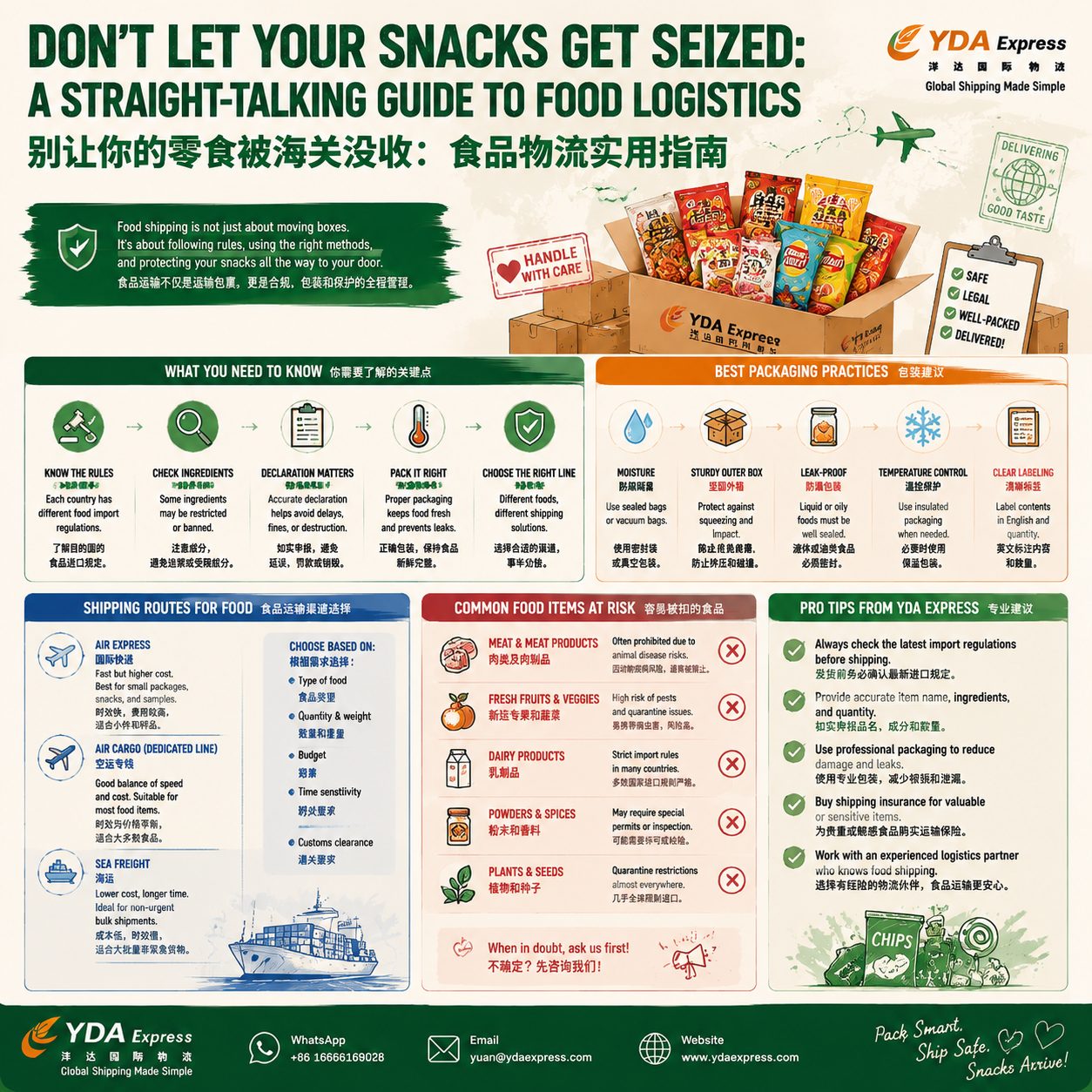
Guía para comprobar si un alimento comprado en China puede enviarse al extranjero. Explica qué productos requieren revisión, cómo verificar ingredientes y caducidad, utilizar un almacén en China, embalar líquidos y alimentos frágiles, preparar la declaración y responder ante una retención aduanera.
Comprar snacks, té, condimentos o fideos en China puede parecer tan sencillo como comprar ropa. El problema aparece cuando el vendedor solo entrega dentro de China o cuando el transportista pregunta por los ingredientes, el tipo de envase y el país de destino.
Los alimentos no se tratan como mercancía general. Un producto puede ser aceptado por una ruta de transporte, pero rechazado por la aduana o la autoridad sanitaria del país receptor. También puede ser legalmente importable y, aun así, no resultar adecuado para un viaje largo por su fecha de caducidad, temperatura o envase.
Por eso, la pregunta correcta no es solo “¿se puede enviar comida desde China?”, sino: “¿este producto concreto puede transportarse e importarse en mi destino, con este embalaje y dentro de su vida útil?”.
¿Qué alimentos suelen ser más fáciles de transportar?
Los alimentos industriales, secos, estables a temperatura ambiente y conservados en su envase original suelen ser más sencillos de evaluar que los productos frescos o refrigerados.
Entre ellos pueden encontrarse:
- galletas y caramelos;
- aperitivos envasados;
- té y café;
- fideos secos o instantáneos;
- condimentos secos;
- algunos alimentos deshidratados;
- determinadas salsas selladas;
- productos de panadería con larga conservación.
Esto no significa que todos estén permitidos en todos los países. Los ingredientes de origen animal, semillas, frutos secos, productos vegetales, alcohol, suplementos y aditivos pueden activar requisitos adicionales.
Un paquete de fideos, por ejemplo, puede contener polvo de carne, huevo, lácteos o extractos animales. Aunque el producto parezca principalmente vegetal, la autoridad del destino puede evaluarlo según todos sus ingredientes.
¿Qué alimentos requieren una revisión especial?
Consulta antes de comprar cuando el producto pertenezca a una de estas categorías:
- carne o productos que contengan carne;
- pescado, marisco o extractos de origen marino;
- leche, queso y otros lácteos;
- huevos o productos con alto contenido de huevo;
- frutas, verduras, semillas o plantas;
- miel y otros productos apícolas;
- suplementos, vitaminas o alimentos funcionales;
- productos caseros o sin etiqueta;
- alimentos refrigerados o congelados;
- bebidas alcohólicas;
- líquidos en recipientes frágiles;
- productos con una fecha de caducidad corta.
.
Los alimentos frescos, congelados o que requieren temperatura controlada pertenecen a una cadena logística distinta. No deben enviarse como un paquete ordinario con la expectativa de que unas bolsas de gel mantengan la temperatura durante todo el trayecto.
Si una ruta no ofrece condiciones térmicas verificables, no debe presentarse como una solución de cadena de frío.
Verifica la importación antes de pagar el producto
Las normas dependen del país, el ingrediente, la cantidad, el uso personal o comercial y la fecha del envío. Una experiencia anterior o la publicación de otro comprador no constituye una autorización.
Antes de realizar el pedido, confirma:
- país y código postal de destino;
- nombre comercial del alimento;
- lista completa de ingredientes;
- peso o volumen por unidad;
- cantidad total;
- fabricante y país de origen;
- fecha de producción y caducidad;
- tipo de envase;
- necesidad de refrigeración;
- uso personal, muestra o reventa.
Consulta la web de la aduana, la autoridad sanitaria o agrícola del país receptor. Si el producto requiere permiso, registro o certificado, debe obtenerse antes del envío, no cuando el paquete ya esté retenido.
La guía de declaración aduanera para compras procedentes de China explica cómo mantener coherentes el pedido, la factura, la lista de contenido y el valor declarado.
Conserva el envase y el etiquetado originales
Un alimento sin fabricante, ingredientes, lote o fecha de caducidad resulta difícil de identificar y puede ser rechazado aunque su contenido parezca inofensivo.
Siempre que sea posible, conserva:
- nombre del producto;
- envase sellado de fábrica;
- lista de ingredientes;
- información del fabricante;
- peso neto;
- número de lote;
- fecha de producción;
- fecha de consumo preferente o caducidad;
- instrucciones de conservación;
- etiquetas de alérgenos.
No conviene dividir alimentos en bolsas sin identificación para reducir volumen. Tampoco se deben mezclar productos distintos en un solo envase.
Si el país exige etiquetado en un idioma concreto, información nutricional u otros datos para la venta comercial, el importador debe confirmar el cumplimiento antes de comprar el lote.
Calcula si la vida útil cubre todo el proceso
No basta con comparar la caducidad con el plazo anunciado por el transportista. El producto también puede pasar tiempo:
- esperando la preparación del vendedor;
- viajando hasta el almacén en China;
- pendiente de otros pedidos;
- en inspección o reembalaje;
- esperando la salida internacional;
- sometido a revisión aduanera;
- en reparto local;
- almacenado antes del consumo o la venta.
Para evaluar la vida útil, utiliza un escenario razonable de retraso y no el plazo más rápido publicado.
Si el alimento caduca pronto, es sensible al calor o necesita condiciones especiales, puede no ser adecuado para consolidación o para una ruta económica de larga duración.
Cómo utilizar un almacén en China para compras de alimentos
Si el vendedor no realiza envíos internacionales, puede enviar el pedido a un almacén en China. Para que el paquete se identifique correctamente, introduce el nombre, teléfono, dirección y código de cliente proporcionados por el servicio de reenvío.
Registra también:
- plataforma y vendedor;
- número de pedido;
- seguimiento nacional;
- descripción de los alimentos;
- número de unidades;
- instrucciones de inspección;
- requisitos de embalaje.
YDA Express ofrece hasta 180 días de almacenamiento gratuito en China, lo que permite recibir compras de distintos vendedores y decidir cuándo enviarlas. Sin embargo, los alimentos no deberían almacenarse automáticamente durante todo ese periodo.
La fecha de caducidad, la temperatura, el estado del envase y el tiempo previsto de transporte deben determinar cuánto pueden esperar.
La guía de reenvío de paquetes desde China explica cómo registrar los pedidos y utilizar correctamente una dirección de almacén.
Qué comprobar cuando los alimentos llegan al almacén
Una inspección visual básica puede ayudar a detectar:
- envases aplastados o perforados;
- tapas abiertas o precintos dañados;
- fugas;
- fechas demasiado próximas;
- cantidades incorrectas;
- productos diferentes al pedido;
- ausencia de etiquetas;
- señales externas de humedad.
Esta comprobación no certifica la seguridad del alimento ni sustituye un análisis sanitario. El almacén tampoco puede confirmar mediante una fotografía si el contenido se ha conservado correctamente antes de llegar.
Si necesitas fotografías de ingredientes, lotes, fechas o precintos, solicítalas antes de aprobar la consolidación.
Cómo embalar alimentos para transporte internacional
El embalaje debe proteger tanto el producto como el resto del paquete.
Productos secos
Mantén el envase original y utiliza una protección exterior si puede romperse, abrirse o deformarse. Las galletas y otros alimentos frágiles necesitan separación frente a productos pesados.
Salsas, aceites y otros líquidos
Cada recipiente debe estar cerrado y protegido individualmente. Utiliza una bolsa estanca y material absorbente capaz de contener una posible fuga.
Los frascos de vidrio necesitan amortiguación y separación. Una etiqueta de “frágil” no sustituye un embalaje adecuado.
Chocolate y productos sensibles al calor
El aislamiento puede reducir cambios rápidos de temperatura, pero no garantiza una temperatura constante. Antes de enviarlos, evalúa la estación, el destino y la capacidad real de la ruta.
Productos con olores intensos
Deben sellarse por separado para evitar que el olor afecte otros artículos. No conviene consolidarlos con ropa, cosméticos o productos que absorban olores fácilmente.
La guía de embalaje a medida para envíos desde China explica cómo retirar volumen innecesario sin eliminar la protección esencial.
Consolidar alimentos no significa mezclarlo todo
Consolidar puede reducir cajas duplicadas, pero solo cuando los productos son compatibles.
No combines automáticamente:
- alimentos con líquidos que puedan derramarse;
- envases frágiles con mercancía pesada;
- productos aromáticos con textiles;
- alimentos con perfumes o productos químicos;
- mercancía permitida con productos restringidos;
- alimentos con distintas necesidades de temperatura;
- pedidos personales con lotes destinados a reventa sin revisar su tratamiento aduanero.
La consolidación debe organizarse según el riesgo, la vida útil, el embalaje y la ruta disponible. En ocasiones, separar un producto problemático permite enviar el resto del pedido sin exponer toda la caja.
Qué información incluir en la declaración
No declares el contenido como “regalo”, “snacks” o “comida” sin más detalles.
Una descripción útil puede incluir:
- tipo de alimento;
- presentación;
- ingredientes relevantes;
- cantidad;
- peso neto;
- marca;
- valor unitario y total;
- país de origen;
- finalidad personal o comercial.
Por ejemplo:
- diez paquetes de galletas de trigo envasadas;
- seis cajas de té verde sin ingredientes animales;
- ocho paquetes de fideos instantáneos con condimento;
- cuatro botellas selladas de salsa de soja.
El valor debe corresponder al pedido y al comprobante de pago. Los regalos promocionales también deben aparecer en la lista con una descripción y un valor razonable.
Cómo elegir la ruta de transporte
La ruta debe confirmarse después de conocer el producto y el destino.
Compara:
- aceptación de alimentos;
- restricciones por ingredientes;
- peso real y volumétrico;
- temperatura esperada;
- duración estimada como intervalo;
- seguimiento disponible;
- responsabilidad por pérdida o daño;
- gestión de aduanas;
- entrega final;
- coste de devolución.
Un servicio rápido no garantiza que la aduana libere el paquete con mayor rapidez. Del mismo modo, una ruta económica puede no ser adecuada para productos sensibles al calor o con una vida útil limitada.
Los alimentos comprados en Pinduoduo deben revisarse antes de enviarse, igual que cualquier otro producto. La lista de restricciones de envío de Pinduoduo ayuda a identificar alimentos, líquidos y otros artículos que necesitan una evaluación previa.
Qué hacer si la aduana retiene el paquete
Primero verifica si la notificación procede del transportista, la aduana o un agente autorizado. No envíes documentos personales ni pagues a través de enlaces cuya autenticidad no hayas comprobado.
Pueden solicitar:
- factura;
- comprobante de pago;
- lista de ingredientes;
- fotografías de la etiqueta;
- cantidad y uso;
- permiso sanitario;
- información del fabricante;
- certificado aplicable;
- identificación o número fiscal del destinatario.
Responde dentro del plazo y utiliza datos coherentes con la declaración original. Si no puedes presentar el documento exigido, pregunta por las opciones de devolución, abandono o tratamiento del producto antes de asumir nuevos costes.
La guía para paquetes retenidos en aduanas explica cómo verificar una notificación y preparar la documentación solicitada.
Diferencia entre un envío personal y una importación comercial
Una pequeña cantidad para consumo propio puede recibir un tratamiento distinto al de un lote destinado a una tienda o restaurante. Sin embargo, escribir “uso personal” no convierte automáticamente una cantidad comercial en un paquete personal.
La autoridad puede considerar:
- número de unidades;
- frecuencia de los envíos;
- valor;
- tipo de producto;
- presentación;
- identidad del remitente y destinatario;
- finalidad declarada.
Si planeas vender alimentos, confirma antes de comprar:
- registro del importador;
- requisitos sanitarios;
- etiquetado comercial;
- información nutricional;
- alérgenos;
- trazabilidad;
- certificados del fabricante;
- obligaciones fiscales;
- condiciones de almacenamiento local.
Un paquete de prueba puede servir para revisar el producto y la logística, pero no sustituye la autorización necesaria para importar comercialmente.
Lista de control antes de enviar alimentos desde China
Antes de pagar el transporte, comprueba:
- el producto está permitido en el destino;
- la lista completa de ingredientes está disponible;
- el envase permanece sellado e identificado;
- la fecha de caducidad cubre el viaje y posibles retrasos;
- no necesita una temperatura que la ruta no puede ofrecer;
- los líquidos están protegidos contra fugas;
- los envases frágiles están separados;
- los productos incompatibles no comparten caja;
- la cantidad coincide con la declaración;
- el valor está respaldado por el pedido;
- el destinatario puede colaborar con la aduana;
- los permisos necesarios ya están disponibles.
YDA Express puede ayudar con compra asistida, recepción en China, comprobación visual básica, fotografías solicitadas, consolidación, reembalaje y búsqueda de rutas disponibles.
La aceptación final depende del producto, el destino, el transportista y las autoridades competentes. Por eso, la evaluación debe realizarse antes de comprar y repetirse antes del envío.
Los nuevos clientes no pagan la comisión del servicio de compra en su primer pedido. Para solicitar esta ventaja, deben contactar con atención al cliente antes de realizarlo. Los clientes recurrentes pueden consultar descuentos exclusivos o cupones disponibles.
📲 Descarga la aplicación de YDA Express
Utiliza la aplicación de YDA Express para comprar productos en China, realizar pedidos, recibir fotografías de inspección, gestionar paquetes, consolidar envíos y organizar entregas internacionales desde un solo lugar.
🎁 Los nuevos clientes no pagan la comisión del servicio de compra en su primer pedido.
🌐 Visita el sitio web de YDA Express y consulta todos nuestros servicios