Descubre qué es la logística de cuarta parte, cómo funciona y por qué es la opción más eficiente para particulares y pequeños negocios que compran en China. Te contamos todo con ejemplos reales, consejos prácticos y la manera de dar el siguiente paso.
Logística 4PL: cómo simplificar tus envíos desde China sin ser un experto en importaciones
Imagina que tienes una idea para vender fundas de móvil personalizadas. Encuentras un proveedor perfecto en Guangzhou, pero no tienes ni idea de cómo traer 200 unidades a tu casa en Sevilla sin que acaben en la aduana, con tarifas sorpresa o, peor aún, perdidas. Aquí es donde la logística de cuarta parte, o 4PL, entra en juego. No es magia, pero casi: un único interlocutor que gestiona todo el proceso, desde que el producto sale de fábrica hasta que llega a tu puerta. Y lo mejor es que no necesitas ser un experto en comercio internacional.
Si alguna vez has comprado en AliExpress, sabes que recibir paquetes pequeños es fácil. Pero cuando el volumen crece, o necesitas consolidar pedidos de varios proveedores (porque compras en 1688, Taobao o Pinduoduo), la cosa se complica. Ahí la logística tradicional se queda corta. Por eso muchos emprendedores y particulares están girando hacia el modelo 4PL. Y en este artículo te explicaré exactamente qué es, cómo funciona y por qué puede ahorrarte dolores de cabeza y dinero.
¿Qué es exactamente la logística 4PL?
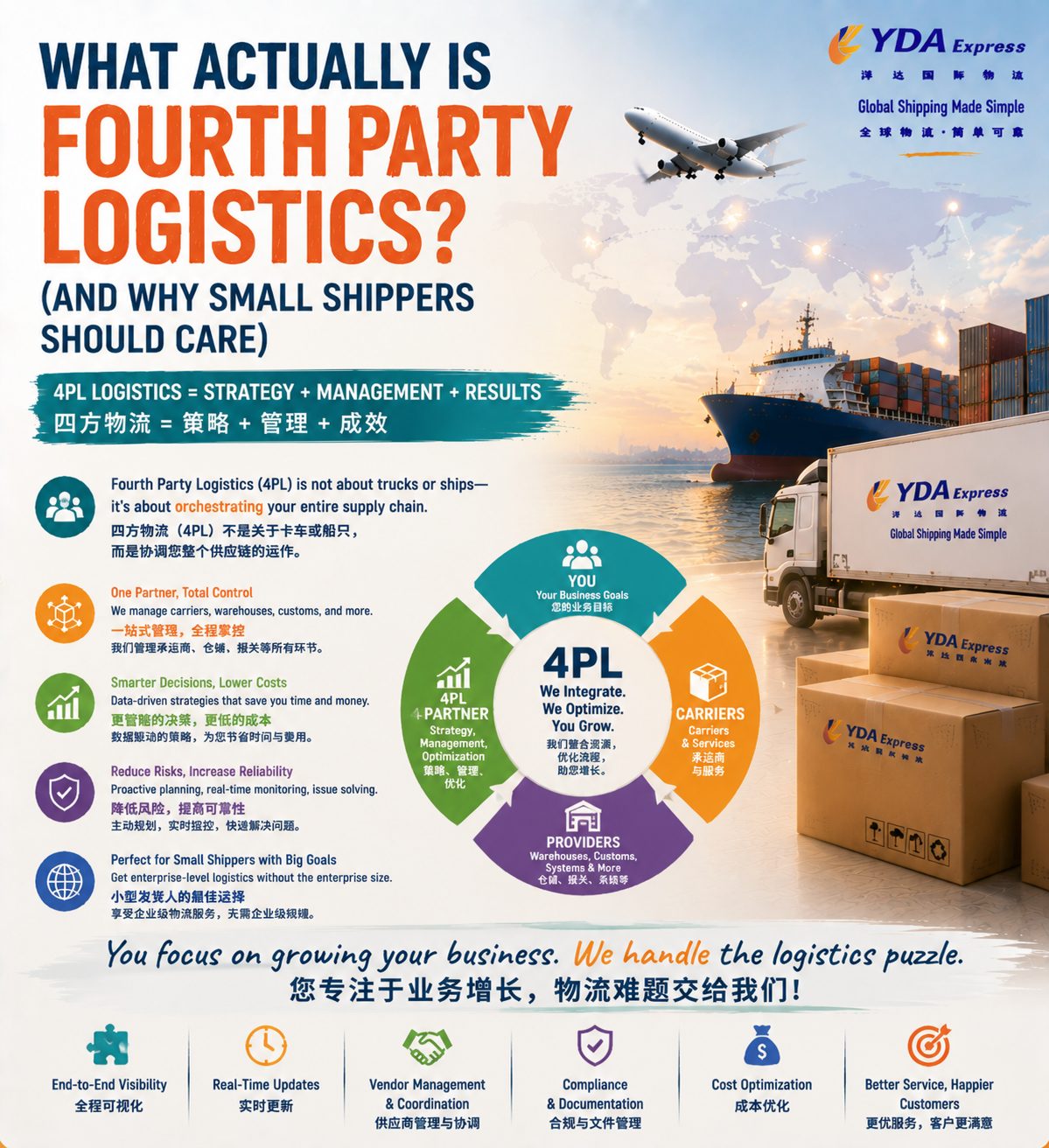
La logística de cuarta parte no es un transportista más. Es un integrador que coordina todos los recursos, tecnologías y proveedores de la cadena de suministro. A diferencia de un 3PL (third-party logistics), que normalmente ofrece servicios específicos como almacenaje o transporte, un 4PL actúa como un director de orquesta. Piensa en ello como un gestor integral que diseña y ejecuta la estrategia logística completa para tu negocio o tus envíos personales.
Aquí está la clave: un 4PL no necesariamente tiene sus propios camiones o aviones. En lugar de eso, utiliza su red de contactos y su conocimiento del mercado para contratar los mejores servicios para cada necesidad. Por ejemplo, puede combinar el almacenaje en un hub en China con envío marítimo a Valencia, gestionar la aduana a través de un agente especializado y luego usar una empresa de paquetería local como SEUR o MRW para la entrega final. Todo bajo un mismo paraguas y con una única factura.
Para que te hagas una idea, el 4PL es como un arquitecto que diseña la casa, mientras que los 3PL son los constructores que levantan las paredes. El arquitecto entiende el proyecto completo y se asegura de que todas las piezas encajen.
Un poco de historia: de 1PL a 4PL
Para entender mejor el modelo, conviene dar un paso atrás. Originalmente existía el 1PL: un fabricante que se encargaba él mismo del transporte y almacenaje. Luego vino el 2PL, que es básicamente un transportista externo contratado para tareas concretas (como una naviera o una empresa de camiones). Después, el 3PL agrupó varios servicios bajo un mismo techo: almacén, picking, transporte, etc. Ahora, el 4PL da la vuelta completa: ya no ejecuta, sino que planifica y controla todos esos elementos de forma estratégica, aprovechando la tecnología y la información para optimizar costes y tiempos.
En la práctica, el 4PL se convierte en tu departamento de logística externalizado. Tú le dices qué necesitas, cuándo y con qué presupuesto, y él se encarga del resto.
Diferencias con el modelo 3PL que probablemente ya conoces
Mucha gente confunde 3PL y 4PL. Honestamente, es normal porque ambos términos se usan a menudo de manera intercambiable. Pero hay diferencias importantes:
- Alcance: Un 3PL ofrece servicios logísticos concretos: transporte, almacén, preparación de pedidos. Un 4PL va más allá e incluye la planificación estratégica, la optimización de la cadena de suministro y la gestión de múltiples proveedores.
- Control: Con un 3PL tú sueles decidir qué transportista usar, cómo empaquetar, etc. Con un 4PL delegas esas decisiones en un experto que, en teoría, sabe mejor que tú lo que conviene.
- Integración tecnológica: Un buen 4PL te da visibilidad total del proceso a través de plataformas de seguimiento que integran datos de distintos actores. Con un 3PL puede que tengas que consultar varios sistemas.
- Relación: El 3PL es un proveedor, el 4PL es un socio estratégico. Esto suena a frase hecha, pero en la práctica significa que el 4PL se involucra en tu negocio para optimizar costes y plazos de forma continua.
Para los pequeños importadores, la diferencia más tangible es la simplicidad. Con un 3PL tienes que coordinar tú mismo: buscar un transitario, negociar tarifas, gestionar el despacho de aduanas, etc. Con un 4PL todo eso desaparece. Das la orden y esperas el paquete.
Ventajas reales de usar un 4PL para tus envíos desde China
A ver, no todo el mundo necesita un 4PL. Si solo compras cuatro camisetas al año, probablemente te baste con el envío estándar de AliExpress. Pero si estás en alguno de estos casos, las ventajas son enormes:
Consolidación de pedidos sin estrés
Imagina que tienes tres proveedores en Yiwu, dos en Shenzhen y uno en Hangzhou. Quieres juntar todo en un solo envío para ahorrar en flete. Un 4PL te ofrece un almacén en China donde recibir todas esas mercancías, las inspecciona, las consolida en una caja o palé y las envía por la vía más eficiente. Tú solo recibes una notificación.
Gestión aduanera sin sorpresas
Las aduanas españolas pueden ser impredecibles. Un error en la documentación o en la clasificación arancelaria puede suponer semanas de retención y costes extra. Un 4PL con experiencia se encarga de todo el papeleo: DUA, valor en aduana, IVA, aranceles. Sabe qué códigos TARIC usar para cada producto y cómo declarar correctamente para evitar inspecciones innecesarias. Si alguna vez has tenido un paquete parado en la Aduana de Barajas sin explicación, entenderás el valor de esto.
Optimización de costes
Un 4PL no solo te busca el transportista más barato, sino que analiza toda la cadena para reducir gastos ocultos. Por ejemplo, puede recomendar cambiar el embalaje para reducir volumen y bajar el peso tasable, o esperar unos días para consolidar un contenedor completo y compartir costes con otros clientes. Son ajustes que a una persona sin experiencia se le escapan.
Ahorro de tiempo y quebraderos de cabeza
El tiempo que inviertes en aprender trámites aduaneros, cotizar seguros, comparar tarifas de flete marítimo y aéreo, coordinar con almacenes... Ese tiempo lo podrías dedicar a vender más. Un 4PL te libera de la logística para que te centres en tu negocio.
Escalabilidad
Si tu negocio crece, un 4PL puede adaptar rápidamente los recursos: pasar de envío aéreo a marítimo, añadir almacenaje en destino, gestionar devoluciones, etc. Todo sin que tú tengas que renegociar contratos.
Tecnología que te da visibilidad total
Un 4PL moderno te ofrece una plataforma online donde ves en tiempo real el estado de tus envíos, los documentos aduaneros, las facturas y hasta fotos del embalaje. Esa transparencia te da tranquilidad y te permite informar correctamente a tus clientes.
Cuándo no necesitas un 4PL (y cuándo sí)
Para envíos muy pequeños o compras esporádicas, el coste de un servicio 4PL puede no justificarse. Si solo importas ocasionalmente y el proveedor te ofrece un envío puerta a puerta con DHL o UPS incluido en el precio, puede bastar. Pero en cuanto tienes volumen (a partir de 100-200 kg al mes), múltiples proveedores, o necesitas consolidar, el 4PL se amortiza rápido.
La pregunta clave es: ¿el tiempo que dedicas a la logística te está costando más de lo que pagarías por delegarlo? Si la respuesta es sí, busca un 4PL.
Casos concretos donde el 4PL marca la diferencia
Para que no se quede en teoría, te pongo dos ejemplos reales (basados en lo que vemos a diario en YdaExpress).
Caso 1: La tienda online de decoración étnica
María vende cojines y tapices que compra a artesanos en Yunnan a través de 1688. Al principio hacía envíos pequeños por correo postal, pero cuando pasó de 10 a 50 pedidos al mes, se volvió caótico. Los paquetes se perdían, los clientes se quejaban de los plazos y ella perdía dinero con las devoluciones. Decidió probar un servicio 4PL que le ofrecía: recepción en almacén de Guangzhou, consolidación semanal, envío marítimo LCL (contenedor compartido) hasta Algeciras, despacho de aduanas incluido y distribución final por mensajería. Resultado: redujo el coste unitario de envío en un 40%, los plazos se volvieron predecibles (21-25 días puerta a puerta) y ella pudo concentrarse en el marketing de su web.
Caso 2: El particular que reforma su casa con materiales de China
Carlos quería suelos laminados y grifería de diseño para su reforma. Compró 200 metros cuadrados de tarima y 15 grifos a dos proveedores distintos. Necesitaba un envío puerta a puerta a León. Un transitario tradicional le pidió que gestionara él la recogida en fábrica, la documentación de exportación, etc. Un 4PL le ofreció un servicio integral: gestionó la recogida, consolidó todo en un almacén en Shenzhen, lo envió por tren de mercancías (ferrocarril China-Europa) hasta Madrid y luego en camión hasta León. Tardó 30 días, pero le costó la mitad que el transporte aéreo y sin complicaciones.
Cómo elegir un buen proveedor 4PL
No todos los 4PL son iguales. Algunos son grandes conglomerados multinacionales que trabajan solo con grandes corporaciones. Otros, como YdaExpress, están especializados en importaciones desde China y atienden tanto a pequeñas empresas como a particulares. Al elegir, fíjate en:
- Experiencia con la ruta China-España: No es lo mismo mover mercancía dentro de Europa que desde Asia. Asegúrate de que conocen los puertos chinos (Shenzhen, Shanghai, Ningbo) y los españoles (Valencia, Barcelona, Algeciras).
- Transparencia en precios: Un buen 4PL te da un desglose claro de todos los costes: flete, combustible, handling, aduanas, IVA, etc. Desconfía de tarifas planas demasiado bonitas.
- Plataforma de seguimiento: Poder ver dónde está tu mercancía en tiempo real es fundamental. Exige una herramienta que integre el tracking de los distintos operadores.
- Servicio de atención al cliente en español: Las incidencias pasan. Si cuando llamas te atiende alguien que entiende tu problema y tu idioma, se nota.
- Capacidad de compra y consolidación: Si compras en múltiples plataformas chinas, valora que el 4PL también haga de agente de compras y te ayude a pagar a proveedores, algo que no todos ofrecen.
El papel de la tecnología en la logística 4PL
Un 4PL moderno se apoya en sistemas de gestión de transporte (TMS), plataformas de visibilidad de la cadena de suministro e integraciones con los principales operadores. Esto se traduce en que, como cliente, tú solo necesitas un usuario y contraseña para:
- Hacer seguimiento de todos tus envíos en un solo panel.
- Descargar facturas y documentos aduaneros.
- Configurar alertas de estado.
- Analizar históricos de costes y tiempos para mejorar la planificación.
Esta capa tecnológica es lo que permite la orquestación: sin ella, el 4PL sería un mero intermediario más.
Costes típicos y modos de envío desde China
Aquí va un pequeño desglose orientativo para que te sitsúes. Los costes varían según peso, volumen y urgencia:
- Envío aéreo: ideal para mercancías de menos de 200 kg o urgentes. Puede costar entre 3 y 6 €/kg, con tiempos de 5-7 días puerta a puerta (incluyendo aduana). Se usan aerolíneas comerciales y servicios express como DHL o FedEx.
- Envío marítimo LCL: para cargas desde 1 m³ hasta llenar medio contenedor. Los precios rondan los 150-300 €/m³, con tránsitos de 30-40 días. El ahorro es considerable en volumen.
- Envío marítimo FCL: contenedor completo (20 o 40 pies). Solo rentable a partir de 15-20 m³. Costes desde 1.500 € por un contenedor de 20 pies, sujeto a fluctuaciones del mercado.
- Ferrocarril China-Europa: una opción intermedia en coste y tiempo (18-25 días). Útil para Europa central y España, con llegada a Madrid y distribución posterior.
Un buen 4PL te asesora sobre la mejor combinación según tu carga. Por ejemplo, si tienes 500 kg de ropa, probablemente te convenga un palé aéreo, no marítimo, por la relación valor-peso y para evitar arrugas por humedad.
Paso a paso: cómo trabajar con un 4PL desde cero
Si nunca has usado uno, el proceso suele ser así:
- Consulta inicial: Le cuentas al 4PL qué productos traes, cantidades, origen en China, destino final.
- Propuesta a medida: Recibes un presupuesto detallado con opciones de transporte, tiempos y servicios incluidos (aduana, seguro, entrega).
- Recogida y consolidación: El 4PL recibe tus compras en su almacén chino, las verifica, las empaqueta adecuadamente.
- Transporte principal: Se embarca por la vía elegida, con seguimiento online.
- Despacho de aduanas en destino: El 4PL gestiona el DUA, paga el IVA y los aranceles en tu nombre (si es DDP), o te asesora para que lo hagas tú (si es DDU).
- Entrega final: Recibes la mercancía en la dirección acordada, con opción de montaje o descarga según el caso.
Todo esto lo coordina una sola persona o equipo. Ni tú ni tu proveedor en China tenéis que lidiar con nadie más.
En YdaExpress llevamos años ayudando a clientes de toda España a simplificar sus importaciones desde China. No solo ofrecemos transporte: te ayudamos a comprar en plataformas como Taobao, 1688, JD.com y Pinduoduo, recibimos la mercancía en nuestro almacén, la revisamos, la empaquetamos de forma segura y la enviamos por la vía más óptima. Todo con un sistema de seguimiento detallado y un equipo que habla tu idioma.
Cómo dar el primer paso
Si estás pensando en importar desde China, ya sea para tu negocio o para un proyecto personal, lo más recomendable es empezar con una consulta sin compromiso. Cuéntanos qué quieres traer, qué volúmenes manejas y qué plazo tienes. A partir de ahí recibirás una propuesta adaptada.
Puedes visitar nuestra web www.ydaexpress.com o contactarnos directamente por WhatsApp al +8616666169028. No importa si eres un particular con un encargo único o una tienda online en crecimiento: la logística 4PL bien aplicada marca la diferencia entre un dolor de cabeza constante y una operación fluida y rentable.
Haz que tus envíos desde China dejen de ser un problema. Confía en profesionales que entienden el camino de principio a fin.
🛍️ Compra en China en un solo lugar No necesitas comprar por separado en Taobao, 1688, JD.com, Tmall o Pinduoduo. Con YDA Express puedes buscar productos, realizar pedidos, solicitar inspecciones con fotos, disfrutar de hasta 180 días de almacenamiento gratuito, consolidar paquetes y enviarlos a cualquier parte del mundo.
👉 Empieza a comprar 📦 Reenvío de paquetes y envíos internacionales ¿Ya realizaste tu compra? Envía tus productos a nuestro almacén en China. Ofrecemos recepción de paquetes, inspección con fotos, hasta 180 días de almacenamiento gratuito, consolidación, envíos internacionales y seguimiento en tiempo real.
👉 Explora todos nuestros servicios 📲 Descarga la app de YDA Express Una sola app para comprar en China, gestionar pedidos y paquetes, consolidar envíos, organizar el transporte internacional y seguir tus compras.
🌍 Más guías útiles Descubre consejos prácticos sobre compras en China, reenvío de paquetes, costes de envío y trámites aduaneros.