
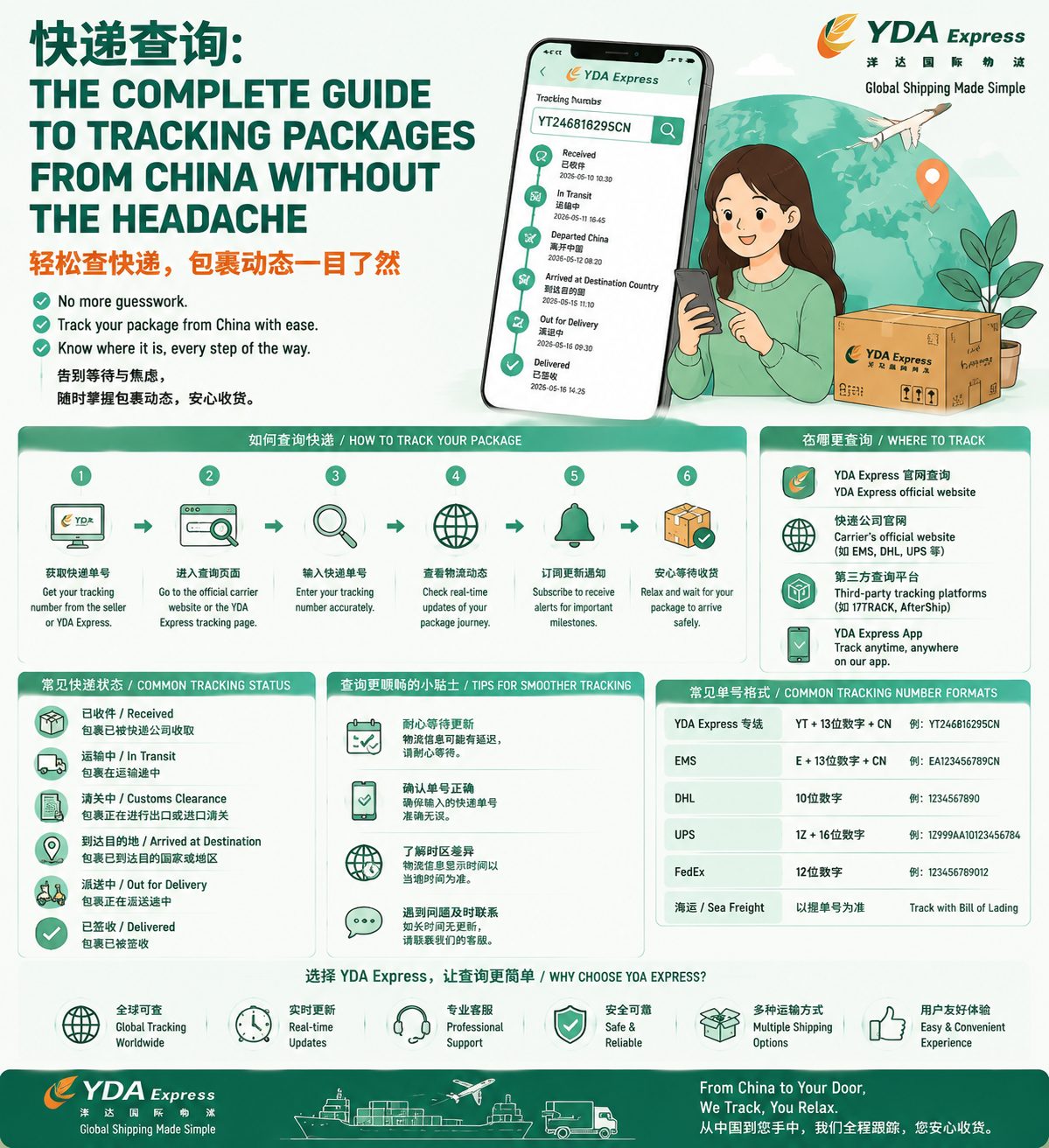
Aprende a rastrear tus envíos desde China con esta guía práctica sobre 快递查询. Desde descifrar números de seguimiento hasta interpretar estados de transporte chinos, te contamos cómo evitar dolores de cabeza y recibir tus paquetes sin sobresaltos.
Esperar un paquete de China puede ser una mezcla de ilusión y ansiedad. Ilusión porque dentro de esa caja viaja ese artículo que tanto buscabas o esos productos para tu pequeño negocio. Ansiedad porque, de repente, el seguimiento deja de actualizarse y un montón de caracteres chinos aparecen en la pantalla. Y tú te preguntas: ¿dónde está mi paquete? Aquí es donde entra en juego el concepto de 快递查询.
快递查询 (pronunciado kuài dì chá xún) es el término chino para “consulta de mensajería” o “rastreo de paquetes”. Básicamente, es lo que haces cuando introduces un número de seguimiento en una web o app para saber dónde está tu envío. Si compras con frecuencia en plataformas como Taobao, 1688, JD.com o Pinduoduo, o si trabajas con un agente de compras en China, te vas a topar con esta expresión una y otra vez.
En esta guía te explicamos todo lo que necesitas saber para rastrear tus paquetes desde China, interpretar los mensajes más comunes y actuar cuando algo no va como esperabas. Y ojo, que no hace falta ser un experto en logística. Con un poco de maña, le pierdes el miedo a esos pantallazos llenos de caracteres y flechas.
¿Por qué usar 快递查询 es distinto cuando el paquete sale de China?
Cuando haces una compra nacional en España o Latinoamérica, el rastreo suele ser directo: metes el número en la web de Correos, SEUR, MRW o Estafeta y ves el camino. Con los envíos internacionales, y sobre todo con los que vienen de China, hay más actores en juego.
Un paquete típico desde China sigue esta ruta: la tienda o fábrica lo entrega a una mensajería local china (SF Express, YTO, ZTO, STO, etc.), que lo lleva a un centro de clasificación. De ahí pasa a la aduana de salida, vuela o navega hasta el país de destino, pasa la aduana de entrada y finalmente lo recoge un operador local para la entrega final.
Cada tramo puede tener su propio sistema de seguimiento. Por eso, el número que te da el vendedor a veces solo funciona en webs chinas, y cuando el paquete llega a tu país necesitas otro número o el mismo, pero consultado en la web del operador local.
Aquí tienes un ejemplo real: imagina que pides unas zapatillas a un proveedor de Putian. Él te manda una foto con un número de seguimiento que empieza por YT (de YTO Express). Durante los primeros días solo verás movimiento dentro de China. Luego, silencio. Hasta que una semana después, ese mismo número empieza a dar información en la web de Correos España, porque YTO ha transferido el paquete a un socio internacional. A veces, ni siquiera es automático: el vendedor te tiene que dar un segundo número de seguimiento para la fase internacional.
Los números de seguimiento chinos: cómo distinguirlos y dónde usarlos
Las empresas de mensajería china tienen formatos de número muy característicos. Conocerlos te ayuda a saber dónde buscar:
- SF Express: suelen ser 12 dígitos, a veces con letras al final.
- YTO, STO, ZTO: normalmente 10-14 dígitos, o comienzan con letras como YT, STO, etc.
- EMS (China Post): empiezan por letra y terminan en CN (ej: EA123456789CN).
- Yanwen, 4PX, otros transitarios: suelen tener códigos alfanuméricos más largos y solo son rastreables en sus propias plataformas o en webs globales como 17TRACK o AfterShip.
Para hacer una 快递查询 efectiva, el primer paso es meter el número en la web de la empresa que emitió la etiqueta. Si no sabes cuál es, herramientas como 17TRACK, Track24 o incluso la propia página de búsqueda de Google a veces identifican al transportista automáticamente.
Desde YdaExpress, donde gestionamos a diario cientos de envíos desde China, recomendamos a nuestros clientes que guarden siempre el número original chino, incluso cuando reciban un número de seguimiento local. Muchas veces, el seguimiento más detallado está en los sistemas chinos durante los primeros días, y eso te da pistas sobre posibles retrasos en aduana o en almacenes de tránsito.
Estados de seguimiento más comunes y qué significan de verdad
Cuando haces una 快递查询 en una web china, lo normal es que te aparezcan mensajes en chino o en un inglés un poco roto. Algunos de los que más se repiten:
- 离开【某某】中心 (ha salido del centro X): el paquete ha abandonado una instalación de clasificación.
- 到达【某某】中心 (ha llegado al centro X): está en una nueva parada.
- 海关留存待验 (retenido en aduana para inspección): toca esperar o preparar documentación.
- 进口海关放行 (despachado por aduana de importación): buenas noticias, ya ha pasado.
- 派送中 (en reparto): el cartero lo tiene en su ruta.
A veces verás estados como “recogido por el transportista” seguido de un largo silencio. No te alarmes: en muchos casos, el paquete ya está en un contenedor rumbo a tu país y no se escanea hasta que llega a la aduana de destino. Es lo que coloquialmente llamamos “el agujero negro del seguimiento”.
Si tu número no arroja resultados durante más de 7-10 días, prueba a preguntar al vendedor o a tu agente de compras. Ellos pueden hacer una consulta interna con la mensajería. A veces, por un error tipográfico al introducir el número, no ves nada. Revisa bien.
Dónde y cómo hacer 快递查询 sin volverte loco
Existen múltiples herramientas, pero aquí van las que la experiencia nos dice que mejor funcionan para hispanohablantes:
Webs y apps especializadas
- 17TRACK: un clásico. Soporta cientos de transportistas chinos e internacionales. Tiene app móvil y versión web en español. Ideal porque centraliza todas tus búsquedas.
- TrackChecker: aplicación para Android e iOS que consulta el estado en segundo plano y te avisa cuando hay cambios. Muy útil para no tener que entrar a cada rato.
- Webs oficiales de transportistas: si sabes que tu paquete viaja con SF Express, usa su web oficial (sf-express.com tiene versión en inglés). Para EMS, la web de China Post. Aunque esté en chino, con el traductor del navegador te apañas.
Truco para no perderte entre tantos números
Crea una hoja de cálculo o una nota en el móvil donde apuntes:
- Proveedor o tienda.
- Número de seguimiento original.
- Transportista chino.
- Número de seguimiento local (cuando aparezca).
- Fecha de compra.
Así, cuando quieras hacer una 快递查询 rápida, no tienes que bucear entre correos. Y si algo sale mal, tienes los datos a mano para reclamar.
El papel de la aduana: el cuello de botella más temido
Lo que más preocupa al hacer 快递查询 es ver que el paquete lleva días en aduana. En España, los envíos de fuera de la UE pasan por la aduana del aeropuerto de entrada (Barajas, El Prat) o por centros de tratamiento postal (como el del CTT en Madrid).
Cuando el seguimiento muestra “Recibido en oficina de cambio internacional” o “En proceso de despacho aduanero”, toca armarse de paciencia. La mayoría de las veces, si el valor declarado es bajo (menos de 150€) y la documentación es correcta, el despacho es automático y en 2-3 días se libera. Pero si hay que pagar IVA o aranceles, o si el paquete necesita inspección, se puede alargar una o dos semanas.
Aquí un apunte práctico: si usas un servicio de paquetería exprés como DHL o FedEx, el propio transportista te contactará para gestionar el pago de impuestos. Pero si usas Correos, Estate atento a la app o a la página de ADTPostales (la aplicación de aduanas de Correos España). Te llegará un aviso para que presentes documentación o pagues el IVA. Si no lo haces en el plazo (generalmente 20 días), el paquete se devuelve.
En YdaExpress, cuando consolidamos mercancía para nuestros clientes, siempre revisamos la documentación aduanera para minimizar sorpresas. A veces, un simple error en la descripción del contenido o un valor mal declarado puede retrasar todo semanas.
Compras en plataformas chinas: ¿qué seguimiento te dan las propias apps?
Si compras directamente en AliExpress, el seguimiento integrado de la plataforma suele ser suficiente. Pero en Taobao, 1688 o JD.com no hay un sistema unificado hacia el exterior, y los vendedores muchas veces solo te pasan el número chino.
Para usar 快递查询 en estos casos:
- Entra en la web de Cainiao (el brazo logístico de Alibaba) si compraste en AliExpress o Tmall.
- En Taobao y 1688, utiliza la propia app de la tienda (está en chino, pero con capturas de pantalla y el traductor de Google se puede).
- Si no te aclaras, copia el número y pégalo en 17TRACK.
Lo importante es no dejar pasar demasiado tiempo: los plazos de protección al comprador en plataformas como AliExpress son limitados (normalmente 60 días). Si el seguimiento no se actualiza y se acerca la fecha límite, abre una disputa cuanto antes.
Qué hacer cuando la 快递查询 dice que el paquete está “extraviado” o “devuelto”
Los temidos mensajes: “paquete extraviado” o “devuelto al remitente”. Ocurren, aunque menos de lo que parece. Antes de tirar la toalla:
- Confirma con el transportista local si realmente se ha perdido. A veces es un error de escaneo.
- Si la devolución es por falta de documentación aduanera, puede que aún estés a tiempo de aportarla.
- Contacta con el vendedor o tu agente. Si el paquete se devuelve a China, ellos pueden reenviarlo.
En nuestra experiencia gestionando envíos internacionales, la mayoría de los problemas de seguimiento se deben a direcciones incompletas, teléfonos de contacto incorrectos o falta de un destinatario claro. Por eso insistimos tanto en que revises bien tus datos de envío al hacer compras en China.
Consejos finales para que tu próxima 快递查询 sea un paseo
- Pide siempre el número de seguimiento original chino y el internacional si existe.
- Usa herramientas como 17TRACK o la app de tu transportista local.
- Ten paciencia con los silencios de 5-10 días: seguramente el paquete está cruzando el océano.
- Si ves “aduana”, no entres en pánico. La mayoría de los paquetes pasan sin intervención manual.
- Si trabajas con un agente de compras o un transitario como YdaExpress, ellos se ocupan de las incidencias y de mantenerte informado. Tu única tarea es relajarte y esperar la notificación de llegada.
Hacer 快递查询 no tiene por qué ser un quebradero de cabeza. Conocer las etapas del viaje, los códigos de los transportistas chinos y las herramientas adecuadas transforma la ansiedad en simple curiosidad. Y cuando el seguimiento por fin muestra “entregado”, la sonrisa lo vale.
Si necesitas ayuda con tus envíos desde China, en YdaExpress estamos a tu lado. Gestionamos todo el proceso: recogida en proveedores, consolidación, almacenaje y envío internacional con seguimiento transparente. Escríbenos por WhatsApp al +86 16666169028, envíanos un correo a yuan@ydaexpress.com o visita nuestra web https://www.ydaexpress.com. Estaremos encantados de hacer que tus paquetes lleguen a casa, sin misterios ni caracteres indescifrables.
🛍️ Compra en China en un solo lugar No necesitas comprar por separado en Taobao, 1688, JD.com, Tmall o Pinduoduo. Con YDA Express puedes buscar productos, realizar pedidos, solicitar inspecciones con fotos, disfrutar de hasta 180 días de almacenamiento gratuito, consolidar paquetes y enviarlos a cualquier parte del mundo.
👉 Empieza a comprar 📦 Reenvío de paquetes y envíos internacionales ¿Ya realizaste tu compra? Envía tus productos a nuestro almacén en China. Ofrecemos recepción de paquetes, inspección con fotos, hasta 180 días de almacenamiento gratuito, consolidación, envíos internacionales y seguimiento en tiempo real.
👉 Explora todos nuestros servicios 📲 Descarga la app de YDA Express Una sola app para comprar en China, gestionar pedidos y paquetes, consolidar envíos, organizar el transporte internacional y seguir tus compras.
🌍 Más guías útiles Descubre consejos prácticos sobre compras en China, reenvío de paquetes, costes de envío y trámites aduaneros.