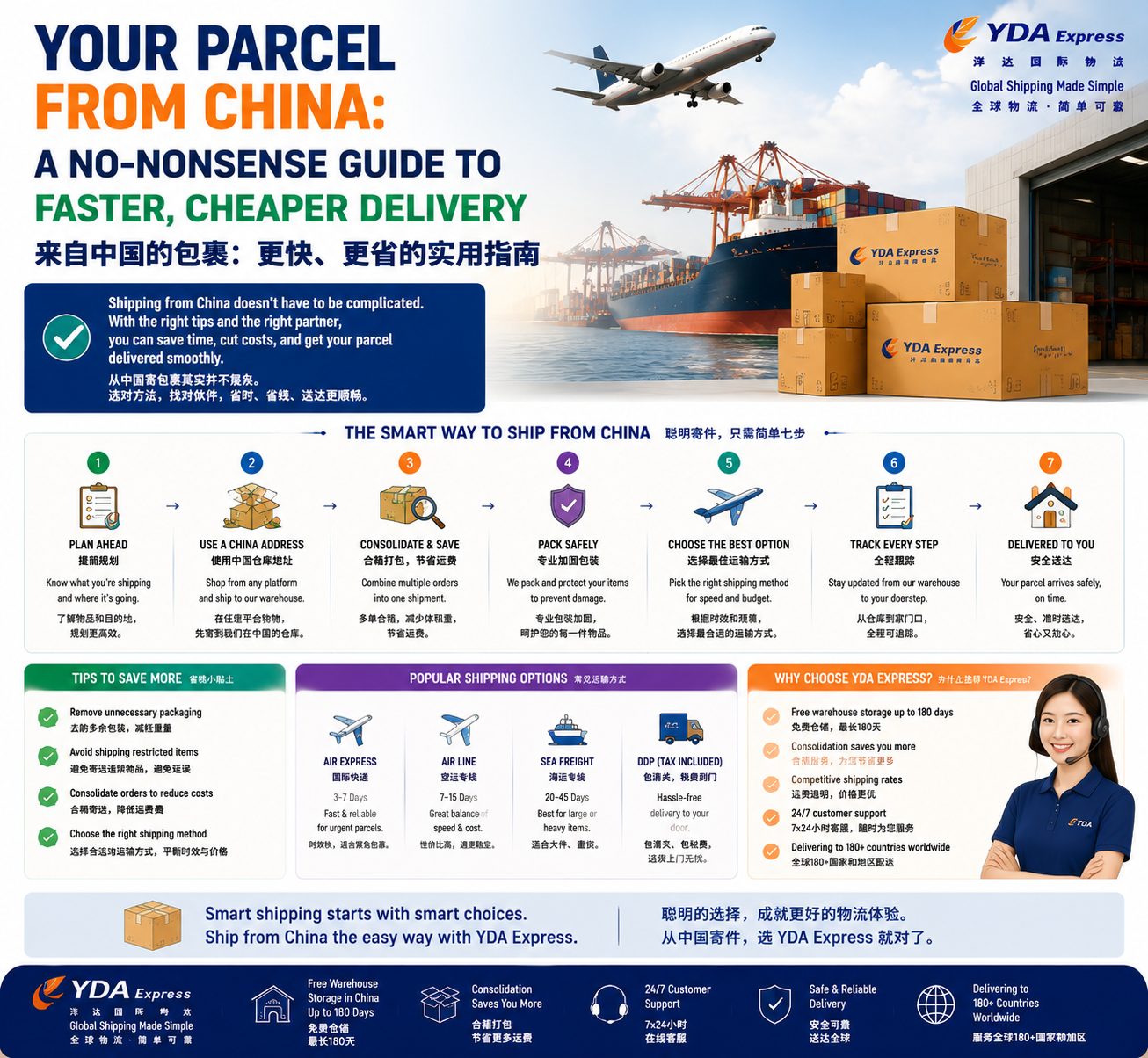
Descubre cómo preparar, consolidar y enviar paquetes desde China sin complicaciones ni costes ocultos. Una guía práctica para compradores y pequeños negocios en España.
Envías dinero, esperas semanas y un día suena el timbre: ha llegado ese paquete desde China. Pero entre medias pueden pasar muchas cosas. Embalajes rotos, tasas de aduanas inesperadas, o simplemente el silencio de un número de seguimiento que no se actualiza.
Si compras en AliExpress, probablemente ya conoces los envíos directos. Pero cuando te aventuras en Taobao, 1688 o JD.com, o si necesitas comprar varias cosas de tiendas distintas y que te lleguen juntas, la historia cambia. Ahí es donde entra en juego saber manejar bien los paquetes internacionales — y, a menudo, contar con un agente de envíos que te eche una mano.
En esta guía voy a explicarte, desde mi experiencia gestionando miles de paquetes, cómo funciona el envío desde China, qué puedes hacer para ahorrar y evitar disgustos, y por qué a veces merece la pena dejar el proceso en manos profesionales.
¿Qué es exactamente un agente de paquetes y cuándo lo necesitas?
Un agente de paquetes — o forwarder — es básicamente un intermediario que recibe tus compras en su almacén en China y luego te las reenvía a tu dirección en España. Suena sencillo, pero hace una diferencia enorme.
Pongamos un ejemplo real: quieres comprar fundas para móvil en una fábrica de Shenzhen, fundas de tablet en otra de Yiwu y cargadores en una tienda de Guangzhou. Si cada vendedor te enviara el paquete por separado, pagarías tres envíos internacionales, tres gestiones de aduanas y probablemente tres veces el IVA de importación. Con un agente, las tres compras llegan al mismo almacén, se consolidan en una sola caja y tú solo pagas un envío. El ahorro puede ser de hasta un 60%.
Además, no todas las tiendas chinas ofrecen envío internacional. Muchas de 1688 solo venden dentro de China, asumiendo que el comprador tiene su propio medio de exportación. Ahí el agente es imprescindible; te da una dirección local china para que los vendedores entreguen sin problema.
Preparando tu paquete para el viaje internacional
No basta con meter todo en una caja y enviar. Aquí hay detalles que marcan la diferencia entre que el paquete llegue impecable o destrozado, o incluso que sea devuelto.
El peso no lo es todo Los transportistas internacionales cobran por el mayor de estos dos valores: el peso real o el peso volumétrico. El volumen lo calculan multiplicando largo × ancho × alto (en cm) y dividiendo entre 5000. El resultado son kilos “volumétricos”. Si tu paquete es grande pero ligero — ropa, juguetes inflables —, pagarás más de lo que marca la báscula. Consejo: pide al agente que compacte al máximo, retire embalajes innecesarios y use cajas ajustadas. A veces cambiar una caja grande por dos más pequeñas puede reducir el costo de envío significativamente.
Protección sin excesos He visto paquetes que vienen envueltos en capas y capas de plástico de burbujas, luego otra caja exterior, y aún así el contenido llega roto. La clave está en proteger los puntos de impacto y evitar que los objetos bailen dentro. Si envías algo frágil, el agente debe fijar bien cada pieza y rellenar huecos. Pero no pidas una caja enorme solo para meter espuma: eso subirá el peso volumétrico sin necesidad. La regla de oro: que nada se mueva dentro al sacudir la caja.
Lo que no puedes enviar Cada país tiene sus restricciones, pero en general olvídate de baterías sueltas, líquidos inflamables, imitaciones de marcas famosas, alimentos perecederos o productos que requieran licencias especiales (medicamentos, armas). En España, Aduanas es especialmente estricta con artículos electrónicos sin certificación CE, cosméticos sin etiquetado en español y juguetes sin marcado. Un buen agente te advertirá antes de comprar, pero conviene que tú también revises la lista de productos prohibidos de la Agencia Tributaria.
La consolidación: el secreto para ahorrar de verdad
Aquí es donde un agente de paquetes demuestra su valor. La consolidación consiste en juntar varios envíos pequeños en uno solo antes de mandarlos a España. No es solo meter cosas en una caja; hay que hacerlo con cabeza.
Imagina que compras en cinco tiendas distintas. Cada una te manda su paquete al almacén del agente. Una vez llegan todos, el agente te pregunta: “¿Los abrimos y juntamos, o los reenviamos tal cual?”. Si los dejas tal cual, pagarás el envío internacional de cinco paquetes separados. Si consolidas, tus cosas se reorganizan en una sola caja —o en varias, si la suma es muy grande—, se optimiza el espacio y se eliminan embalajes sobrantes. El peso total suele bajar y, desde luego, las tarifas de envío disminuyen drásticamente.
Un caso típico: un cliente nuestro compraba piezas de repuesto para móviles. Eran componentes pequeños, pero cada proveedor usaba su propia caja. Consolidando 12 envíos en uno solo, redujo el coste de transporte un 70% y además todos llegaron el mismo día, sin tener que estar pendiente de múltiples repartos.
Eso sí, ten en cuenta que una vez consolidado, ya no puedes separar los paquetes. Si uno de los artículos resulta defectuoso, la devolución se complica. Por eso, muchos agentes ofrecen fotos de verificación: antes de consolidar, te envían imágenes de cada producto para que confirmes que está todo correcto. En YdaExpress lo hacemos siempre; así evitas sorpresas.
Elegir el transportista adecuado
No todos los envíos son iguales. La elección entre un servicio exprés y uno económico puede suponer días de diferencia y un cambio notable en el precio.
Servicios exprés (DHL, FedEx, UPS) Son los más rápidos. Un paquete a España puede llegar en 3-5 días hábiles. Incluyen gestión de aduanas puerta a puerta, seguimiento detallado y generalmente buena atención al cliente. La contra: son más caros, sobre todo para paquetes voluminosos o pesados. Si tu prioridad es la velocidad y tu mercancía tiene valor, esta es la opción.
Envío aéreo económico (EMS, SF International, líneas aéreas propias) Tardan un poco más, entre 7 y 15 días, pero el ahorro puede ser del 30-50%. EMS, por ejemplo, es el servicio postal expreso de China y colabora con Correos en España. Una vez en destino, el reparto lo hace Correos, lo que a veces añade algún día extra. Son servicios fiables, aunque el seguimiento puede ser menos preciso. Perfecto si no hay mucha prisa.
Envío marítimo Para cargas grandes (a partir de 100 kg) o productos voluminosos, el barco es imbatible en precio. Eso sí, los tiempos se cuentan en semanas: de 25 a 40 días hasta puerto español (normalmente Barcelona o Valencia), más el despacho de aduanas y la distribución interior. Solo recomendable si manejas palés o mercancía no perecedera y planificas con antelación.
Ferrocarril (China-Europe Railway Express) Está en auge. Los trenes de mercancías conectan ciudades chinas como Yiwu con Madrid en unos 18-22 días. Es más barato que el avión y más rápido que el barco. Ideal para envíos de tamaño medio (100-500 kg). Eso sí, la disponibilidad puede variar y la gestión aduanera requiere documentación más completa.
Para España, la mayoría de paquetes pequeños y medianos se mandan por DHL o por líneas aéreas económicas. Yo suelo recomendar a mis clientes que, si no hay urgencia, elijan la línea económica con seguro de pérdida; casi siempre llega bien y el ahorro merece la pena.
Aduanas e impuestos: lo que nadie te cuenta
Cualquier paquete que llegue de fuera de la Unión Europea puede ser inspeccionado por Aduanas. Y aquí viene lo que más quebraderos de cabeza da a los compradores españoles.
Desde julio de 2021, todas las mercancías importadas en la UE pagan IVA, sin importar su valor. Antes, los envíos de menos de 22 euros estaban exentos; ahora ya no. El IVA en España es del 21% sobre el valor declarado (producto + gastos de envío). Si además el valor supera los 150 euros, se aplican aranceles, que varían según el tipo de producto.
¿Significa eso que siempre pagarás impuestos? Sí, pero hay formas de gestionarlo:
- Si el vendedor o el agente están registrados en el sistema IOSS (Import One Stop Shop), el IVA se cobra en el momento de la compra y el paquete pasa rápido por aduanas. Es lo más limpio y evita retrasos.
- Si no, Correos o el transportista te pedirán el pago del IVA (más una comisión de gestión, que en Correos suele rondar los 5-6 euros) antes de entregarte el paquete. Y eso puede demorarse varios días.
Consejo de quien lo ha visto muchas veces: declara siempre el valor real de las mercancías. Un valor demasiado bajo puede levantar sospechas y acabar en una retención larga, o peor, en una multa. Si tienes dudas, pregunta a tu agente qué código arancelario lleva tu producto y cuánto te costará realmente.
En la práctica, con YdaExpress ofrecemos envíos con IOSS para que sepas exactamente lo que pagas desde el primer momento. Y si un paquete se queda atascado en Aduanas, ayudamos a gestionar la documentación para que no se eternice.
Errores típicos que te harán perder tiempo y dinero
Tras años viendo paquetes ir y venir, he recopilado los fallos más comunes. A lo mejor alguno te suena.
Error 1: Elegir solo por precio “El más barato” no siempre es el mejor. A veces, una tarifa baja esconde una línea de envío con poco seguimiento, sin seguro o con plazos de entrega de dos meses. Si el paquete se pierde, el ahorro se convierte en pérdida total. Mira siempre las condiciones completas.
Error 2: Embalaje insuficiente para objetos frágiles He recibido fotos de paquetes que parecían haber sido pateados en el camino. Si el contenido es delicado, hay que usar caja de doble canal y proteger cada pieza por separado. Y siempre, siempre, contratar un seguro si el valor es alto.
Error 3: No tener en cuenta los días festivos chinos Durante el Año Nuevo Chino (finales de enero o febrero) y la Semana Dorada (octubre), las fábricas y transportistas paran entre una y tres semanas. Si no lo tienes en cuenta, tu paquete puede quedarse parado sin que nadie te avise. Planea con margen.
Error 4: Ignorar las restricciones de tamaño Algunas líneas económicas no admiten paquetes de más de 60 cm en cualquiera de sus lados. Si tu caja es muy alargada, te pueden cobrar un recargo o incluso rechazar el envío. Pregunta antes cuáles son los límites.
Error 5: No revisar la dirección postal Parece de cajón, pero ocurre. Un número de piso mal puesto, un código postal equivocado, y el paquete puede acabar en la otra punta de España. Siempre confirma dos veces tu dirección, incluidos nombre completo y teléfono de contacto.
Si ya has sufrido alguno de estos fallos, sabrás lo frustrante que es. Ahora imagina que alguien revisa todo eso por ti. Esa es la diferencia entre ir por libre y contar con un agente que se dedica a esto.
Cómo puede ayudarte YdaExpress a simplificar todo esto
En YdaExpress llevamos años gestionando paquetes para clientes españoles y de todo el mundo. No somos una gran naviera, pero precisamente por eso podemos ofrecer un trato cercano y soluciones adaptadas a cada caso.
¿Cómo funciona con nosotros?
- Te registras y obtienes una dirección de almacén en China.
- Compras en Taobao, 1688, JD, Pinduoduo o la tienda que quieras y pones nuestra dirección como destino.
- Recibimos tus paquetes, los inspeccionamos y te mandamos fotos sin coste adicional.
- Cuando estén todos, te preguntamos si quieres consolidar y te ofrecemos varias opciones de envío con sus precios y plazos.
- Tú eliges, pagas el envío y te lo mandamos. Con IOSS si lo necesitas, para que no tengas líos de aduanas.
Honestamente, la mayoría de nuestros clientes repiten porque ahorran tiempo y no tienen que andar persiguiendo números de seguimiento ni discutiendo con vendedores que no hablan su idioma.
Si estás pensando en hacer un pedido desde China, o si ya compras habitualmente y quieres dejar de pelear con los envíos, escríbenos. Nuestro WhatsApp es +8616666169028; también puedes ver más en ydaexpress.com.
Un paquete bien gestionado es el que llega sin que tengas que preocuparte. Y para eso estamos.
🛍️ Compra en China en un solo lugar No necesitas comprar por separado en Taobao, 1688, JD.com, Tmall o Pinduoduo. Con YDA Express puedes buscar productos, realizar pedidos, solicitar inspecciones con fotos, disfrutar de hasta 180 días de almacenamiento gratuito, consolidar paquetes y enviarlos a cualquier parte del mundo.
👉 Empieza a comprar 📦 Reenvío de paquetes y envíos internacionales ¿Ya realizaste tu compra? Envía tus productos a nuestro almacén en China. Ofrecemos recepción de paquetes, inspección con fotos, hasta 180 días de almacenamiento gratuito, consolidación, envíos internacionales y seguimiento en tiempo real.
👉 Explora todos nuestros servicios 📲 Descarga la app de YDA Express Una sola app para comprar en China, gestionar pedidos y paquetes, consolidar envíos, organizar el transporte internacional y seguir tus compras.
🌍 Más guías útiles Descubre consejos prácticos sobre compras en China, reenvío de paquetes, costes de envío y trámites aduaneros.