Una guía práctica y sin rodeos para entender los envíos exprés desde China: qué son los 快递包裹, cómo funcionan, el despacho de aduanas en países hispanohablantes y consejos para ahorrar con la consolidación de paquetes.
Has comprado ese gadget que tanto querías en AliExpress, y ahora esperas con ansias el paquete. Pero empiezas a oír historias de aduanas caprichosas, paquetes perdidos y costos ocultos. Tranquilo. Después de años moviendo cientos de envíos desde China hacia España, México, Argentina y toda Latinoamérica, te voy a contar cómo funciona realmente el mundo de los 快递包裹 (express parcels) y cómo puedes manejar tus envíos como un profesional, incluso si es tu primera compra.
¿Qué rayos es un 快递包裹 y por qué te importa?
"快递包裹" se pronuncia "kuàidì bāoguǒ" y es simplemente el término chino para paquete exprés. En China, el comercio electrónico mueve millones de estos paquetes cada día. Cuando compras en Taobao, 1688, JD.com o incluso cuando usas un agente de compras, tu pedido se convierte en uno de ellos. La clave está en que no todos los 快递包裹 viajan igual, y tu experiencia como comprador en un país hispanohablante dependerá de las manos por las que pase ese paquete.
Imagínate el recorrido: el vendedor en Shenzhen empaqueta tu pedido y lo entrega a un mensajero local (como SF Express, YTO o ZTO). Esa primera milla es rápida y eficiente, pero el verdadero reto empieza cuando el paquete sale de China.
El viaje de tu paquete: de la fábrica a tu puerta
Aquí no hay magia. Un paquete exprés internacional típico pasa por estas etapas:
- Recogida y transporte al centro de distribución. El vendedor entrega a un transportista chino. A veces directamente a la empresa de mensajería internacional si es un envío puerta a puerta.
- Consolidación (opcional pero recomendable). Si compras en varias tiendas, un almacén como el de YdaExpress recibe todos tus paquetes, los junta y los prepara para el envío internacional. Esto no solo ahorra dinero, sino que reduce el riesgo de que algún paquete pequeño se pierda.
- Tránsito internacional. Casi siempre es por vía aérea. Puede ser directo o con escalas. Compañías como DHL, FedEx o UPS tienen sus propias flotas, pero también hay rutas gestionadas por aerolíneas comerciales. Un detalle curioso: los vuelos de carga suelen salir de noche desde los grandes hubs como Hong Kong, Shanghai o Guangzhou.
- Aduana de destino. Este es el punto que más preocupa. En España, por ejemplo, cualquier envío procedente de fuera de la UE está sujeto al IVA (21%) y posibles aranceles, independientemente del valor. Antes había una exención para paquetes de menos de 22€, pero desapareció en julio de 2021. En México, si el valor supera los 50 USD, pagas impuestos; en Argentina, el régimen puerta a puerta tiene sus propias reglas con franquicias anuales. Lo importante es saber que la aduana no es un monstruo, pero sí una realidad que debes anticipar.
- Última milla. Una vez liberado, el paquete pasa a manos de un operador local. Puede ser Correos en España, Correo Argentino, Estafeta en México, o empresas privadas como SEUR, MRW, DHL Express, etc.
Despacho de aduanas: lo que nadie te explica y te conviene saber
Cuando tu paquete llega a la frontera, no pasa automáticamente. La aduana revisa la documentación y, según el valor declarado, decide si hay que pagar algo. Si el vendedor declara un valor bajo para "ayudarte", corres el riesgo de que el paquete sea retenido por subfacturación, y las multas pueden ser mayores que el ahorro pretendido.
Mi consejo: pide siempre que se declare el valor real. En YdaExpress, por ejemplo, siempre declaramos lo que el cliente ha pagado, porque la transparencia evita problemas. Además, así tienes un comprobante para tu garantía o devoluciones.
En el caso de España, desde la implantación del IOSS (sistema de ventanilla única de importación), muchas plataformas como AliExpress ya cobran el IVA en el momento de la compra. Si es así, el paquete debería pasar sin cargos adicionales, siempre que el vendedor haya transmitido correctamente los datos electrónicos. Pero ojo, no siempre ocurre. Si no se ha pagado el IVA en origen, tendrás que pagarlo al recibir el paquete, más una posible comisión de gestión del transportista (por ejemplo, Correos cobra unos 5-6€ por gestionar el despacho). Así que cuando veas un cargo extra, no es un timo, es el IVA más la tasa.
En México, el SAT aplica el 16% de IVA más aranceles si el valor es alto. Recomiendo usar servicios como Estafeta Members o DHL, que hacen el despacho más ágil, aunque sus tarifas de gestión también existen.
En Chile, los envíos de menos de 30 USD están exentos de IVA y aranceles, pero si superas ese monto, pagas el 19% de IVA más un 6% de arancel, aproximadamente. En Argentina, el límite de franquicia es de 50 USD por envío, con un tope anual, y cualquier exceso paga el 50% del valor excedente. Así que cada país tiene su baile.
Consolida para ahorrar (y de paso, evita disgustos)
Aquí está el truco que muchos compradores frecuentes aplican: la consolidación. Supón que compras una funda de móvil, dos camisetas y un cargador en tres tiendas distintas de Taobao. Si cada una te envía el paquete por separado, pagarás tres envíos internacionales, cada uno con su propio despacho de aduanas y posiblemente tres comisiones de gestión. Un desastre.
En cambio, si usas un servicio de almacén como el de YdaExpress, das una dirección en China a los vendedores. Nosotros recibimos los tres paquetes, los abrimos (si autorizas) para comprobar que todo está bien, desechamos cajas innecesarias y los metemos todo en un solo envío. De repente, pasas de pagar quizá 30€ por tres envíos pequeños a pagar 18€ por uno solo, y además solo un trámite aduanero. Es pura lógica.
Además, el almacenaje suele ser gratuito durante un tiempo (en nuestro caso, hasta 60 días). Así puedes ir acumulando compras de distintas semanas y mandar todo junto cuando te convenga. He visto clientes que juntan 10 o 15 paquetes en una sola caja y el ahorro es notable: a veces más del 40% en costos de envío.
Transportistas: conoce a los jugadores más comunes
Para la parte internacional, los grandes nombres son DHL, FedEx y UPS. Son rápidos, pero caros. DHL, por ejemplo, puede entregar desde China a España en 3-5 días laborables, pero te costará. Luego hay opciones como SF International, que es una empresa china con buena cobertura y precios más competitivos, aunque sus tiempos pueden ser de 7-15 días. Para la última milla en España, SEUR y MRW son muy fiables, mientras que Correos Express tiene sus altibajos pero sigue siendo una opción económica.
En Latinoamérica, el panorama varía: DHL es un estándar en casi todos los países, pero en México Estafeta y Redpack son fuertes; en Argentina, OCA y Correo Argentino; en Chile, Chilexpress; en Colombia, Servientrega. Lo importante es que, cuando eliges un método de envío, sepas quién hará la entrega final, porque de eso depende la experiencia (¿recibes un SMS de aviso? ¿puedes cambiar la dirección? ¿entregan los sábados?). Por ejemplo, en zonas rurales de Argentina, el Correo Argentino puede ser la única opción, y la entrega puede demorar más de lo esperado.
Cómo evitar los errores más comunes
He visto de todo: paquetes sin número de teléfono del destinatario, direcciones mal escritas, descripciones genéricas que levantan sospechas en aduana ("regalo" o "muestra" sin más). Algunos consejos básicos pero que se pasan por alto:
- Dirección en formato local. Si vives en España, escribe la calle, número, piso, código postal. Nada de "Avenida Siempre Viva 742" a medias. Si tu dirección tiene detalles (como interior, escalera, etc.) inclúyelos.
- Teléfono y correo electrónico. Muchos transportistas locales necesitan contactarte para coordinar la entrega. Si no pones un teléfono válido, el paquete puede volver a reparto o incluso ser devuelto. En mi experiencia, un 30% de los retrasos en entregas se deben a datos de contacto incorrectos.
- Descripción detallada. En la factura de aduana, describe el producto con precisión: "Camiseta de algodón para hombre" en vez de "ropa". Así es menos probable que el oficial de aduanas quiera inspeccionar o poner trabas.
- Valor real, como ya dije.
- Seguro. Si el producto es valioso, asegúralo. La mayoría de los seguros cuestan un pequeño porcentaje del valor declarado y cubren pérdida o daño. Es mejor pagar un poco más y dormir tranquilo.
YdaExpress: tu aliado de confianza para los 快递包裹
Trabajar con un forwarder no es para todos, pero si compras con frecuencia o planeas hacer un pedido grande, marca la diferencia. En YdaExpress llevamos años simplificando el envío de paquetes desde China para clientes de todo el mundo hispanohablante. Ofrecemos:
- Dirección personal en China para tus compras.
- Recepción, inspección y almacenaje gratuito hasta 60 días.
- Consolidación profesional: reempaquetamos para reducir peso y volumen.
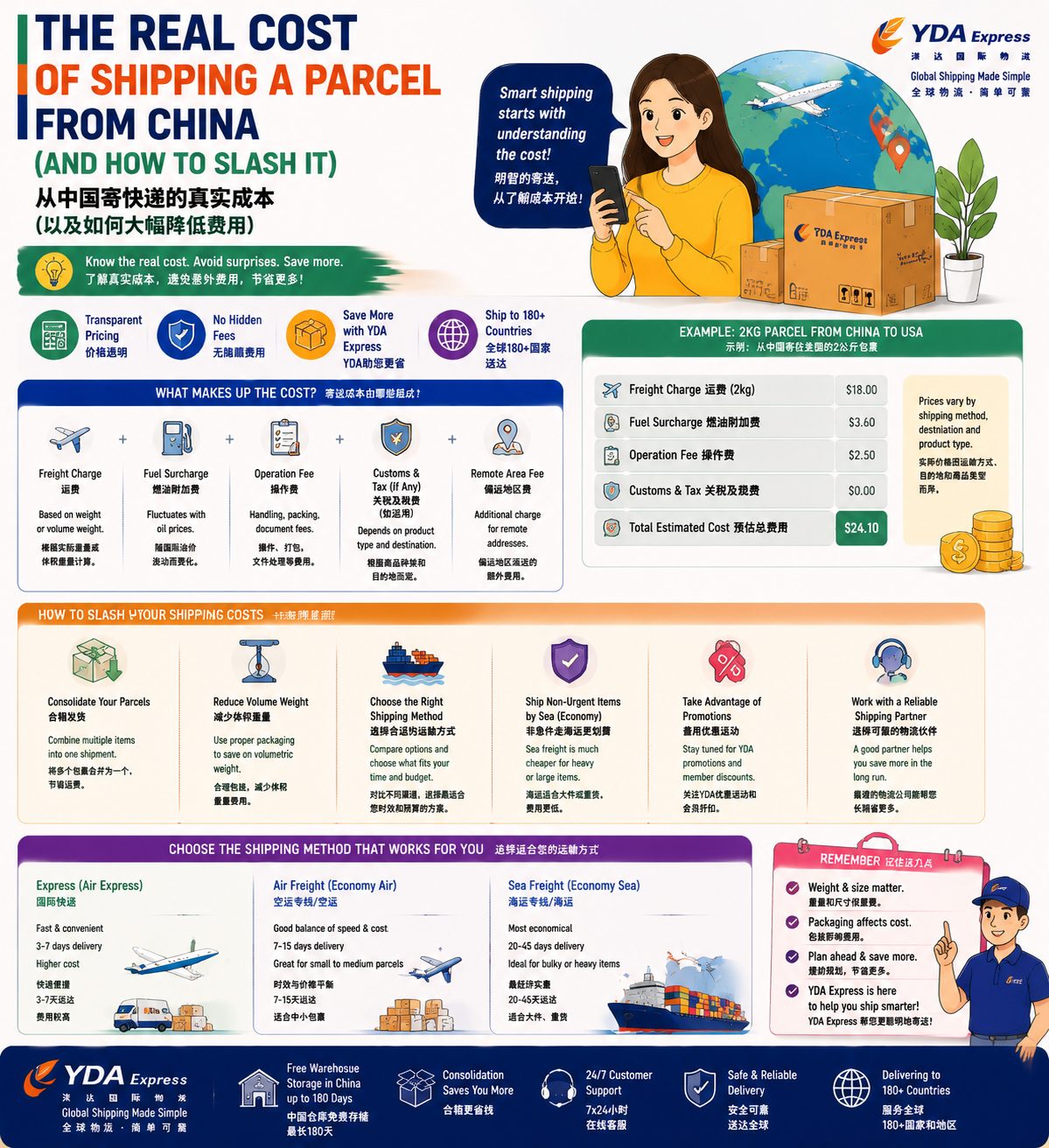
- Múltiples opciones de envío: desde express (3-7 días) hasta económico por mar (30-45 días).
- Gestión aduanera amigable: declaramos correctamente y te orientamos si surgen incidencias.
- Atención al cliente en tu idioma, con transparencia total.
No nos pagan las comisiones de las tiendas; simplemente cobramos por el servicio de envío y manejo. Así no hay conflicto de intereses. Queremos que tu paquete llegue bien y a tiempo, porque un cliente satisfecho repite.
¿Qué método de envío te conviene?
Depende de la urgencia y el presupuesto. Un ejemplo real: para un paquete de 2 kg de ropa de China a España, el envío por air express (DHL o similar) puede costar unos 30-40€ y llegar en menos de una semana. Por contra, el envío económico aéreo (que suele usar SF + Correos) puede costar 15-20€ pero tardar 15-20 días. Y si tienes 20 kg de productos no urgentes, el flete marítimo podría costar 50-80€ y tardar 35-50 días. Todo depende.
En YdaExpress te mostramos todas las opciones y precios antes de que decidas, para que sepas exactamente cuánto pagarás y cuándo recibirás. Nada de sorpresas. Hace poco, un cliente de Argentina nos pidió enviar 5 kg de repuestos de electrónica. Con el envío express, le llegaba en 10 días pero costaba 120 USD; con el económico, tardaba 25 días y pagaba 45 USD. Optó por el económico porque no tenía prisa. Ese tipo de decisión informada es lo que promovemos.
Resolviendo problemas comunes
A veces, los paquetes se atoran en aduana. No te asustes. Normalmente es por falta de documentación, pago pendiente o inspección aleatoria. Si ocurre, contacta al transportista o a nosotros (si gestionamos el envío). La mayoría de los retrasos se solucionan en unos días aportando facturas o comprobantes de pago. En una ocasión, un cliente en España tuvo un paquete retenido porque la descripción decía "electronic parts" sin detalle. Bastó con enviar la factura de compra y una lista de los componentes para que lo liberaran.
Otro problema: el paquete aparece como "entregado" pero no lo has recibido. Primero, revisa con vecinos o portería. Luego, contacta urgentemente al transportista local; a veces el repartidor se equivocó de dirección. Si el tracking indica que fue entregado pero no aparece, inicia una reclamación. Por eso es importante contar con un seguro.
Cierra el círculo: compra con cabeza
El envío internacional no tiene por qué ser un dolor de muelas. Con un poco de planificación y el apoyo adecuado, puedes acceder a un mundo de productos increíbles a precios que en tu país son imposibles. Herramientas como los almacenes de consolidación y los agentes de compras nivelan el campo para el comprador particular o la pequeña empresa.
Si estás listo para hacer tu primera compra o buscas mejorar la logística de tu negocio, en YdaExpress estamos aquí para ayudarte. Escríbenos por WhatsApp al +8616666169028 o visita https://www.ydaexpress.com. Cuéntanos qué quieres traer y te damos una cotización sin compromiso. Y recuerda: cada 快递包裹 puede ser una pequeña aventura, pero no tiene por qué ser una odisea.
🛍️ Compra en China en un solo lugar No necesitas comprar por separado en Taobao, 1688, JD.com, Tmall o Pinduoduo. Con YDA Express puedes buscar productos, realizar pedidos, solicitar inspecciones con fotos, disfrutar de hasta 180 días de almacenamiento gratuito, consolidar paquetes y enviarlos a cualquier parte del mundo.
👉 Empieza a comprar 📦 Reenvío de paquetes y envíos internacionales ¿Ya realizaste tu compra? Envía tus productos a nuestro almacén en China. Ofrecemos recepción de paquetes, inspección con fotos, hasta 180 días de almacenamiento gratuito, consolidación, envíos internacionales y seguimiento en tiempo real.
👉 Explora todos nuestros servicios 📲 Descarga la app de YDA Express Una sola app para comprar en China, gestionar pedidos y paquetes, consolidar envíos, organizar el transporte internacional y seguir tus compras.
🌍 Más guías útiles Descubre consejos prácticos sobre compras en China, reenvío de paquetes, costes de envío y trámites aduaneros.