
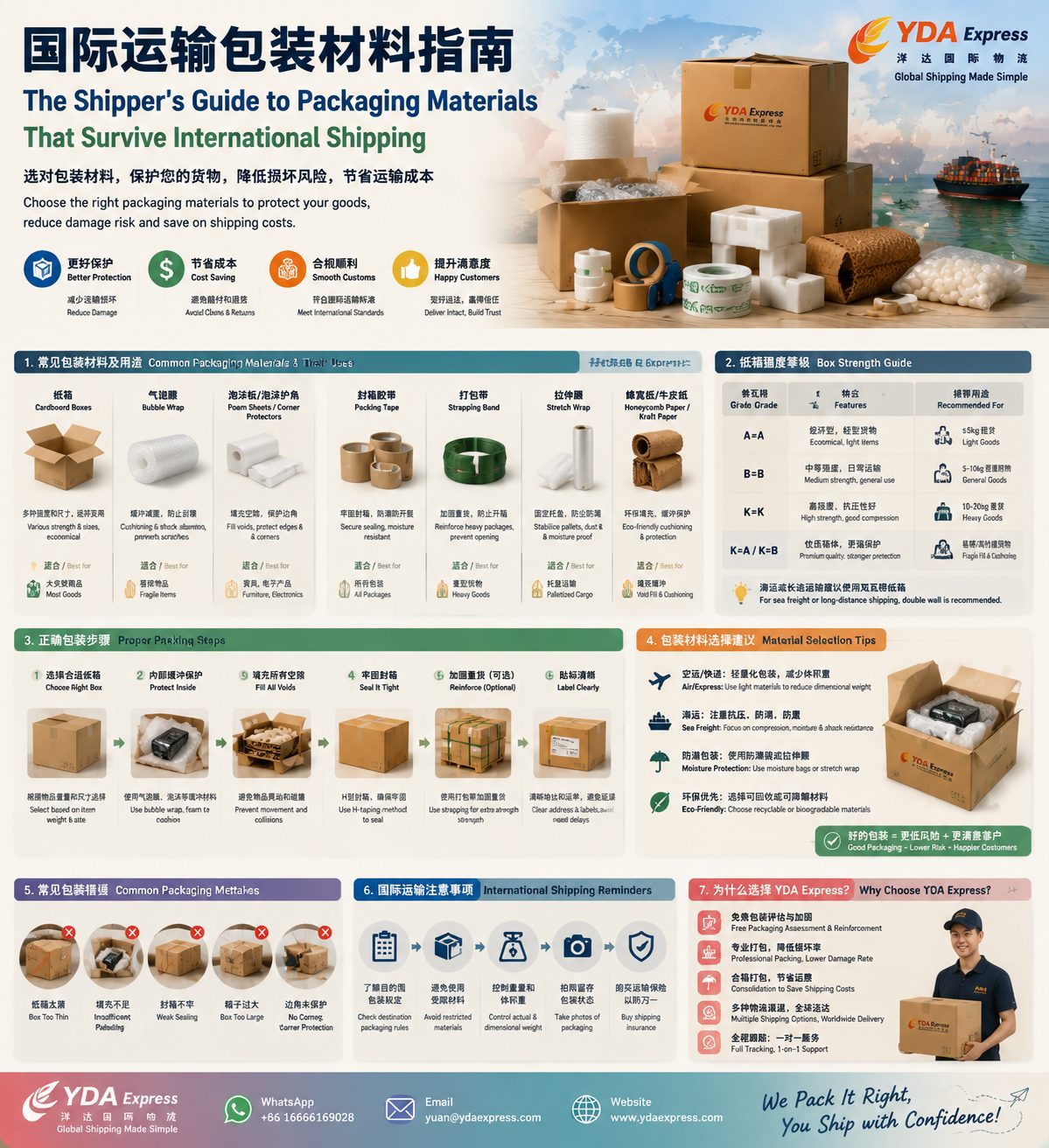
Guía práctica para elegir y combinar cajas, plástico de burbujas, espuma, separadores, papel kraft, bolsas estancas y materiales antiestáticos. Aprende a proteger productos frágiles, electrónicos, textiles y líquidos sin aumentar innecesariamente el peso volumétrico del envío.
Elegir materiales de embalaje no consiste en llenar una caja con todo lo que encuentres. Una protección eficaz debe cumplir cuatro funciones: evitar que el producto se mueva, absorber golpes, resistir la presión exterior y proteger frente a humedad, rozaduras o fugas.
Un pedido enviado desde China puede pasar por transportistas nacionales, almacenes, centros de clasificación, controles aduaneros y servicios de reparto local. Durante ese recorrido, el paquete puede cambiar varias veces de posición y soportar vibraciones, apilamiento y manipulación mecánica.
Por eso, el embalaje utilizado por un vendedor para entregar dentro de China no siempre es suficiente para un envío internacional. Antes de consolidar tus compras conviene revisar el producto, identificar sus puntos débiles y combinar los materiales adecuados sin aumentar innecesariamente el peso volumétrico.
¿Qué riesgo debe resolver el embalaje?
Antes de elegir cartón, burbujas o espuma, clasifica el producto según el daño que podría sufrir:
- Golpes: cerámica, vidrio, pantallas y piezas con salientes.
- Aplastamiento: cajas de regalo, calzado, sombreros y productos huecos.
- Rozaduras: bolsos, superficies pintadas, metales pulidos y artículos de colección.
- Movimiento interno: conjuntos de piezas, accesorios y productos irregulares.
- Humedad: textiles, libros, documentos y determinados componentes electrónicos.
- Fugas: cosméticos, botellas y otros recipientes con contenido líquido.
- Electricidad estática: placas, chips y componentes electrónicos sensibles.
Un mismo artículo puede necesitar varias capas. Una taza, por ejemplo, requiere protección superficial, refuerzo alrededor del asa, amortiguación contra impactos y una caja capaz de soportar presión. Utilizar solamente plástico de burbujas no resuelve todas esas necesidades.
¿Qué caja de cartón debes utilizar?
La caja exterior soporta la presión del apilamiento y mantiene unido el conjunto. Debe estar seca, sin perforaciones, esquinas debilitadas ni pliegues producidos por usos anteriores.
Una caja de pared simple puede ser suficiente para productos ligeros y resistentes, siempre que su capacidad corresponda al contenido. Para mercancías pesadas, frágiles o que recorrerán largas distancias, puede ser necesario utilizar cartón de doble pared o un sistema de doble caja.
No elijas el embalaje solamente por su grosor. También debes comprobar:
- Resistencia adecuada al peso total.
- Tamaño suficiente para colocar la amortiguación.
- Esquinas y juntas en buen estado.
- Ausencia de etiquetas y códigos antiguos.
- Espacio interior que no sea excesivo.
Una caja demasiado pequeña transmite los golpes directamente al producto. Una demasiado grande exige más relleno y puede aumentar el peso volumétrico. La guía para elegir la caja de cartón adecuada para envíos desde China explica cómo equilibrar resistencia, dimensiones y coste.
¿Para qué sirve cada material de protección?
Plástico de burbujas
Sirve para envolver artículos y absorber impactos moderados. Debe cubrir todas las caras del producto y reforzar bordes, asas o salientes. Cuando hay varias piezas, cada una debe envolverse por separado.
No debe utilizarse como único relleno de una caja grande. Si el artículo continúa moviéndose, añadir unas vueltas alrededor no corregirá el problema.
Espuma y láminas de polietileno
La espuma protege superficies, separa piezas y puede cortarse para inmovilizar objetos irregulares. Resulta útil para electrónica, vidrio, cerámica, productos pintados y artículos con puntos de apoyo concretos.
Las piezas de espuma para esquinas ayudan a mantener distancia entre el producto y las paredes de la caja. En artículos pesados, el material debe tener densidad suficiente para no aplastarse durante el transporte.
Separadores y cartón ondulado
Los separadores impiden que varios productos choquen entre sí. Son especialmente útiles para vasos, botellas, vajilla, pequeños recipientes o componentes que comparten una misma caja.
El separador organiza el contenido, pero no reemplaza la envoltura individual cuando los artículos son frágiles.
Papel kraft
Puede rellenar huecos y proteger mercancía resistente frente a movimientos leves. Es adecuado para prendas, libros, cajas pequeñas y objetos que no necesitan amortiguación intensiva.
No siempre es la mejor opción para productos pesados o muy frágiles, porque puede compactarse y dejar espacio libre. También añade más peso que determinados rellenos de aire.
Almohadillas de aire
Sirven para ocupar espacios vacíos alrededor de productos ligeros. No deben soportar objetos pesados ni colocarse como única barrera alrededor de artículos con bordes afilados, ya que pueden perforarse o perder volumen.
Bolsas, barreras y materiales absorbentes
Los textiles, documentos y productos sensibles a la humedad pueden necesitar una bolsa interior cerrada. Los líquidos deben mantenerse en su recipiente original correctamente cerrado, colocarse dentro de una segunda bolsa estanca y acompañarse de material absorbente cuando corresponda.
El embalaje no convierte un producto restringido en mercancía ordinaria. Antes de enviar líquidos, aerosoles, baterías u otras mercancías sensibles, confirma que la ruta seleccionada los acepta.
Protección antiestática
Los componentes electrónicos sensibles no deberían envolverse directamente con materiales que puedan generar electricidad estática. Para placas, circuitos o chips deben utilizarse bolsas y materiales antiestáticos apropiados antes de añadir la amortiguación exterior.
¿Cómo combinar las capas sin desperdiciar espacio?
Una estructura de embalaje bien diseñada suele seguir este orden:
- Proteger la superficie del producto.
- Reforzar los puntos frágiles.
- Envolver o fijar cada unidad por separado.
- Separar productos que no deben tocarse.
- Colocar amortiguación en los seis lados.
- Utilizar una caja exterior proporcionada al peso.
- Rellenar los huecos hasta impedir el movimiento.
- Sellar las juntas y verificar la etiqueta.
Después de llenar la caja, muévela suavemente. Si escuchas o sientes desplazamiento, el contenido todavía no está correctamente fijado. No se trata de comprimir el producto con fuerza, sino de mantenerlo estable y alejado de las paredes exteriores.
Para piezas especialmente frágiles puede utilizarse el método de doble caja: el producto se protege dentro de una caja interior y esta se coloca en una segunda caja con amortiguación entre ambas. La guía para embalar artículos frágiles explica cuándo merece la pena aplicar este sistema.
¿Cómo se deben sellar y etiquetar las cajas?
La cinta debe adherirse correctamente al cartón y cubrir la junta central y los dos bordes laterales, formando un cierre en H tanto en la base como en la parte superior. Las cajas pesadas pueden necesitar refuerzo adicional, siempre sin ocultar etiquetas ni crear una superficie difícil de abrir durante una inspección.
La etiqueta de transporte debe colocarse sobre una cara plana y limpia. El código de barras no debe doblarse alrededor de una esquina ni quedar tapado por otras etiquetas. Retira o cubre completamente los códigos anteriores para evitar errores de clasificación.
Las indicaciones “Frágil” o “Este lado arriba” pueden ayudar a identificar el contenido, pero no sustituyen una protección adecuada. El paquete debe estar preparado para resistir la manipulación ordinaria aunque esas instrucciones no se respeten en todo momento.
¿Cuándo son necesarios un palé o una caja de madera?
Los artículos muy pesados, la maquinaria, los muebles y determinados productos de gran tamaño pueden necesitar paletización, estructura de madera o una caja fabricada a medida.
Si se utiliza madera maciza en embalajes para comercio internacional, deben comprobarse las exigencias fitosanitarias del país de destino y la documentación o marcado aplicable. No debe asumirse que cualquier palé reutilizado o caja de madera puede cruzar la frontera.
Antes de elegir esta protección, compara el beneficio frente al aumento de peso, volumen y posibles gastos de manipulación. En algunos casos, una estructura personalizada protege mejor; en otros, una caja reforzada con soportes internos resulta suficiente. Consulta la guía sobre embalaje a medida para envíos desde China para valorar estas opciones.
¿Cómo controlar el embalaje al comprar en varias tiendas?
Los vendedores de Taobao, 1688, Tmall, JD.com o Pinduoduo preparan sus paquetes para la entrega nacional en China. Si compras a varios proveedores, recibirás cajas con diferentes tamaños, resistencias y niveles de protección.
En un almacén de consolidación puedes esperar a que lleguen los pedidos, revisar su estado exterior y decidir qué embalajes conservar, sustituir o reforzar. YDA Express ofrece hasta 180 días de almacenamiento gratuito para facilitar compras por etapas y preparar un envío conjunto cuando los artículos estén disponibles.
La inspección básica puede detectar problemas visibles, pero no sustituye una autenticación de marca, certificación técnica, prueba funcional completa o análisis de laboratorio. Si necesitas fotografías detalladas, vídeos, mediciones o instrucciones especiales de embalaje, solicítalos antes de la consolidación y confirma su alcance y coste.
La guía de consolidación de paquetes desde China ayuda a decidir qué productos pueden compartir caja y cuáles deben viajar separados.
¿Cómo evitar que el embalaje aumente demasiado el transporte?
La protección y la reducción de volumen deben evaluarse juntas. Retirar una caja puede ahorrar espacio, pero no conviene hacerlo si contiene un artículo frágil, conserva la forma del producto o es importante para una devolución, regalo o reventa.
Antes de autorizar el envío, solicita:
- Peso real después del embalaje.
- Dimensiones exteriores finales.
- Peso volumétrico aplicable.
- Materiales adicionales utilizados.
- Fotografías del paquete terminado.
- Comparación de las rutas compatibles.
El precio debe calcularse utilizando el paquete final, no las medidas estimadas por el vendedor. La guía sobre el coste de envío desde China explica cómo influyen el peso real, el volumen, el destino y el tipo de mercancía.
Lista de control antes de cerrar el paquete
- Cada producto está protegido según su riesgo.
- Los artículos múltiples están envueltos y separados.
- Las esquinas, asas y salientes tienen refuerzo.
- Los líquidos cuentan con una segunda barrera contra fugas.
- Los componentes sensibles utilizan protección antiestática.
- El contenido no se mueve dentro de la caja.
- La resistencia de la caja corresponde al peso total.
- Las juntas están selladas correctamente.
- La etiqueta y el código de barras son legibles.
- Se han guardado fotografías antes y después del embalaje.
- El peso y las dimensiones finales están confirmados.
No existe un único material capaz de proteger todos los productos. La seguridad depende de combinar una caja resistente, una fijación correcta, amortiguación suficiente y barreras específicas para los riesgos reales del contenido.
YDA Express puede recibir tus compras en China, conservarlas hasta 180 días sin coste de almacenamiento, realizar las comprobaciones solicitadas, consolidar paquetes y preparar un embalaje compatible con la mercancía y la ruta elegida. El objetivo no es utilizar más material, sino aplicar la protección necesaria donde realmente aporta valor.
📲 Descarga la aplicación de YDA Express
Utiliza la aplicación de YDA Express para comprar productos en China, realizar pedidos, recibir fotografías de inspección, gestionar paquetes, consolidar envíos y organizar entregas internacionales desde un solo lugar.
🎁 Los nuevos clientes no pagan la comisión del servicio de compra en su primer pedido.
🌐 Visita el sitio web de YDA Express y consulta todos nuestros servicios