
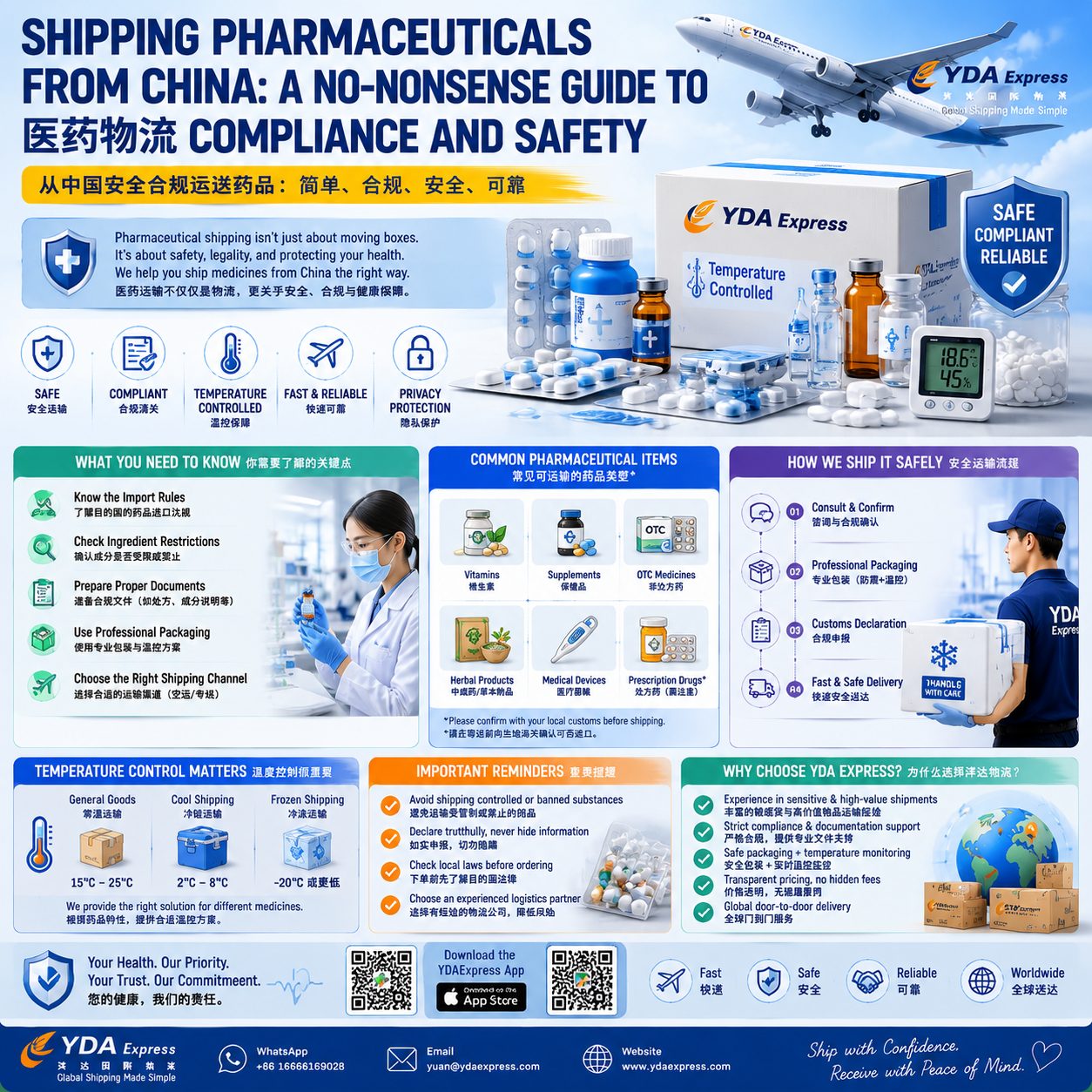
Guía práctica para comprobar antes de comprar o enviar medicamentos, suplementos, dispositivos médicos y otros productos de salud desde China. Explica cómo verificar la clasificación del producto, los permisos de importación, la documentación, la caducidad, la temperatura, el embalaje y los requisitos aduaneros.
Comprar vitaminas, dispositivos médicos, productos de cuidado personal o medicamentos en China no es igual que comprar ropa o accesorios.
La clasificación puede cambiar según la composición, las afirmaciones del vendedor, el uso previsto y el país de destino. Un artículo anunciado como suplemento en China podría considerarse medicamento en otro país. Una lámpara de belleza puede tratarse como aparato de consumo o dispositivo médico según la finalidad declarada.
Antes de pagar, hay que responder tres preguntas:
- ¿Cómo clasifica el destino este producto?
- ¿Puede importarlo legalmente el destinatario?
- ¿Existe una ruta que mantenga las condiciones de almacenamiento requeridas?
Si alguna respuesta no está confirmada, el envío debe detenerse hasta obtener información fiable.
Primero distingue qué tipo de producto estás comprando
No todos los artículos relacionados con la salud pertenecen a la misma categoría.
Medicamentos
Incluyen productos presentados para prevenir, diagnosticar, tratar o aliviar enfermedades. Pueden estar sujetos a receta, autorización de comercialización, permiso de importación y controles sobre ingredientes activos.
Los medicamentos controlados, narcóticos, psicotrópicos, inyectables o destinados a enfermedades graves requieren una revisión especialmente estricta. No deben enviarse como mercancía general ni declararse como suplementos o artículos personales.
Suplementos alimenticios
Vitaminas, minerales, cápsulas, polvos, probióticos y productos herbales pueden tratarse como alimentos, suplementos o medicamentos dependiendo de sus ingredientes y afirmaciones.
Que un producto se venda libremente en China no significa que pueda importarse o comercializarse libremente en otro país.
Dispositivos médicos
Termómetros, mascarillas, instrumentos de diagnóstico, material estéril, equipos terapéuticos y otros dispositivos pueden necesitar registro, marcado, representante autorizado, identificación del producto o documentación técnica.
La clasificación depende del uso previsto y del riesgo. No se debe asumir que todos los productos pequeños o sin batería son simples accesorios.
Productos de cuidado personal
Cremas, parches, aceites y otros productos pueden considerarse cosméticos mientras no hagan afirmaciones terapéuticas. Si la ficha promete tratar dolor, inflamación, infección u otra condición, la clasificación puede cambiar.
Antes de elegir un proveedor, consulta la guía de compra en 1688 para comprobar especificaciones, empresa vendedora, documentos disponibles y condiciones de devolución.
Confirma la regulación del destino antes de pagar
Las reglas cambian según el país y pueden diferir entre compras personales, muestras y mercancía comercial.
Consulta la autoridad sanitaria, aduanera o regulatoria correspondiente para confirmar:
- clasificación legal;
- ingredientes permitidos;
- necesidad de receta;
- cantidad admitida para uso personal;
- registro sanitario;
- licencia del importador;
- permiso previo;
- etiquetado obligatorio;
- documentación del fabricante;
- condiciones de almacenamiento;
- requisitos para muestras;
- restricciones de venta.
No compres primero con la intención de buscar los permisos después. Si la mercancía llega sin autorización, puede acumular costes de almacenamiento, ser devuelta o recibir otro tratamiento conforme a la normativa local.
La guía de declaración aduanera para compras desde China explica cómo mantener coherentes la factura, la lista de contenido, el valor y la descripción del producto.
Qué documentos debes solicitar al proveedor
La documentación exacta depende de la categoría y el destino, pero antes de comprar conviene comprobar si el proveedor puede entregar:
- factura comercial;
- lista de empaque;
- nombre y dirección del fabricante;
- composición o ingredientes;
- modelo y uso previsto;
- lote y fecha de fabricación;
- fecha de caducidad;
- condiciones de almacenamiento;
- certificado de análisis, cuando corresponda;
- documentación de calidad;
- instrucciones y etiquetado;
- registro o certificado aplicable;
- información sobre esterilidad;
- datos de trazabilidad;
- documentos de transporte para baterías o sustancias reguladas.
Un archivo con un logotipo o un sello no demuestra por sí solo que el documento sea auténtico o válido en el país receptor.
Compara el nombre del fabricante, la dirección, el modelo, el lote y las fechas en todos los documentos. Si el proveedor no puede explicar quién fabrica el producto o no entrega la composición, no es prudente avanzar.
La inspección del almacén tiene límites
Cuando el paquete llega a un almacén en China, una revisión visual puede confirmar:
- cantidad recibida;
- coincidencia general con el pedido;
- modelo o talla indicada;
- integridad exterior;
- precinto visible;
- lote y caducidad impresos;
- daños aparentes;
- presencia de documentos.
Esta revisión no puede:
- autentificar medicamentos;
- confirmar la composición química;
- certificar esterilidad;
- demostrar eficacia;
- sustituir un análisis de laboratorio;
- validar un registro sanitario;
- garantizar que la temperatura se mantuvo antes de la llegada;
- confirmar que un dispositivo cumple la regulación del destino.
YDA Express ofrece hasta 180 días de almacenamiento gratuito en China, pero ese plazo no significa que todos los productos sanitarios puedan permanecer almacenados durante 180 días. Deben respetarse la fecha de caducidad, la humedad, la luz y la temperatura indicadas por el fabricante.
La guía de reenvío de paquetes desde China explica cómo registrar pedidos, utilizar el código de cliente y solicitar comprobaciones antes de consolidar.
Cuándo se necesita temperatura controlada
No debe decidirse la temperatura por el tipo general de producto. La condición correcta debe proceder del fabricante y aparecer en el etiquetado o la documentación técnica.
Puede incluir:
- temperatura ambiente controlada;
- protección frente al calor;
- protección frente a congelación;
- refrigeración;
- congelación;
- control de humedad;
- protección de la luz.
Un producto que exige condiciones controladas necesita una solución capaz de mantenerlas durante todo el recorrido: almacenamiento, recogida, aeropuerto, tránsito, aduana y entrega final.
Colocar unas bolsas de gel en una caja ordinaria no demuestra que la temperatura se mantendrá. Para una operación verificable pueden ser necesarios:
- embalaje cualificado;
- perfil térmico de la ruta;
- refrigerante adecuado;
- registrador de temperatura;
- límites de exposición;
- procedimiento frente a desviaciones;
- almacenamiento compatible en destino;
- personal capacitado.
Si no puede verificarse la capacidad de la ruta y del embalaje, el producto no debe enviarse.
YDA Express no debe tratar como mercancía ordinaria vacunas, medicamentos refrigerados, productos biológicos, inyectables u otros artículos cuya calidad dependa de una cadena de frío validada.
Cómo evaluar la vida útil restante
La fecha de caducidad debe cubrir más que el tiempo de vuelo.
También hay que considerar:
- preparación del proveedor;
- transporte nacional en China;
- entrada y procesamiento en almacén;
- espera de otros pedidos;
- embalaje;
- salida internacional;
- posibles transbordos;
- revisión aduanera;
- entrega local;
- periodo previsto de uso o venta.
No utilices el plazo de transporte más rápido como única referencia. Calcula un margen razonable para retrasos.
En mercancía comercial, el comprador también debe confirmar si el cliente, hospital, farmacia o distribuidor exige una vida útil mínima en el momento de la entrega.
¿Se pueden consolidar productos de salud?
Solo cuando sus condiciones sean compatibles.
No consolides automáticamente:
- medicamentos con productos químicos;
- material estéril con líquidos que puedan derramarse;
- productos refrigerados con mercancía general;
- envases frágiles con artículos pesados;
- productos personales con lotes comerciales;
- artículos con distintas rutas regulatorias;
- medicamentos con alimentos o cosméticos sin revisar las restricciones;
- productos cuya etiqueta o caja no puede retirarse.
El embalaje debe conservar el lote, la caducidad, el precinto, las instrucciones y la identificación necesaria.
Puede retirarse una caja de transporte exterior que no aporte protección, pero no debe eliminarse el envase que mantenga la integridad, trazabilidad o esterilidad.
La guía de embalaje a medida para envíos desde China explica cómo reducir volumen sin eliminar elementos necesarios para proteger e identificar el producto.
Cómo preparar la declaración aduanera
La declaración debe utilizar una descripción específica y coherente con la documentación.
Evita términos como:
- health products;
- medical supplies;
- samples;
- personal items;
- accessories;
- gifts.
Una descripción útil puede incluir:
- nombre del producto;
- forma de presentación;
- ingrediente o material principal;
- modelo;
- uso previsto;
- cantidad;
- valor unitario y total;
- fabricante;
- país de origen;
- lote, cuando sea necesario;
- presencia de batería;
- condición de almacenamiento.
No declares un medicamento como suplemento, un dispositivo médico como aparato doméstico ni una mercancía comercial como regalo.
Los productos gratuitos o las muestras también necesitan descripción y un valor razonable. “Sin valor comercial” no significa valor cero a efectos aduaneros.
Qué hacer si el paquete queda retenido
Primero confirma si la revisión corresponde a:
- aduana de exportación china;
- aduana del destino;
- transportista;
- agente de despacho;
- autoridad sanitaria;
- organismo responsable de dispositivos médicos.
Después solicita por escrito:
- motivo de la retención;
- documentos exigidos;
- persona responsable de responder;
- plazo;
- costes de almacenamiento;
- opciones de devolución;
- consecuencias de no responder.
Pueden pedir factura, receta, permiso de importación, registro sanitario, certificado de análisis, información del fabricante, etiquetado o prueba del valor.
No presentes documentos diferentes a los utilizados en la declaración inicial sin explicar la razón. Mantén iguales el nombre, el modelo, la cantidad, el lote y el valor.
La guía para paquetes retenidos en aduanas explica cómo verificar notificaciones, presentar documentos y evitar fraudes de pago.
Compra personal y mercancía comercial no son lo mismo
Una pequeña cantidad para uso personal puede recibir un tratamiento diferente, pero cada país establece sus propias reglas.
La autoridad puede considerar:
- tipo de producto;
- necesidad de receta;
- ingrediente activo;
- cantidad;
- frecuencia;
- valor;
- condición del destinatario;
- finalidad declarada.
La compra personal no elimina automáticamente los requisitos sanitarios. Tampoco debe utilizarse para importar productos destinados a reventa.
Para una importación comercial pueden ser necesarios:
- importador autorizado;
- registro del producto;
- licencia sanitaria;
- representante local;
- documentación técnica;
- trazabilidad por lote;
- etiquetado aprobado;
- sistema de almacenamiento;
- procedimiento de retirada;
- distribuidor autorizado.
Un pedido de muestra sirve para evaluar el producto, pero no sustituye los permisos de comercialización.
Lista de control antes de comprar o enviar
Antes de pagar, confirma:
- la clasificación en el país de destino;
- si el destinatario puede importarlo;
- los ingredientes o materiales;
- el fabricante real;
- el registro o permiso necesario;
- el lote y la fecha de caducidad;
- las condiciones de almacenamiento;
- la documentación disponible;
- la aceptación por la ruta;
- la capacidad térmica, si corresponde;
- el embalaje;
- la responsabilidad del despacho;
- la capacidad de almacenamiento del receptor.
Detén el envío si:
- no se conoce la composición;
- falta la identificación del fabricante;
- la etiqueta no coincide con el documento;
- el proveedor sugiere ocultar el producto;
- no existe permiso exigido;
- la vida útil es insuficiente;
- la ruta no puede demostrar la temperatura necesaria;
- el destinatario no puede completar el despacho.
Cómo puede ayudar YDA Express
YDA Express puede ayudar con compra asistida, recepción de paquetes, comprobación visual básica, fotografías solicitadas, consolidación de mercancía compatible, reembalaje y consulta de rutas disponibles.
El servicio no sustituye a una autoridad sanitaria, un médico, un laboratorio, un agente de aduanas autorizado ni un operador farmacéutico especializado. La aceptación depende del producto, el destino, la documentación y la capacidad real de transporte.
Cuando un producto necesita receta, permiso sanitario, importador autorizado o temperatura controlada, el cliente debe obtener la confirmación correspondiente antes de comprar.
Los nuevos clientes no pagan la comisión del servicio de compra en su primer pedido. Para solicitar esta ventaja, deben contactar con atención al cliente antes de realizarlo. Los clientes recurrentes pueden consultar descuentos exclusivos o cupones disponibles.
La prioridad no es encontrar una ruta que acepte la caja. Es confirmar que el producto seguirá siendo legal, identificable y apto para su uso cuando llegue.
📲 Descarga la aplicación de YDA Express
Utiliza la aplicación de YDA Express para comprar productos en China, realizar pedidos, recibir fotografías de inspección, gestionar paquetes, consolidar envíos y organizar entregas internacionales desde un solo lugar.
🎁 Los nuevos clientes no pagan la comisión del servicio de compra en su primer pedido.
🌐 Visita el sitio web de YDA Express y consulta todos nuestros servicios