Descubre los principales canales de compra desde China, desde agentes personales hasta plataformas directas y servicios de reenvío. Aprende a elegir la opción más segura, económica y eficiente para tus envíos internacionales, con consejos prácticos y ejemplos reales.
Comprar productos en China y recibirlos en España, México o cualquier país hispanohablante ya no es un misterio. Pero si estás dando tus primeros pasos o incluso si ya tienes experiencia, seguro te has topado con el dilema: ¿cuál es el mejor canal para hacerlo? La respuesta no es única, depende de lo que busques, la cantidad de paquetes, el valor de la mercancía y qué tan dispuesto estés a involucrarte en cada paso.
En esta guía te voy a contar, desde la experiencia de quien ha manejado cientos de envíos, cuáles son los canales de compra más usados, sus ventajas ocultas y los problemas que nadie te cuenta. Y sí, también te diré cuándo merece la pena contar con un socio logístico que te quite los dolores de cabeza.
¿Qué entendemos por ‘canales de compra’ desde China?
Básicamente, es la ruta que sigue un producto desde el vendedor chino hasta tu puerta. No se trata solo de elegir entre AliExpress o un agente, sino de entender quién compra, quién almacena, quién consolida, qué transporte se usa y quién responde si algo sale mal. Los canales más comunes son:
- Compra directa en marketplaces internacionales (AliExpress, Banggood, Gearbest).
- Agente de compras o personal shopper (alguien que compra por ti en Taobao, 1688, JD.com).
- Plataformas de dropshipping o B2B (Alibaba, Made-in-China) para negocios.
- Servicio de reenvío o forwarding (como YDA Express), donde tú compras y envías a un almacén en China, y ellos gestionan el envío internacional.
Cada uno tiene su momento. Aquí te explico cuándo usar cada uno.
1. Compra directa en AliExpress y similares
Es el canal más popular para quienes empiezan. La ventaja es clara: haces clic, pagas con tarjeta o PayPal, y en teoría el paquete llega. Muchos vendedores ofrecen envío económico, a veces hasta gratis. Pero la realidad tiene sus matices.
- Lo bueno: sencillez. No necesitas intermediarios, el propio vendedor envía.
- Lo malo: control de calidad casi nulo, tiempos de entrega impredecibles (correos ordinarios pueden tardar más de 60 días), y si compras en varias tiendas, te llegarán paquetes separados, cada uno con su propio riesgo de aduana. Además, los métodos de envío baratos suelen tener seguimiento limitado y cero protección.
Para el consumidor ocasional, AliExpress puede ser suficiente. Pero si piensas comprar varias cosas o productos de cierto valor, es probable que termines frustrado. He visto demasiados casos de paquetes perdidos y vendedores que no responden.
2. Agente de compras personal
Aquí entra la figura del ‘daigou’ o agente. Una persona (o empresa pequeña) en China que recibe tu lista de productos, los compra en sitios como Taobao o 1688, los recibe en su domicilio, verifica estado, y luego te los envía consolidados. Suelen cobrar una comisión por producto o por pedido total.
- Ventajas: acceso a plataformas chinas que no venden al exterior, posibilidad de negociar precios, verificación de calidad (fotos, videos), consolidación de paquetes.
- Desventajas: el costo puede escalar rápido si la comisión es alta (entre 5% y 10% comúnmente), comunicación a veces lenta por la diferencia horaria, y no siempre tienen opciones de envío competitivas; muchos dependen de paquetería estándar y no pueden ofrecer tarifas de volumen.
Para pedidos puntuales o productos muy específicos, el agente puede ser una solución. Pero si tu intención es comprar de forma recurrente o necesitas trazabilidad total, quizá notes que la experiencia se queda corta.
3. Plataformas B2B y dropshipping
Si tienes una tienda online o vendes en marketplaces, probablemente ya conoces Alibaba. Permite comprar al por mayor directo de fábricas, con precios muy competitivos. El dropshipping desde China también usa estos canales.
La realidad es que manejar esa relación requiere tiempo, conocimiento de Incoterms, y a menudo un agente de carga independiente. No es raro que fábricas ofrezcan envío puerta a puerta, pero con márgenes inflados y sin transparencia en costos de aduana.
4. Servicio de reenvío internacional (forwarding)
Aquí es donde las cosas se ponen interesantes. Un servicio de reenvío te da una dirección en China (típicamente un almacén). Tú compras directamente en Taobao, 1688, JD, Pinduoduo, o incluso al vendedor de AliExpress le pones la dirección de tu almacén. Cuando los paquetes llegan, el proveedor de reenvío los recibe, revisa (si se lo pides), consolida en una sola caja y te lo envía por la vía que elijas: aéreo express, aéreo económico, marítimo o ferrocarril.
Este canal es mi recomendación personal para quien compra con frecuencia o quiere tener control total de su logística. Las razones:
- Ahorro real: al consolidar varios paquetes, pagas un solo envío internacional y reduces costes por kg.
- Flexibilidad de transporte: puedes elegir entre DHL, FedEx, UPS, envío aéreo especializado o incluso marítimo si el volumen lo justifica. No dependes del método que imponga el vendedor.
- Dirección local china: muchos vendedores ofrecen envío nacional gratis o muy barato dentro de China. Usar un almacén local elimina sobrecostos.
- Servicios extra: revisión de productos, fotos, empaquetado reforzado, gestión de aduanas (te ayudan a declarar el valor de forma realista para evitar impuestos excesivos).
Honestamente, desde que empecé a usar forwarding, dejé de preocuparme por los tiempos y la seguridad. Pero no todos los servicios de reenvío son iguales. Algunos cobran cuotas mensuales, otros tarifas de recepción, o inflan el peso volumétrico sin justificación. Por eso es clave elegir uno transparente.
¿Cómo afecta la aduana en España y Latinoamérica?
No importa el canal que uses, todos los paquetes acaban pasando por la aduana de tu país. En España, desde julio de 2021 cualquier mercancía extracomunitaria paga IVA, incluso productos de bajo valor. Si el valor es superior a 150€, además se pagan aranceles. En México, el límite libre de impuestos es 50 dólares (USD) para envíos postales, y por courier suelen ser más estrictos. En Colombia, el umbral es 200 USD, pero con costos de gestión aduanera que elevan la factura.
Un buen canal de compra no puede ignorar la aduana. Muchos agentes y plataformas te dirán que envían “libre de impuestos” pero no es cierto; simplemente subdeclaran la factura o etiquetan como regalo, lo cual puede acarrear multas o retenciones. La clave está en declarar de forma honesta, usar métodos de envío que ofrezcan despacho simplificado, y sobre todo, no abusar.
En YDA Express, que es el servicio de reenvío con el que colaboramos habitualmente, vemos a diario cómo clientes ahorran dinero y disgustos simplemente declarando valores realistas y aprovechando rutas con gestión aduanera incluida (DDP). De hecho, para España tienen opciones de envío con IVA prepagado, lo que evita sorpresas al repartidor.
Factores clave para elegir tu canal de compra desde China
Pongamos los pies en la tierra. Antes de decidir, hazte estas preguntas:
- ¿Cuántos proveedores distintos tienes? Si son más de dos, la consolidación te ahorrará pasta.
- ¿Qué tipo de producto es? Electrónicos, con baterías, imitaciones de marcas, líquidos… requieren canales de envío específicos. No todos los agentes pueden enviarlos.
- ¿Qué urgencia tienes? El aéreo express tarda 5-10 días a España; el marítimo económico, 25-35 días. No elijas el canal sin alinear expectativas.
- ¿Cuánto estás dispuesto a involucrarte? Si prefieres dar una lista y olvidarte, un agente todo-en-uno puede ser mejor. Pero si controlas tus compras, el forwarding te da más flexibilidad y menor costo a largo plazo.
Errores típicos al elegir canal (y cómo evitarlos)
He visto casos que se repiten:
- Fiarse del envío barato sin seguimiento. A la larga, lo barato sale caro. Si el paquete vale más de 30€, invierte en un envío con tracking y seguro.
- No leer la letra pequeña del almacén de reenvío. Pregunta si cobran por recepción, por almacenaje pasado X días, o por fotos. Un buen forwarder lo deja claro desde el día uno.
- Desconocer el peso volumétrico. Para aéreo, DHL y FedEx cobran por el espacio que ocupa tu caja, no solo por los kilos. Si tu producto es voluminoso pero ligero, pide al vendedor empaque compacto o usa marítimo.
- Solicitar servicios extra a última hora. Si quieres fotos o embalaje especial, contrátalo antes de que el paquete llegue al almacén. Así evitas retrasos y costos adicionales de manipulación.
¿Cuándo realmente necesitas un agente o un forwarder?
Para compras de prueba o caprichos de menos de 20€, AliExpress directo puede cumplir. Pero si:
- Estás comprando para un pequeño negocio.
- Quieres productos personalizados.
- Vas a comprar en plataformas solo chinas como Taobao.
- Tienes múltiples envíos de distintos vendedores.
- Quieres asegurarte de que lo que llega es lo que pediste.
Entonces sí o sí necesitas un canal que incluya almacenaje y consolidación. Es fácil: pides a cada vendedor que mande a tu dirección china, esperas a que todos lleguen, y despachas una sola vez. En nuestro día a día, clientes que antes pagaban 40€ por tres envíos sueltos, hoy pagan 18€ por uno consolidado, y encima más rápido.
Paso a paso: cómo funciona un servicio de reenvío real
Imagina que compras fundas de móvil, bisutería y carcasas de auriculares en tres tiendas distintas. Los vendedores te cobran envío local gratis porque la dirección de entrega está en Shenzhen. En 3-4 días, tus tres paquetes llegan al almacén de YDA Express. Tú accedes a tu panel, ves la foto de cada paquete, pides que los junten, y seleccionas método de envío: por ejemplo, aéreo económico con IVA incluido. En menos de dos semanas, llaman a tu puerta en Madrid.
La magia está en la sencillez: no necesitas chatear en chino, ni preocuparte si un vendedor no envía fuera de China, ni hacer malabares con las declaraciones de aduana. El sistema ya tiene plantillas predefinidas para que no metas la pata.
¿Y si ya tienes un agente de confianza? ¿Por qué cambiar?
No se trata de cambiar por cambiar. Pero es sano comparar tarifas y servicios cada cierto tiempo. Algunos proveedores de reenvío cobran tarifas planas por recepción y almacenaje que a la larga son más económicas que las comisiones de un agente personal. Además, la tecnología ha avanzado: hoy puedes gestionar tus envíos desde una app, pagar con múltiples métodos, y tener visibilidad completa sin depender de un intermediario que tarda horas en responder.
Conclusión
Elegir el canal de compra desde China adecuado es más una cuestión de volumen y control que de precio inmediato. Un envío barato puede salir carísimo si el paquete se pierde o se queda atascado en aduanas. Conocer las opciones y adaptarlas a tu necesidad real es lo que marca la diferencia.
Si estás harto de incertidumbre, de tiempos eternos o de pagar de más, toca probar un servicio de reenvío con los ojos abiertos. Y si lo haces, empieza con un pedido pequeño, compara, y verás por qué quienes lo prueban rara vez vuelven al método tradicional.
Para más información sobre cómo hacer envíos desde China sin complicaciones, visita nuestro sitio web https://www.ydaexpress.com o escríbenos directamente por WhatsApp al +86 16666169028 o correo a yuan@ydaexpress.com. Estamos para ayudarte a convertir tus compras en China en una experiencia sencilla, transparente y sin sustos.
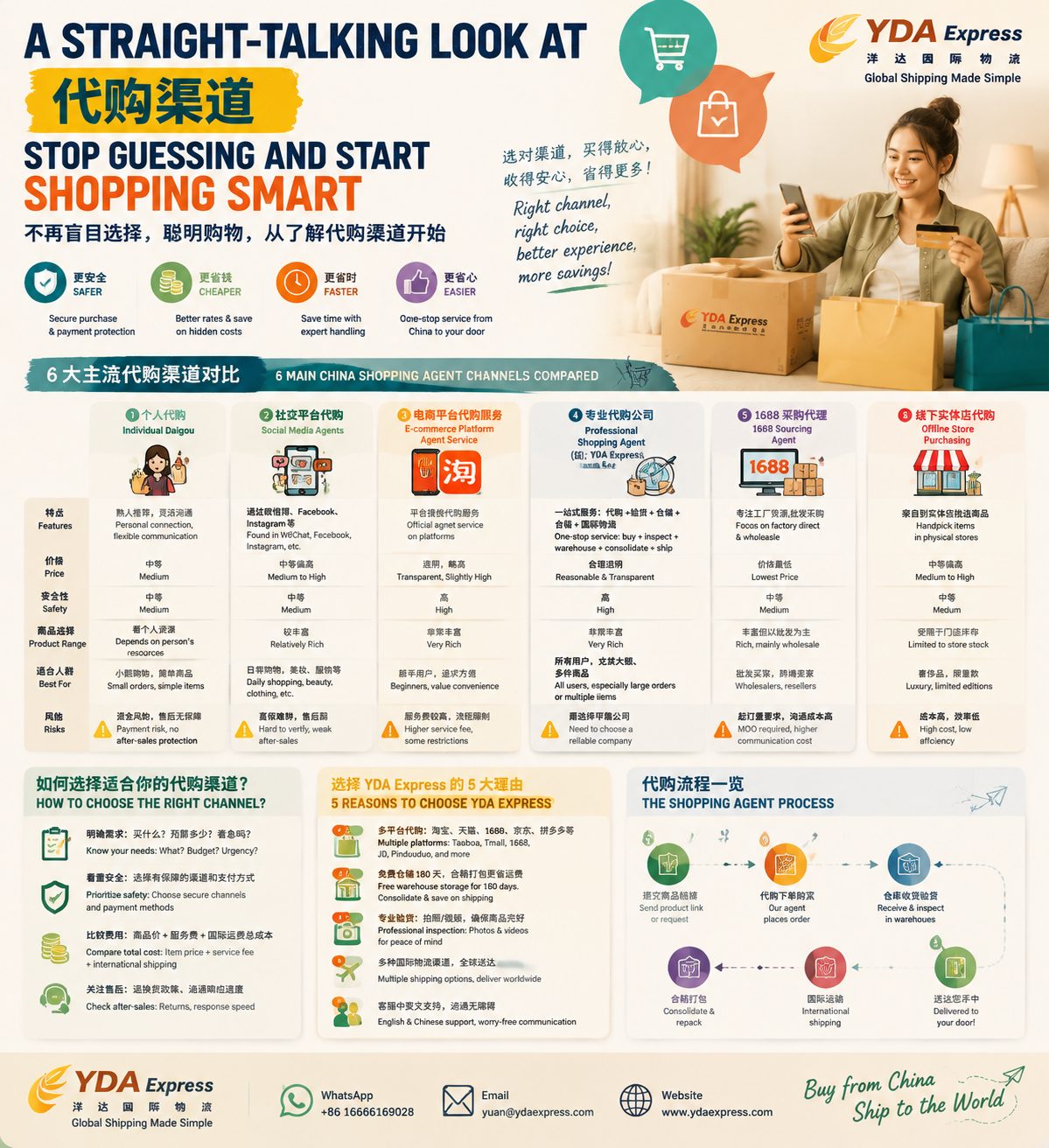
🛍️ Compra en China en un solo lugar No necesitas comprar por separado en Taobao, 1688, JD.com, Tmall o Pinduoduo. Con YDA Express puedes buscar productos, realizar pedidos, solicitar inspecciones con fotos, disfrutar de hasta 180 días de almacenamiento gratuito, consolidar paquetes y enviarlos a cualquier parte del mundo.
👉 Empieza a comprar 📦 Reenvío de paquetes y envíos internacionales ¿Ya realizaste tu compra? Envía tus productos a nuestro almacén en China. Ofrecemos recepción de paquetes, inspección con fotos, hasta 180 días de almacenamiento gratuito, consolidación, envíos internacionales y seguimiento en tiempo real.
👉 Explora todos nuestros servicios 📲 Descarga la app de YDA Express Una sola app para comprar en China, gestionar pedidos y paquetes, consolidar envíos, organizar el transporte internacional y seguir tus compras.
🌍 Más guías útiles Descubre consejos prácticos sobre compras en China, reenvío de paquetes, costes de envío y trámites aduaneros.