Descubre cómo funciona la logística de la cadena de suministro al comprar productos en China y cómo simplificar el proceso para que tus envíos lleguen rápido, sin costes ocultos ni dolores de cabeza.
Seguro que más de una vez has estado en esa situación: compras algo en una tienda online china, recibes un número de seguimiento que tarda en actualizarse, y durante semanas no tienes ni idea de dónde está tu paquete. O peor, recibes una notificación de aduanas pidiéndote más papeles o cobros inesperados. Es frustrante, lo sé.
Pero la mayoría de esos problemas no son culpa del vendedor, ni de la tienda, ni siquiera del transportista. Tienen que ver con la logística de la cadena de suministro, ese engranaje invisible que mueve los productos desde una fábrica en Shenzhen hasta la puerta de tu casa en Madrid, Ciudad de México o Buenos Aires. Entender cómo funciona —y quién puede hacerlo bien por ti— marca la diferencia entre una experiencia desastrosa y una operación limpia, barata y rápida.
En este artículo te explico, de forma práctica y sin tecnicismos, qué es realmente la logística de la cadena de suministro cuando compras fuera, cómo se organiza un envío internacional desde China y de qué manera un servicio como YdaExpress te quita todo ese peso de encima.
¿Qué es la logística de la cadena de suministro?
Si lo buscamos en un libro, la cadena de suministro abarca desde la materia prima hasta el cliente final. Pero para alguien que compra por internet —ya sea un particular que quiere unas zapatillas o un pequeño negocio que importa accesorios—, la logística de la cadena de suministro empieza en el momento en que das clic a “comprar” en una plataforma como AliExpress, Taobao o 1688, y termina cuando tienes el paquete en tus manos.
En ese recorrido pasan muchas cosas: alguien recibe la mercancía en un almacén en China, la revisa, la empaqueta de forma segura, la agrupa con otras compras que hayas hecho, elige la ruta de transporte más adecuada (aviación exprés, carga aérea, marítima...), prepara la documentación de aduanas, la envía, hace seguimiento y finalmente coordina la entrega local.
Eso es la logística de la cadena de suministro aplicada al comercio electrónico transfronterizo. Y te aseguro que, cuando se hace bien, apenas notas que existe. Cuando se hace mal… bueno, ya sabes.
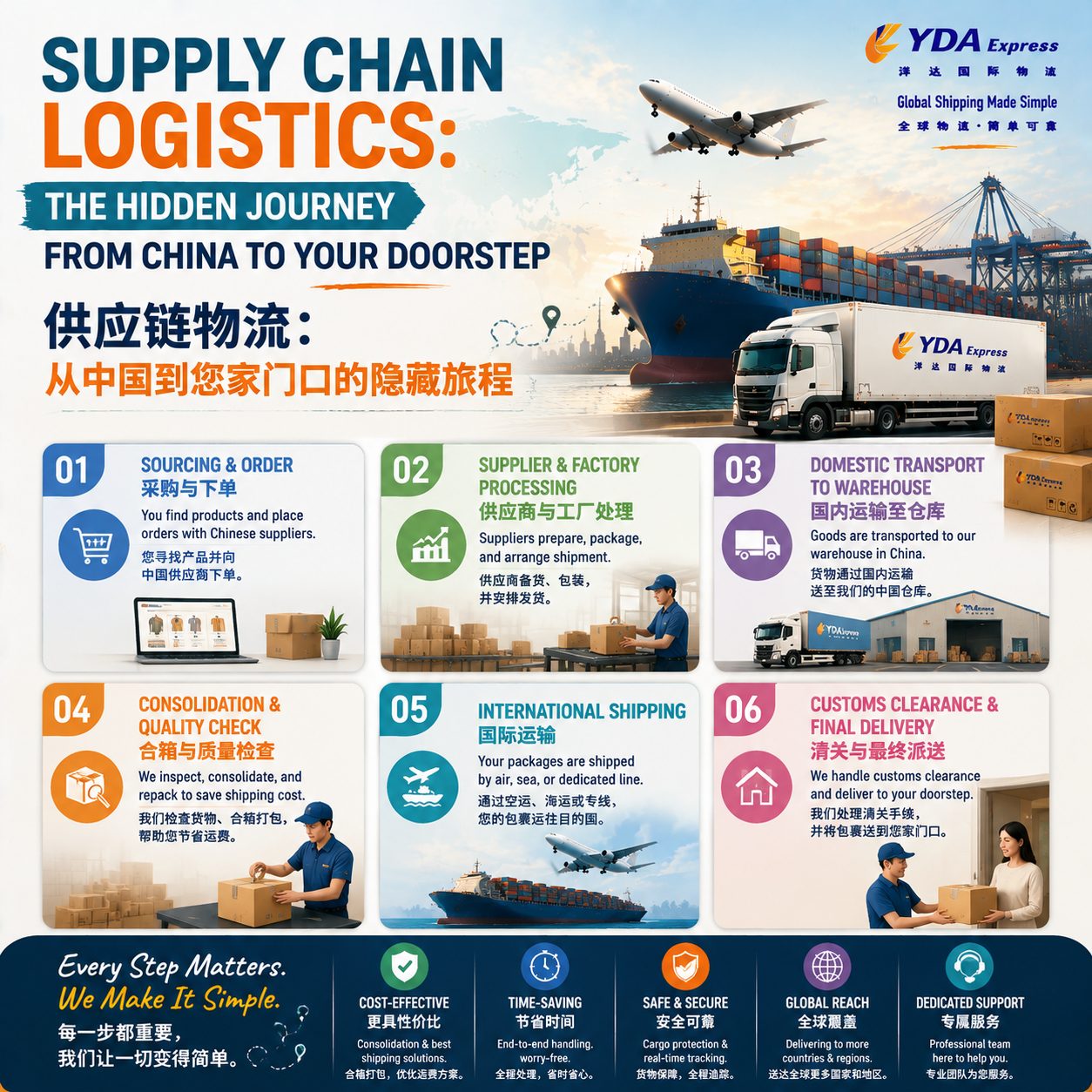
El viaje de tu paquete desde China
Vamos paso a paso. Así entenderás en qué consiste cada eslabón y por qué conviene tener a un experto al otro lado.
1. La compra y el almacenamiento
Normalmente, cuando compras en una tienda china que no envía directamente a tu país, necesitas una dirección de destino dentro de China. Servicios como YdaExpress te proporcionan una dirección en su almacén. El vendedor envía el producto allí, y cuando llega, se registra en tu cuenta con fotos, peso y dimensiones.
Aquí ya tenemos la primera ventaja: puedes ver lo que realmente ha llegado. Si el vendedor se equivoca de talla o de color, te enteras antes de que el paquete cruce medio mundo. Devolverlo dentro de China es mucho más fácil y barato que desde tu país.
Además, ese almacenamiento temporal te permite hacer varias compras en distintas fechas sin prisas. Tus cosas van acumulándose de forma segura hasta que decides enviarlas.
2. La consolidación: juntar para ahorrar
Imagina que pides una funda de móvil en 1688, una chaqueta en Taobao y tres figuritas en AliExpress. Si cada vendedor te lo enviara por separado, pagarías tres envíos internacionales, tres veces el manejo aduanero y probablemente tres declaraciones de valor que, aunque pequeñas, suman.
La consolidación es uno de los pasos más inteligentes dentro de la logística de la cadena de suministro. Consiste en recibir todos esos paquetes en el almacén chino, quitar embalajes innecesarios (muchas veces los vendedores ponen cajas enormes para algo minúsculo), agruparlo todo en un solo bulto y prepararlo para el viaje. El ahorro en costes de transporte ronda fácilmente el 30-50% y reduces el riesgo de extravíos.
Aquí es clave que el operador logístico tenga experiencia. Un buen embalaje, con protección interna pero sin peso muerto, evita daños y mantiene el coste bajo. Además, si declaras el contenido correctamente, facilitas la aduana.
3. Opciones de envío
Cuando tu paquete consolidado está listo, toca elegir cómo viaja. Tienes varias alternativas:
- Línea exprés internacional: DHL, FedEx o UPS son rápidos (3-7 días laborables a España, por ejemplo). Suelen incluir el despacho de aduanas estándar y te dan seguimiento puntual. Son algo más caros, pero muy fiables.
- Línea económica aérea: Transportistas como SF International o agentes locales que tienen acuerdos con aerolíneas. Tarda unos 10-20 días y el precio es intermedio. Buen equilibrio si no hay urgencia.
- Carga marítima: Para envíos muy grandes (por ejemplo, si importas mercancía para un pequeño negocio) el transporte marítimo tarda 30-45 días hasta puerto español, como Valencia o Barcelona, y luego se completa con distribución terrestre. Es la opción más económica para mucho volumen.
En todos los casos, una buena logística de la cadena de suministro te permite comparar tarifas, tiempos y coberturas, y elegir lo que mejor se adapte a tu presupuesto y prisa.
4. Aduanas y documentación
La aduana es el punto donde muchos envíos se atascan. No es ningún monstruo, pero necesita que los papeles estén en orden. En España, por ejemplo, todas las mercancías de fuera de la Unión Europea pagan IVA (salvo envíos de valor inferior a 22 euros, pero eso ya no aplica desde 2021 con la nueva normativa; ahora prácticamente todo paga). Si además el valor supera los 150 euros, puede haber aranceles.
Una declaración de aduanas clara —con el contenido descrito de forma precisa, el código arancelario correcto y el valor real— evita inspecciones y multas. Los proveedores logísticos serios preparan esta documentación de forma automática basándose en lo que tú has declarado en el almacén. Si intentas declarar menos para pagar menos impuestos, te arriesgas a que paren el paquete, te pidan justificante de pago y acabes pagando más y recibiendo el producto con semanas de retraso.
Aquí la transparencia es clave. YdaExpress, por ejemplo, te orienta sobre cómo declarar de forma realista y se encarga del papeleo para que el trámite sea fluido.
5. Entrega final
Una vez que el paquete pasa la aduana, entra en la red del transportista local (Correos, Seur, Correos de México, etc.). El seguimiento sigue activo y recibes notificaciones hasta la entrega. Si todo el trabajo previo se ha hecho bien, esta fase es casi automática.
Por qué falla la cadena de suministro (y cómo evitarlo)
Los fallos más comunes que veo a diario en logística de la cadena de suministro desde China son:
- Direcciones incompletas o incorrectas: en plataformas chinas, la dirección de envío a veces se corta o se escribe con caracteres no latinos. Tener un almacén propio en China soluciona ese problema.
- Embalaje deficiente: artículos frágiles que viajan sin protección y llegan rotos. Al consolidar, un operador profesional revisa el contenido y añade protección extra si es necesario.
- Documentación aduanera mal hecha: descripciones ambiguas como “regalos” o “muestras” suelen despertar sospechas. Mejor ser específico: “10 fundas de plástico para teléfono, valor 2€/unidad”.
- No comparar rutas: a veces pagas DHL para algo que no es urgente y podrías haber usado una línea económica aérea, o al revés, esperas un mes con una línea barata para un producto que necesitabas ya.
Contar con un agente de compras y logística que te asesore en cada paso evita todos estos tropiezos. No solo te da acceso a tarifas negociadas con transportistas, sino que te orienta con conocimiento real del terreno.
¿Merece la pena externalizar la logística de la cadena de suministro?
Honestamente, si haces compras ocasionales y no quieres complicarte, sí. Y si tienes un pequeño negocio y planeas importar con frecuencia, mucho más.
Desde el punto de vista práctico, delegar todo este proceso en un proveedor especializado te libera de:
- Tener que hablar con cada vendedor chino para coordinar envíos parciales.
- Gestionar almacenes que no conoces.
- Negociar tarifas de transporte sin volumen.
- Rellenar documentos aduaneros o lidiar con incidencias.
Además, cuando surge cualquier problema (un paquete que no llega al almacén, una inspección en aduanas), tienes a alguien que responde, en tu idioma y con conocimiento de causa.
En YdaExpress tratamos cada día con compradores en España, México, Colombia, Argentina y muchos otros países. El proceso está tan afinado que muchas veces recibimos sus compras, las consolidamos y las enviamos sin que ellos tengan que hacer nada más que seguir el tracking. Y cuando nos preguntan “¿cómo es posible que me llegara en 8 días?”, la respuesta está justamente en una cadena de suministro bien gestionada.
Cómo empezar con una logística de cadena de suministro sin dolores de cabeza
Si estás pensando en traer productos de China, ya sea para uso personal o para vender, estos son los pasos prácticos que te recomiendo:
- Crea una cuenta gratuita en un servicio de agente de compras y logística que te ofrezca dirección en China, almacenamiento, consolidación y envío internacional.
- Compra en las tiendas que quieras usando esa dirección de almacén como destino. Muchos agentes, como YdaExpress, incluso pueden hacer la compra por ti si no tienes Alipay o encuentras barreras de idioma.
- Cuando lleguen tus paquetes al almacén, revisa las fotos y los pesos. Si ves algo raro, pide devolución antes de que salga de China.
- Solicita la consolidación y elige el método de envío que más te convenga. Deja que el equipo prepare el paquete y gestione la documentación.
- Paga el envío y los impuestos que correspondan. A partir de ahí, solo sigue el tracking y espera.
Tu única preocupación será decidir qué comprar. Todo el resto —la logística de la cadena de suministro— queda en manos de profesionales que se dedican a esto.
Si quieres probarlo, en YdaExpress podemos ayudarte. Escríbenos por WhatsApp al +8616666169028,o visita nuestra web https://www.ydaexpress.com para crear tu cuenta y empezar a simplificar tus envíos desde China. Deja que los que llevamos años en esto nos ocupemos de la cadena mientras tú disfrutas de tus compras.
🛍️ Compra en China en un solo lugar No necesitas comprar por separado en Taobao, 1688, JD.com, Tmall o Pinduoduo. Con YDA Express puedes buscar productos, realizar pedidos, solicitar inspecciones con fotos, disfrutar de hasta 180 días de almacenamiento gratuito, consolidar paquetes y enviarlos a cualquier parte del mundo.
👉 Empieza a comprar 📦 Reenvío de paquetes y envíos internacionales ¿Ya realizaste tu compra? Envía tus productos a nuestro almacén en China. Ofrecemos recepción de paquetes, inspección con fotos, hasta 180 días de almacenamiento gratuito, consolidación, envíos internacionales y seguimiento en tiempo real.
👉 Explora todos nuestros servicios 📲 Descarga la app de YDA Express Una sola app para comprar en China, gestionar pedidos y paquetes, consolidar envíos, organizar el transporte internacional y seguir tus compras.
🌍 Más guías útiles Descubre consejos prácticos sobre compras en China, reenvío de paquetes, costes de envío y trámites aduaneros.