
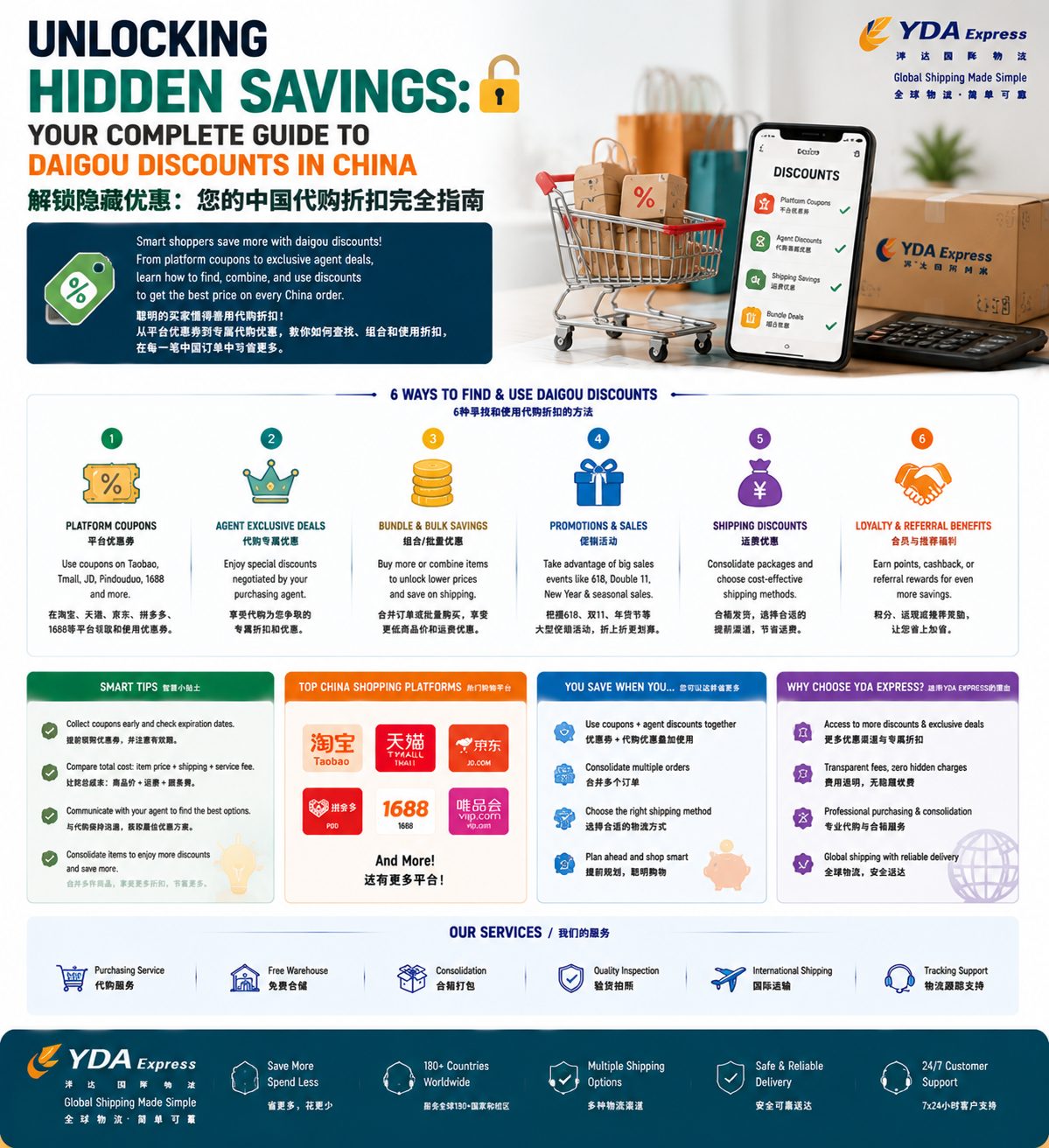
Descubre cómo los agentes de compras en China pueden ofrecerte descuentos exclusivos y cómo puedes aprovechar las mejores ofertas, reducir costos de envío y optimizar tus pedidos internacionales con servicios como YdaExpress.
代购折扣: Cómo Conseguir Descuentos Reales al Comprar en China a través de un Agente
Seguro que más de una vez te has visto tentado por esos precios increíblemente bajos que ves en Taobao, 1688 o JD. Ropa de moda, accesorios electrónicos, decoración… todo mucho más barato que en las tiendas locales. Pero cuando sumas el envío internacional y los posibles impuestos, la cosa cambia. Aquí es donde un buen agente de compras marca la diferencia, y sí, también donde entran en juego los famosos 代购折扣 (descuentos de agente de compras). No es magia: es conocimiento del mercado chino, volumen de compras y un poco de estrategia logística.
¿Qué es realmente un agente de compras y por qué puede ofrecer descuentos?
Un agente de compras, o daigou, es un intermediario que compra productos en China por ti y te los envía al extranjero. Pero no es solo un mensajero con carrito de compras. Un agente profesional opera como un socio comercial: tiene relaciones directas con fábricas, compra en grandes volúmenes y conoce las plataformas y los eventos de descuento mejor que nadie.
Los descuentos pueden venir de varios lados:
- Descuentos por volumen: al agrupar pedidos de varios clientes, el agente negocia precios de mayorista incluso para cantidades pequeñas.
- Ofertas relámpago y cupones: los agentes están atentos a promociones en apps como Pinduoduo, Taobao y 1688, y aplican códigos que tú ni siquiera sabrías que existen.
- Precios sin intermediarios locales: en China, algunos productos tienen un precio de venta al público distinto al que se ofrece a compradores internacionales. El agente accede al precio local, sin el recargo que pagarías en una tienda extranjera.
Honestamente, cuando empecé a trabajar con envíos desde China, me sorprendía la diferencia real. Un par de zapatillas que en España veías por 80 €, aquí, con un buen agente, podían salir por menos de 30 € puestas en la puerta de tu casa.
Tipos de descuentos que puedes esperar (y cómo usarlos a tu favor)
No todos los descuentos son un porcentaje fijo. La clave está en saber combinar varias estrategias para bajar el costo total.
Descuentos por consolidación de envíos
Este es uno de los que más confunde a los compradores primerizos. Imagina que pides 5 artículos de tiendas distintas. Si cada uno se enviara por separado, los gastos de envío se multiplicarían. Un agente los recibe en su almacén en China, los junta en una sola caja y te los manda de una vez. El ahorro puede llegar al 60% o más frente al envío individual. Y además, muchas empresas de mensajería cobran menos por kilo adicional que por el primer kilo, así que consolidar siempre será más rentable.
Descuentos por temporada y eventos especiales
Si no conoces el 11.11 (el Día del Soltero) o el 6.18, te estás perdiendo los mayores descuentos del mundo. Durante estos eventos, los precios en las plataformas chinas caen en picado. Un agente sabe cuándo comprar y, a menudo, reserva productos por adelantado para asegurar stock. No es raro ver rebajas del 50% o más en electrónica y moda. La clave es planificar con tiempo y preguntar a tu agente por el calendario de próximas ofertas.
Descuentos por fidelidad y clientes recurrentes
Muchos agentes ofrecen pequeñas comisiones más bajas o exenciones de tarifas de gestión para clientes habituales. Si compras cada mes para tu negocio o para uso personal, negocia. Un agente profesional valora la relación a largo plazo y puede ajustar sus honorarios después de unos cuantos envíos exitosos.
Envíos low-cost sin perder trazabilidad
No todo es ahorrar en el producto. El envío puede comerse el descuento si no eliges bien. Un buen agente te da opciones: desde el económico China Post Air Mail (que tarda pero es muy barato) hasta DHL o FedEx para entregas urgentes. Para paquetes de menos de 2 kg, el envío económico puede costar apenas unos pocos euros. Eso sí, no sacrifiques el seguro en productos de alto valor. El ahorro de verdad es sentir que tu compra está protegida.
Cómo elegir un agente que realmente te dé descuentos, no dolores de cabeza
Aquí viene lo que muchos no te cuentan. No todos los que prometen “los mejores precios” son de fiar. Para reconocer un servicio serio, fíjate en esto:
- Transparencia en tarifas: un agente profesional desglosa el costo del producto, su comisión, el envío y los posibles impuestos. Si te dicen un precio “todo incluido” sin detalle, desconfía.
- Comunicación fluida y en tu idioma: no hace falta que hablen español perfecto, pero sí que entiendas las condiciones. Un agente que responde rápido y aclara dudas vale su peso en oro.
- Almacenamiento gratuito y fotos de control: servicios como YdaExpress ofrecen almacenamiento gratuito por varios días y te envían fotos cuando reciben los productos. Así verificas que todo es correcto antes de enviar.
- Opciones de envío variadas: que te permita elegir entre Correos, DHL, FedEx o alternativas locales al llegar a tu país. Esto puede reducir mucho el costo final, sobre todo si vives en una zona donde Correos de España, por ejemplo, es más económico para paquetes pequeños.
La experiencia real: lo que he aprendido pidiendo desde China
En YdaExpress hemos visto de todo: desde el entusiasta que compra fundas de móvil hasta el pequeño emprendedor que trae mercancía para su tienda online. Y lo que más se repite es que el verdadero ahorro no está en un solo descuento, sino en todo el proceso optimizado. Cuando almacenas tus compras durante una o dos semanas, esperas a juntar un buen lote y luego consolidas, el costo por artículo se desploma.
Por ejemplo, un cliente de Barcelona compró seis chaquetas en pleno verano, cuando en China estaban en liquidación. Las guardamos en nuestro almacén hasta que él completó otros pedidos. Consolidamos todo en una caja de 5 kg y lo enviamos por una línea económica con tracking. El envío total le salió por 22 €, menos de 4 € por chaqueta. Con ese margen, pudo venderlas a un precio muy competitivo y aún ganar dinero.
Algunos errores comunes que debes evitar
- No calcular el peso volumétrico: muchos se fijan solo en el peso real, pero las mensajerías cobran por el espacio que ocupa el paquete. Un solo artículo muy ligero pero voluminoso (como un peluche gigante) puede elevar el costo si no se consolida con otros más densos.
- Olvidar los impuestos de importación: en España, compras superiores a 150 € pagan IVA e impuestos aduaneros. Un agente serio te asesora sobre cómo declarar el valor para que no haya sorpresas, pero siempre dentro de la legalidad.
- Pedir en épocas de alta demanda: durante el Año Nuevo Chino o la Navidad, los envíos se ralentizan y suben los precios. Planifica tus compras con 6-8 semanas de antelación si quieres los mejores precios.
Cómo conseguir tus 代购折扣 paso a paso
Si estás listo para empezar, aquí tienes un itinerario práctico:
- Define lo que quieres comprar: manda los enlaces de los productos a tu agente o pídele que busque por ti. Indica tallas, colores y cantidades.
- Solicita un presupuesto con descuentos aplicables: pregunta explícitamente si hay cupones activos, precios por lote o descuentos por pago anticipado.
- Aprovecha el almacenamiento gratuito: no envíes cada cosa según va llegando. Deja que el agente reciba todo y luego decide cuándo mandarlo. Así puedes añadir más productos que se te ocurran sobre la marcha.
- Elige la mejor opción de envío: compara al menos dos alternativas. A veces, un servicio más lento pero mucho más barato puede ser tu mejor aliado si no tienes prisa.
- Revisa las fotos y confirma antes del envío: este paso es vital. Una vez que el paquete salga del almacén, no hay vuelta atrás fácil. Asegúrate de que todo está en orden.
- Realiza el seguimiento y comparte tu experiencia: si el agente hace un buen trabajo, fideliza. Con el tiempo, los descuentos y condiciones mejoran.
¿Merece la pena todo esto?
Si compras de vez en cuando, quizá no le veas tanto valor. Pero si eres de los que piden cada dos por tres o tienes un negocio pequeñito, usar un agente con experiencia es casi obligatorio para no tirar el dinero. Los 代购折扣 no son un mito: existen y pueden ser muy generosos si sabes cómo y cuándo aprovecharlos.
Personalmente, después de años gestionando envíos internacionales, sigo impresionado por la cantidad de gente que paga de más por no dedicar unos minutos a planificar sus pedidos. No es complicado, sólo hace falta el compañero adecuado.
Si tienes dudas o quieres empezar a comprar en China con todas las garantías, en YdaExpress podemos ayudarte. Ofrecemos almacenamiento gratuito, consolidación de paquetes, asesoría personalizada y múltiples líneas de envío para que tú solo te preocupes de elegir lo que quieres. Escríbenos por WhatsApp al +8616666169028 o visita nuestra web y te preparamos una cotización sin compromiso. Verás que comprar desde China con descuentos reales es más fácil de lo que imaginas.
🛍️ Compra en China en un solo lugar No necesitas comprar por separado en Taobao, 1688, JD.com, Tmall o Pinduoduo. Con YDA Express puedes buscar productos, realizar pedidos, solicitar inspecciones con fotos, disfrutar de hasta 180 días de almacenamiento gratuito, consolidar paquetes y enviarlos a cualquier parte del mundo.
👉 Empieza a comprar 📦 Reenvío de paquetes y envíos internacionales ¿Ya realizaste tu compra? Envía tus productos a nuestro almacén en China. Ofrecemos recepción de paquetes, inspección con fotos, hasta 180 días de almacenamiento gratuito, consolidación, envíos internacionales y seguimiento en tiempo real.
👉 Explora todos nuestros servicios 📲 Descarga la app de YDA Express Una sola app para comprar en China, gestionar pedidos y paquetes, consolidar envíos, organizar el transporte internacional y seguir tus compras.
🌍 Más guías útiles Descubre consejos prácticos sobre compras en China, reenvío de paquetes, costes de envío y trámites aduaneros.