Descubre cómo funciona la logística de exportación desde China, los modos de envío, documentación clave y cómo un agente logístico como YDA Express te ayuda a importar sin errores. Consejos prácticos para particulares y empresas que compran en plataformas como Taobao.
Un amigo me dijo hace poco: «Comprar en China es fácil, lo difícil es que te llegue». Y tiene toda la razón. Pedir un producto en 1688, Taobao o Tmall es un paseo, pero luego empieza la aventura: ¿cómo lo saco del país? ¿qué papeleo necesito? ¿y si se queda en aduanas? La logística de exportación —o export logistics, como la llaman los que ya llevan años en esto— es justo ese puente que muchos olvidan hasta que es demasiado tarde.
He visto cajas perdidas, paquetes retenidos en Barajas durante semanas y facturas de aduana que dolían más que el propio producto. Por eso, esta guía va a explicártelo todo con los pies en la tierra. Sin tecnicismos de relleno, pero sin olvidar lo importante. Si alguna vez has pensado en traer mercancía desde China, o si ya lo haces y quieres ahorrarte sustos, quédate.
¿Qué es realmente la logística de exportación?
Básicamente, es todo lo que ocurre entre que un proveedor chino mete tu pedido en una caja y tú lo recibes en tu casa o almacén de Madrid, Ciudad de México o Buenos Aires. Suena simple, pero incluye recogida, almacenaje, embalaje, despacho de aduanas, transporte internacional y entrega final. Y cada paso tiene sus trucos.
No es solo contratar un envío. La logística de exportación bien hecha te ahorra dinero, evita multas y te da tranquilidad. La mal hecha... te convierte en detective por un mes persiguiendo un número de tracking que no se actualiza.
A menudo la gente piensa que basta con que el vendedor ponga una dirección en la etiqueta. Pero exportar —sacar mercancía del territorio aduanero chino e introducirla en el tuyo— exige documentos, códigos arancelarios y, muchas veces, pagar impuestos antes de que el paquete llegue a tu puerta. Si nadie te lo explica, es normal sentirse perdido.
Lo que diferencia un envío normal de una exportación
Un paquete que circula dentro de China no necesita aduanas. Tu pedido de Shanghái a Pekín es un asunto doméstico. Cuando cruza fronteras, intervienen dos países, dos sistemas fiscales y una montaña de regulaciones. Por eso, aunque compres en una tienda online, si el origen es China y tú estás en España, estás importando. Y para la aduana china, ese producto está saliendo del país: es una exportación.
Es decir, cada envío transfronterizo es una operación de importación/exportación. Y si no cumples con los requisitos, el paquete puede ser devuelto, destruido o generar costes extra que nadie te va a pagar.
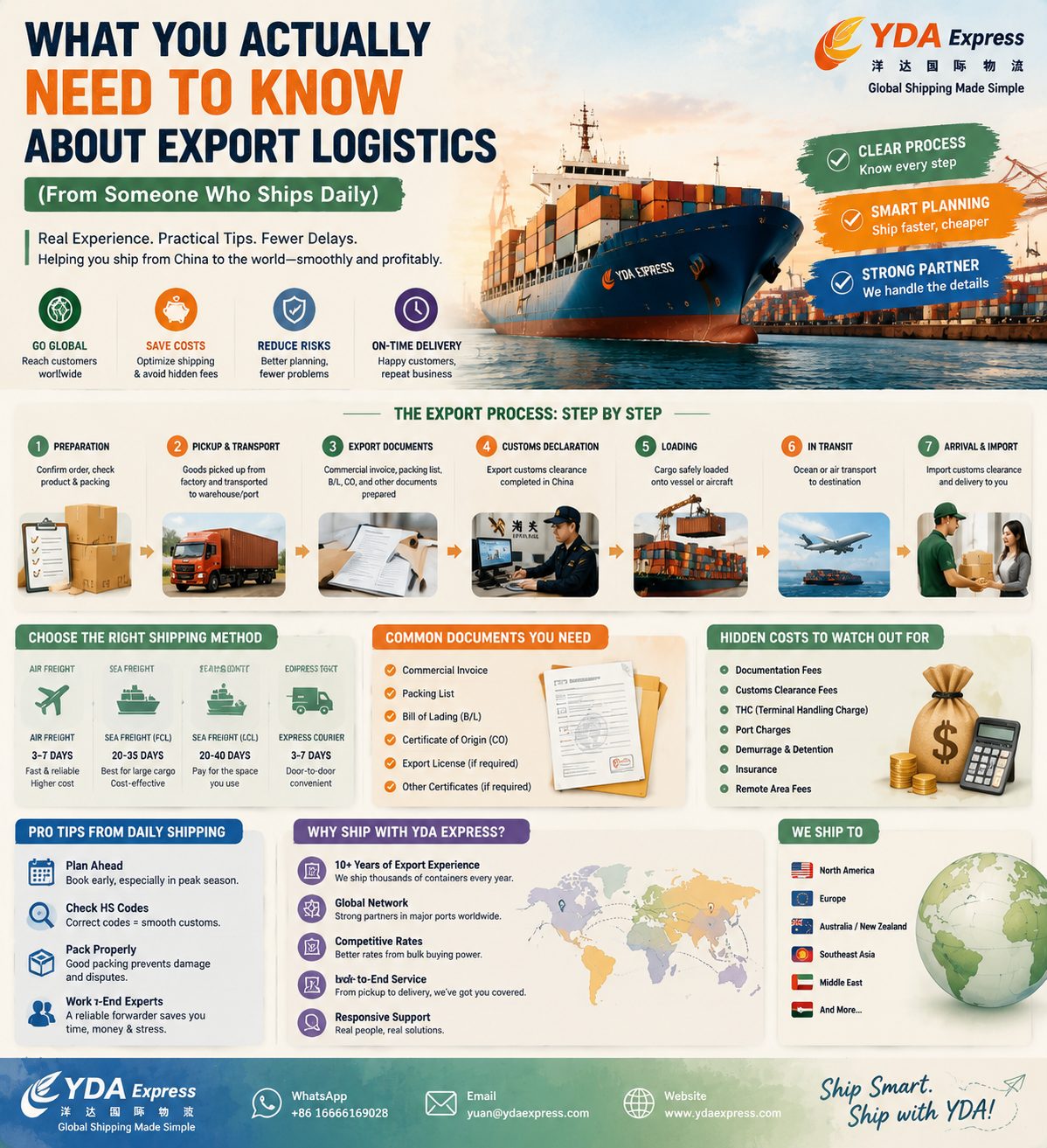
Modos de envío desde China: cómo elegir el tuyo
Aquí viene la primera decisión gorda: por dónde mando mis cosas. No es lo mismo enviar un móvil que diez cajas de zapatillas. Y tu presupuesto también manda.
Express internacional (DHL, FedEx, UPS, SF International)
Es la opción más rápida y cómoda. Puerta a puerta en 3-7 días hábiles. Ideal para muestras, documentos o paquetes pequeños. El transportista se encarga de casi todo el papeleo aduanero. Pero ojo: aunque el envío sea rápido, si tu paquete supera el valor mínimo exento de impuestos (en España, por ejemplo, todo lo que pase de 150 euros paga IVA y aranceles), los costes pueden dispararse. Es común que DHL te pida el pago de impuestos antes de entregarte el paquete. Si no pagas, no lo sueltan.
Transporte aéreo (carga aérea)
Se usa para envíos más grandes, normalmente a partir de 50-100 kg. Va en aviones de carga, no en el maletero del pasajero. Tarda entre 5 y 10 días y suele ser más barato que el express por kilo. Pero no es puerta a puerta: necesitas un agente que recoja la mercancía en el aeropuerto de destino y la lleve hasta tu dirección. Requiere más papeleo y, a veces, contratar un despachante de aduanas.
Transporte marítimo
La opción reina para cargas grandes o pesadas. Tarda entre 25 y 45 días (dependiendo del puerto: Valencia, Barcelona, Algeciras, Veracruz, Callao...). Es la más económica por kilo, pero exige planificación: debes reservar espacio en un contenedor (completo o compartido), preparar un Bill of Lading, factura comercial, packing list... Además, cuando el barco llega, hay que hacer el despacho en la aduana del puerto y luego el transporte interior. Si nunca lo has hecho, puedes perder semanas en trámites.
Ferrocarril (tren de mercancías China-Europa)
Una alternativa que ha crecido mucho. Conecta ciudades chinas como Yiwu o Wuhan con Madrid o Duisburgo en unos 18-22 días. Es más rápido que el barco y más barato que el avión. Ideal para mercancías de valor medio que no pesan mucho. Perfecta si tienes tiempo pero no quieres esperar un mes.
Al final, elegir modo no es solo cuestión de precio: también importa la urgencia, el tipo de producto (los productos electrónicos con baterías tienen restricciones aéreas) y cuánto estás dispuesto a involucrarte en trámites.
Transporte exprés vs. carga aérea: el error típico
Mucha gente oye «aéreo» y piensa en DHL. Pero el aéreo de carga es otra cosa. Imagina que quieres enviar 200 kg de ropa desde Guangzhou a Madrid. Si contrarias un envío exprés, te costaría una fortuna. Si usas carga aérea, pagas por el espacio que ocupa tu mercancía en un vuelo comercial de carga y luego un camión te lo acerca. Eso sí, tendrás que hacer el despacho tú o contratar a alguien.
La diferencia práctica: con mensajería exprés, la empresa de paquetería actúa como declarante aduanero y te simplifica el proceso. Con carga aérea y marítima, normalmente necesitas un agente de aduanas o un transitario. Por eso muchas pymes y particulares prefieren el express, aunque paguen más. Hasta que el volumen lo justifica.
Documentación que siempre vas a necesitar
No subestimes el papeleo. Una coma mal puesta puede detener tu carga durante semanas. Estos son los documentos clave:
- Factura comercial: Es la factura de venta. Debe incluir precio unitario, total, divisa (normalmente en USD), condiciones de entrega (Incoterms) y declaración de origen. Sin ella, aduanas no sabe cuánto cobrar de impuestos.
- Packing list (lista de empaque): Detalla peso, dimensiones, número de bultos y contenido de cada caja. La aduana puede pedirla para verificar que la mercancía coincide con lo declarado.
- Conocimiento de embarque o Air Waybill: Para envíos marítimos (Bill of Lading) o aéreos (AWB). Es el contrato de transporte y sirve para reclamar la mercancía en destino.
- Certificado de origen: Algunos productos necesitan demostrar que son «made in China» para acogerse a aranceles reducidos o cumplir normativas.
- Licencias o certificados especiales: Dependiendo del producto: sanitarios, fitosanitarios, CE, ROHS, etc. Si importas juguetes, cosméticos o electrónicos, asegúrate de que cumplen con la normativa europea o de tu país.
En envíos exprés, normalmente el transportista te pedirá solo la factura y tal vez una lista de contenido. Pero cuando te mueves a carga aérea o marítima, la lista se alarga.
Aduanas y aranceles: lo que nadie te cuenta
Cada país tiene su propia normativa. Pero hay patrones comunes. En la Unión Europea, por ejemplo, desde 2021 se eliminó la exención de IVA para importaciones de menos de 22 euros. Ahora todo paga IVA. Además, si el valor supera los 150 euros, se pagan aranceles según la partida arancelaria. En otros países, como México, hay franquicias diferentes (por ejemplo, 50 USD por envío para particulares). Infórmate antes de comprar.
Los aranceles dependen del código TARIC (en Europa) o del Sistema Armonizado. Una confusión en la clasificación puede hacer que pagues de más o, peor, que la aduana te multe. Si no tienes claro el código arancelario de tu producto, busca a alguien que te asesore.
Un consejo: nunca pidas al proveedor que declare un valor menor para «ahorrar impuestos». Las aduanas no son tontas; conocen los precios de mercado. Si te pillan, te arriesgas a sanciones, retrasos y que tu nombre quede marcado. Lo barato sale caro.
Cómo un transitario (o agente logístico) te salva la vida
Aquí es donde entra gente como YDA Express. Un transitario no es solo un mensajero: es un especialista que coordina toda la cadena de exportación. Se encarga de reservar espacio en el transporte, preparar la documentación, gestionar aduanas y entregar la mercancía en destino. Es decir, hace de puente entre el vendedor chino y tú.
Imagina que compras 50 zapatillas en una fábrica de Fujian. El vendedor las envía al almacén de YDA Express en China. Allí las reciben, revisan que estén bien embaladas, te mandan fotos si quieres, y luego las consolidan con otros envíos (si usas envío agrupado) para ahorrar costes. Luego eligen el mejor modo de transporte según tu presupuesto y urgencia, preparan los papeles y las envían. Cuando llegan a tu país, se encargan del despacho de aduanas (si contratas el servicio) o te lo coordinan para que no tengas que aprenderte de memoria el Código Aduanero. Al final, recibes tus zapatillas sin haber sudado una gota.
¿Por qué usar un agente en lugar de ir directamente a DHL o al barco?
Porque un agente como YDA Express trabaja con múltiples transportistas y puede ofrecerte tarifas negociadas que tú no conseguirías solo. Además, te asesora sobre qué modo conviene más: a veces un envío exprés sale más a cuenta que un aéreo porque evita gastos ocultos de manipulación en aeropuerto. Y te libra de tener que coordinar con proveedores chinos que quizás no hablan tu idioma y no entienden las exigencias aduaneras de tu país.
Si compras regularmente en Taobao, 1688 o Tmall, un servicio de consolidación (juntar varios paquetes en uno solo) te ahorra muchísimo dinero. Imagina que pides diez artículos pequeños a diez tiendas distintas. Si cada uno te lo enviaran por separado, pagarías diez envíos internacionales y diez veces los gastos de gestión aduanera. Consolidando, todo va en un solo envío, y el ahorro es enorme.
Errores comunes al exportar desde China (y cómo evitarlos)
He visto repetirse los mismos fallos una y otra vez. Aquí van algunos:
- Olvidar el Incoterm: Si solo acuerdas el precio de compra sin definir quién paga el transporte y el seguro, pueden surgir disputas. Usa términos como FOB (el vendedor entrega en el puerto chino y tú pagas el flete principal) o EXW (tú recoges en fábrica y gestionas todo). Si no sabes qué elegir, pregunta.
- No calcular el peso volumétrico: En envíos aéreos, no solo importa el peso real, sino el espacio que ocupa la caja. Una caja grande con poca densidad (como almohadas) se cobra por peso volumétrico, no por peso real. Si no lo tienes en cuenta, el coste se dispara.
- Embalaje deficiente: Los viajes internacionales son brutales. Cajas mal protegidas llegan aplastadas. Un buen agente te sugerirá embalaje extra para evitar daños.
- Ignorar las restricciones de productos: Pilas, líquidos, cosméticos, imitaciones... cada país tiene sus límites. Antes de comprar, verifica si tu producto puede entrar sin problemas.
- No tener en cuenta el tiempo: Si pides por barco, calcula fechas pensando en posibles retrasos por congestión portuaria, huelgas o temporada alta (como antes del Año Nuevo Chino).
¿Conviene más un envío marítimo o un exprés? Un ejemplo práctico
Supongamos que quieres enviar 30 kg de ropa desde Guangzhou a Barcelona. Con DHL Express, pagarías alrededor de 7-8 euros por kilo (precio final con impuestos aparte). El envío llegaría en 4-5 días. Con carga aérea, podrías conseguir 4-5 euros el kilo, pero tardaría 7-10 días y tendrías que hacer despacho (o pagar a alguien). Por barco, envíos pequeños no salen a cuenta, pero si juntas 100 kg, el coste puede bajar a 1,5-2 euros el kilo, aunque tardará un mes. Ahora, si eres un particular que solo compra 5-10 kg de vez en cuando, el exprés te simplifica la vida y los costes adicionales de aduana serán similares. Pero si tienes una tienda online y envías 100 kg al mes, consolidar y usar barco o tren te ahorrará miles de euros al año.
En YDA Express hemos visto de todo: desde estudiantes que traen una maleta de ropa desde Taobao hasta importadores que mueven contenedores completos de muebles. Y la clave siempre es la misma: saber qué opción se adapta a tu carga y no dejarte llevar solo por el precio más bajo.
Cómo empezar con la logística de exportación hoy mismo
Si estás listo para dar el paso, estos son los pasos que te sugerimos:
- Define tu producto y su código arancelario. Puedes consultar con un agente o buscar en el portal de aduanas de tu país.
- Elige un proveedor fiable en China. Plataformas como Alibaba, 1688 o Taobao. Pide muestras si puedes.
- Contacta con un agente logístico especializado en China. Explícale tu volumen, frecuencia y destino. Te dará opciones de transporte y costes.
- Prepara la documentación. Factura proforma, lista de empaque y los certificados que necesites.
- Confirma el envío y haz el seguimiento. Un buen agente te informará en cada etapa.
No hace falta que sepas todo de antemano. De hecho, la mayoría de nuestros clientes en YDA Express empezaron sin idea y fueron aprendiendo sobre la marcha. Lo importante es tener un socio logístico que te acompañe y no te falle cuando el paquete se atasque en aduanas.
Reflexión final
La logística de exportación puede parecer un laberinto al principio, pero si la descompones en pasos y te rodeas de profesionales, se convierte en una herramienta que te abre las puertas a los mejores productos del mundo a precios competitivos. China es la fábrica global, y saber cómo traer de allí lo que necesitas, sin errores y sin dramas, es una ventaja enorme.
Si quieres que te echemos una mano con tus envíos desde China, ya sea para uso personal, para tu negocio o para revender, en YDA Express estamos a un mensaje. Escríbenos por WhatsApp al +86 16666169028 o por correo a yuan@ydaexpress.com. Y si prefieres echar un vistazo a nuestros servicios de consolidación y compra asistida, visita nuestra web: https://www.ydaexpress.com. La primera consulta es gratis.
🛍️ Compra en China en un solo lugar No necesitas comprar por separado en Taobao, 1688, JD.com, Tmall o Pinduoduo. Con YDA Express puedes buscar productos, realizar pedidos, solicitar inspecciones con fotos, disfrutar de hasta 180 días de almacenamiento gratuito, consolidar paquetes y enviarlos a cualquier parte del mundo.
👉 Empieza a comprar 📦 Reenvío de paquetes y envíos internacionales ¿Ya realizaste tu compra? Envía tus productos a nuestro almacén en China. Ofrecemos recepción de paquetes, inspección con fotos, hasta 180 días de almacenamiento gratuito, consolidación, envíos internacionales y seguimiento en tiempo real.
👉 Explora todos nuestros servicios 📲 Descarga la app de YDA Express Una sola app para comprar en China, gestionar pedidos y paquetes, consolidar envíos, organizar el transporte internacional y seguir tus compras.
🌍 Más guías útiles Descubre consejos prácticos sobre compras en China, reenvío de paquetes, costes de envío y trámites aduaneros.