Behind the Scenes of Customs: What 'Supervision' Really Means for Your Shipment

管理员
2026年7月4日
24 阅读
0 喜欢

When you ship internationally, 'customs supervision' isn't just about a quick inspection—it's an entire process that can make or break your delivery. Learn what it involves and how to navigate it successfully.

You’ve finally found the perfect supplier on 1688. The samples looked great. You placed a small order, paid, and had it shipped to your forwarder in Shenzhen. A few days later, you get an update: “Held by customs for inspection.” No further details. Just those five words, and your mind starts racing.

That sinking feeling is something we see all the time at YdaExpress. A package that should have been on a plane sits in limbo, and you’re left wondering: what exactly is happening? That’s customs supervision in action, and it’s not as mysterious as it seems.

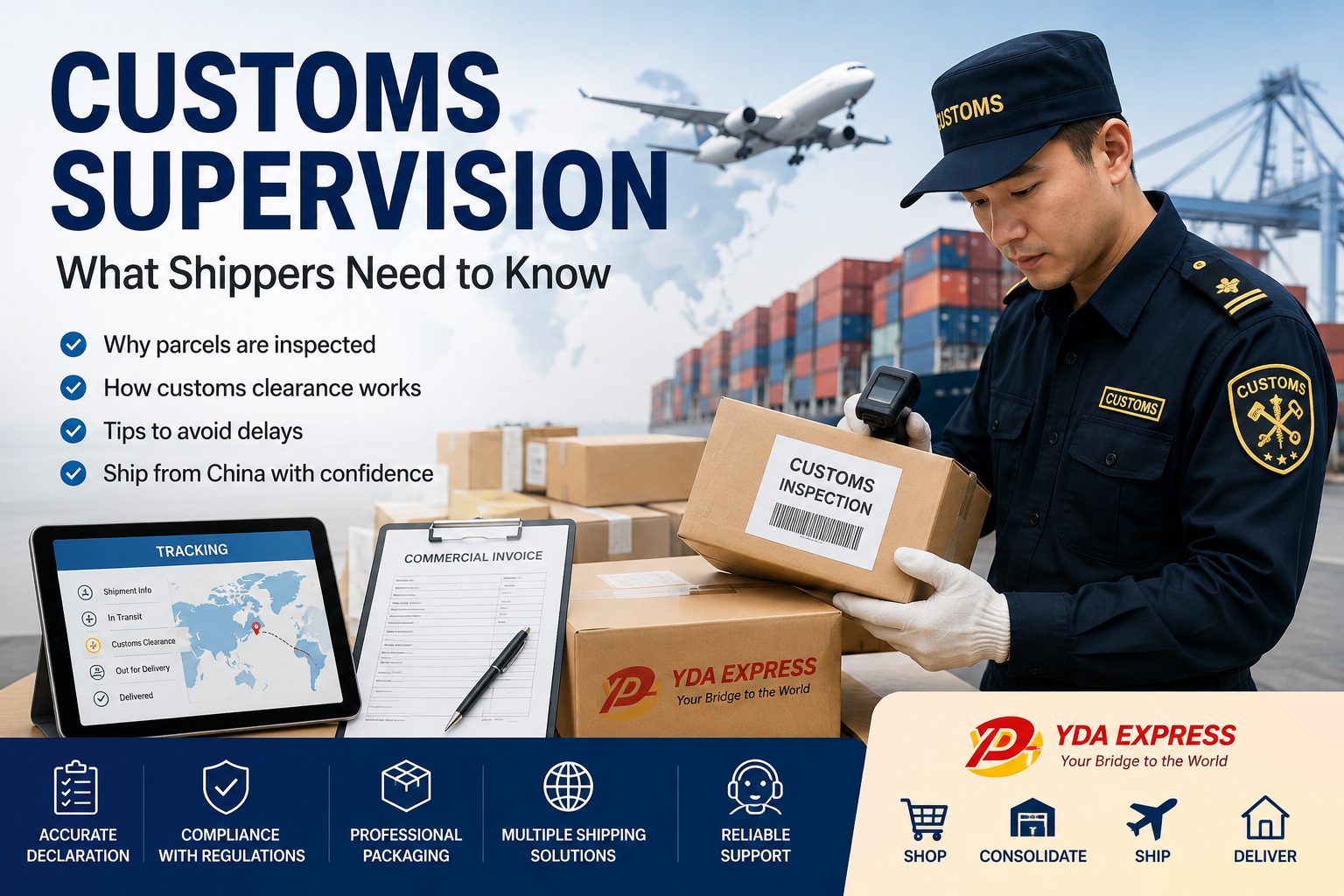
Customs supervision, or 海关监管 in Chinese, is the entire system of rules, checks, and monitoring that a country’s customs authority uses to control goods crossing its borders. It’s not a single event—like a border officer waving you through or pulling you aside. It’s a continuous process that starts the moment your shipment enters the customs territory and ends only when it’s officially cleared for import or export.

Think of it as a silent, watchful mechanism. It doesn’t just look at what’s inside your box. It checks the paperwork, the declared value, the origin, the destination, and a dozen other data points. If something doesn’t add up, the system flags it. That’s when your tracking updates with that dreaded “held” status.

Why Customs Supervision Matters (More Than You Think)

Here’s the thing: customs supervision isn’t there to annoy you. It serves three main purposes: security, trade compliance, and revenue collection. Governments want to stop illegal goods, protect local industries, and collect the right amount of duties and taxes. Fair enough.

But for a small business owner or an individual shopper, supervision can feel like a lottery. You might send ten packages without a hitch, and then the eleventh gets stuck. Why? Because supervision has layers. Some shipments get a quick automated data check; others are selected for physical inspection. And some unlucky ones face a full document audit that can drag on for weeks.

The key is understanding what triggers closer scrutiny. That knowledge turns a nerve-wracking process into something you can manage.

What Actually Triggers Closer Customs Supervision?

Let’s get practical. After handling thousands of parcels from China, we’ve noticed certain patterns. The following factors dramatically increase your chances of a hold-up:

1. Vague or Incorrect Paperwork
A commercial invoice that simply says “gift” or “samples” without a realistic value is a red flag. Customs officers aren’t naive. If the package weighs 5 kg and the declared value is $10, they’ll likely open it. Inaccurate HS codes, missing sender details, or mismatched addresses all invite extra checks.

2. Undervaluation
This is the number one mistake we see. Sellers sometimes offer to mark a lower value to help you save on import duties. Don’t do it. Customs databases are smart. They know the average value of commonly shipped items. If you declare a $200 smartphone as a $20 “electronic accessory,” you’re asking for trouble. Penalties can range from delays to confiscation—and you’ll still owe the unpaid duties.

3. Suspicious Package Characteristics
Damaged boxes, excessive tape, or packaging that smells odd—these can prompt a physical inspection. Even the way items are listed matters. A package labeled “personal effects” that contains a dozen identical watches will get flagged.

4. Restricted or Prohibited Goods
Every country has a list of items that need special permits or are outright banned. Lithium batteries, branded counterfeits, certain cosmetics, food products—these often require extra documentation. If you’re unsure, check the destination country’s customs website before shipping.

5. Random Selective Checks
Sometimes, it’s just bad luck. Customs agencies use risk-management algorithms that pick random shipments for inspection to keep everyone honest. You can’t avoid these, but you can make sure your paperwork is so clean that the check is over quickly.

The Chinese Customs Angle

When you’re shipping from China, you’re dealing with two customs authorities: Chinese export customs and the destination country’s import customs. Both exercise supervision, and each has its own quirks.

Chinese export customs look for things like sensitive technologies, endangered species, or items needing export licenses. They also keep an eye on intellectual property. That means if you’re shipping a batch of sneakers with a well-known logo, they might hold it to verify brand authorization.

At YdaExpress, we often see delays caused by small paperwork blunders that the seller didn’t catch. A missing battery declaration, a mismatch between the invoice and the packing list—these are easy to avoid with a professional eye. Our team reviews every shipment’s documents before consolidation, because even a minor error at the Chinese export stage can cascade into a mess at the destination.

How Long Does Customs Supervision Take?

There’s no single answer. For air express shipments with major carriers like DHL or FedEx, basic supervision might be over in hours if everything’s electronic and pre-cleared. For standard air freight or sea freight, it can take days. If a physical inspection happens, add another 1–3 days. And if customs requests more information from you or the consignee, the clock stops until you respond.

The worst-case scenario? A full audit or a dispute over classification. That can tie up a shipment for weeks or even result in it being returned or destroyed. That’s rare for most everyday shipments, but it’s a real risk if you cut corners on compliance.

How to Keep Your Shipment on the Right Side of Customs

You don’t need to become a trade lawyer. A few common-sense steps will drastically lower your odds of a problem.

Get your paperwork right. A proper commercial invoice should list each item with a clear description, quantity, unit value, and total value. Use the correct HS (Harmonized System) code. If you work with a forwarder, they can help you classify your goods.

Declare honest values. Yes, you may pay more in duties, but think of it as insurance against a much larger loss. And if you’re shipping replacement parts or genuinely low-cost items, include a screenshot of the purchase price—that can back up your declaration.

Pack intelligently. Durable outer packaging protects your goods, but don’t overdo it. A 2 kg item in a box sized for a microwave looks suspicious. Avoid excessive wrapping that makes inspection harder.

Know the rules. Before you buy, check if your item is restricted. Batteries, for instance, often need a Material Safety Data Sheet (MSDS). Some countries ban used clothing or certain plant products. A quick search on the destination customs website can save days of delay.

Partner with an experienced forwarder. This is the real game-changer. A forwarder that consolidates shipments daily from China sees hundreds of customs clearance events a week. They know which carriers handle certain goods better, which documents are needed for specific categories, and how to pre-submit electronic data to speed things up. At YdaExpress, our customers rarely get surprised because we’ve already flagged potential issues before the package leaves our warehouse.

What to Do If Your Package Is Held

First, don’t panic. A hold doesn’t mean it’s seized. Often, customs just needs a bit more info.

If you’re using a forwarder, they’ll likely get notified first. We deal with these cases daily. Usually, it’s a simple request: a copy of the payment receipt, a more detailed description, or a correction to the invoice. Provide the information quickly, and the package gets moving again.

In rare cases where a physical inspection finds something off—like a prohibited item—you’ll have to decide whether to abandon the goods or try to get a special permit. A good forwarder can advise you on the best path based on local regulations.

The Bigger Picture

Customs supervision isn’t a barrier—it’s a baseline. It’s how countries manage the flow of goods while protecting their citizens and markets. Once you understand that, you can approach international shipping with less stress and more strategy.

The secret is preparation. Accurate documents, honest valuations, and a partner who knows the landscape inside out turn a potential headache into just another smooth step in your supply chain.

Ready to ship from China without the customs guesswork? Visit YdaExpress.com or drop us a message on WhatsApp at +8613078354343. We’ll handle the supervision so you can focus on your business.