What Is Reverse Logistics? A Practical Guide for International Shippers Buying from China

管理员
2026年6月21日
50 阅读
0 喜欢

Reverse logistics is what happens when goods need to move backward in the supply chain. For overseas shoppers and small businesses buying from China, it can be a headache. This guide explains how to handle returns, exchanges, and warranty claims without losing time and money—and how a China-based forwarding partner can make the process far smoother.

It starts with the wrong item

You open the box. The excitement fades fast. The dress is two sizes too small. The phone case isn’t for the model you ordered. The supplier printed your old address on the waybill even though you updated it three times. Now you need to send something back to China. And you have no idea where to begin.

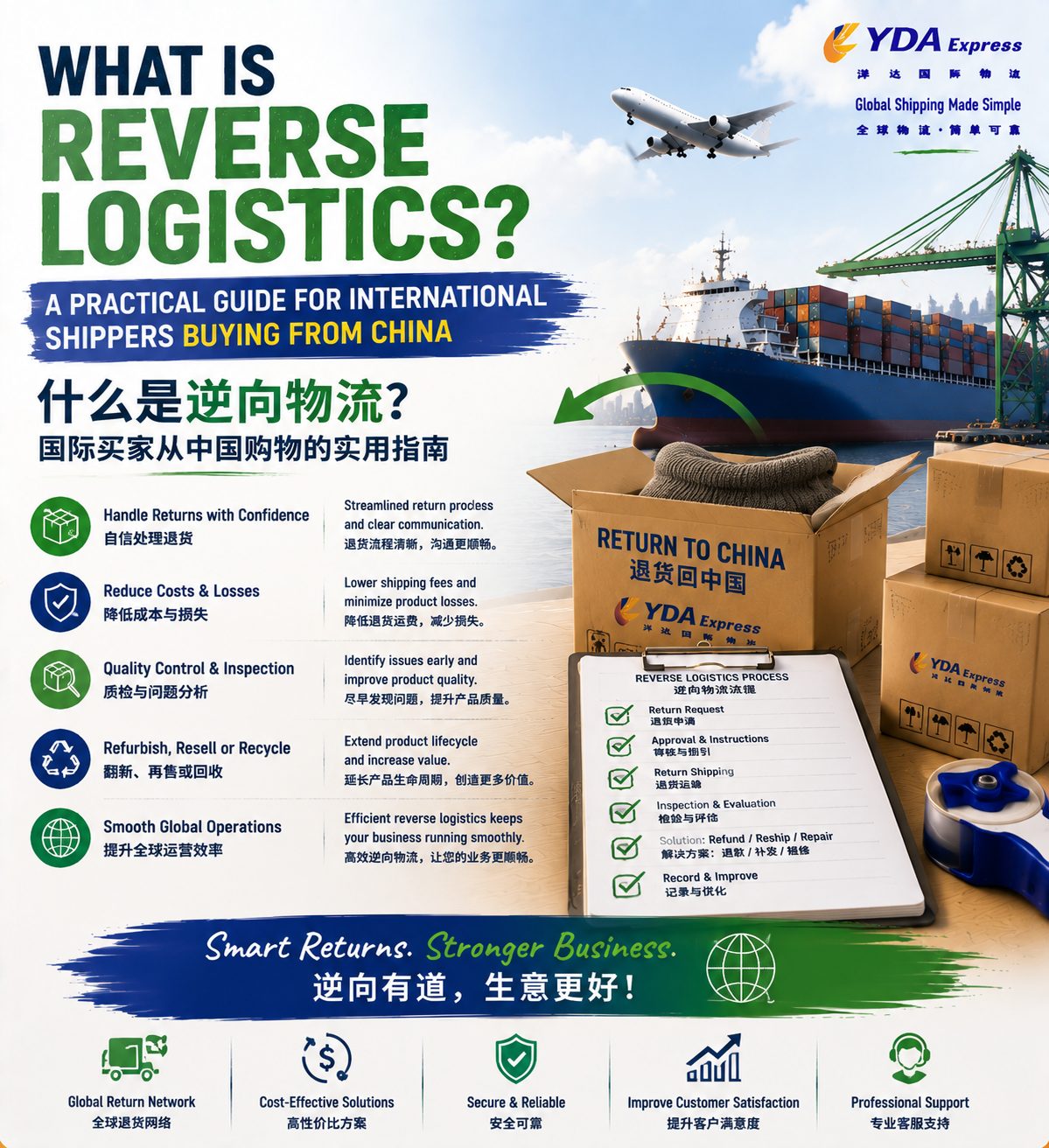
That’s reverse logistics—the part of shipping nobody loves but almost everyone who buys from overseas will face at some point. It’s not just returns. It’s exchanges, warranty repairs, recalls, recycling, and even proper disposal of packaging in some places. If goods leave your hands and head back to the seller or manufacturer, that’s reverse logistics.

Reverse logistics (逆向物流) isn’t talked about as much as forward shipping. Most guides focus on getting your order from the factory or marketplace to your door. But the reverse journey is just as important, and often far more complicated. Get it wrong and you lose the item, the shipping cost, and sometimes the trust of the supplier. Get it right and you turn a potential disaster into a manageable inconvenience.

Here’s the thing—reverse logistics isn’t just a big-business problem. It hits the small eBay reseller who gets a batch of defective USB cables just as hard as it hits the multinational retailer. And if you’re buying from platforms like Taobao, 1688, or Pinduoduo through an agent or forwarder, you need a plan for what happens when something isn’t right.

What exactly is reverse logistics?

In plain English, reverse logistics is any movement of goods that goes backward along the supply chain. Instead of manufacturer → warehouse → you, it’s you → somewhere else. That somewhere else could be the seller for a refund, a repair center, or even a recycler.

Common types for international shoppers include:

  • Customer returns – The item is wrong, damaged, or you simply changed your mind.
  • Warranty repairs – The product failed within the warranty period and must be shipped back for service.
  • Exchanges – You want a different size or color.
  • Recalls – Rare but possible, especially with electronics.
  • Packaging disposal – Not usually a return to China, but some countries require retailers to handle packaging waste. For small importers, that can mean extra steps.

For most of YdaExpress’s customers, the trigger is simple: something arrived not as expected. Maybe the factory made an error. Maybe the listing was misleading. Maybe the courier damaged the box and the item inside. Whatever the reason, you now need to move that item back through the same international shipping routes that brought it forward.

Why cross-border reverse logistics feels harder

Returning a sweater you bought from a local online store is easy. Print a label. Drop it off. Wait for the refund. When the destination is Shenzhen or Yiwu instead of a distribution center two states over, everything changes.

Shipping costs eat into the refund

International returns aren’t cheap. A small parcel from the US to China via a major carrier can easily run $30–$60. For a $15 phone case, that’s a nonstarter. Even heavier items can make the whole return pointless. You need to know the cost before you commit. And you need to compare options—air freight for speed, sea freight for bulk, or even discounted express labels from a forwarder who ships high volumes.

Customs treats returns differently

When you import goods, you often pay duties and taxes. If you send something back, you might be able to claim a refund on those duties—but the paperwork isn’t simple. And the Chinese customs side is its own puzzle. A returned item that doesn’t have the right documentation can be flagged as a new import, triggering taxes on the seller’s side. That’s a fast way to sour a supplier relationship. Clearance notes like “Return & Repair” or “Defective Return” must be prominently marked, and sometimes commercial invoices need to show zero value with a proper explanation.

Time and trust

Sea freight back to China takes weeks. Air freight is faster but costs more. During that time, the seller might forget about you, or the platform dispute window might close. Communication barriers—language, time zones, different business practices—make it even harder to keep the process on track. Without a reliable partner on the ground in China, you’re just hoping the return gets handled correctly.

The supplier’s willingness to cooperate

Some Chinese suppliers are excellent with returns. Others will resist. They might ask you to ship back at your own expense even for a clear error. Or they’ll give you a vague address that turns out to be a shipping agent’s warehouse that rejects personal returns. If you have a local contact or a forwarder with a verified return address, you’re in a much stronger position.

How to make reverse logistics work for you

Here’s where a practical approach makes a difference. Before you even ship that return, do a few simple checks.

1. Verify the problem with your forwarder’s warehouse photos

If you use a China-based parcel forwarder, they often photograph your items when they arrive at their warehouse. That’s gold. You can see whether the damage happened before or after consolidation. You can spot the wrong color or missing accessories. At YdaExpress, our warehouse team inspects and photographs every incoming package. Before you approve international shipping, you know exactly what you’re getting. Catching an error at the warehouse costs nothing to fix—a local return to the seller is cheap and fast. Catching it after the item has crossed the ocean is where the real costs start.

2. Know the return policy before you buy

On platforms like Taobao, each seller sets their own return terms. Some offer “7 days no reason return” (7天无理由退货), but that often applies only to domestic Chinese returns—not international. Read the fine print. If you’re working with an agent, ask them to confirm the return policy. A good agent can negotiate on your behalf, but they need to know the rules upfront.

3. Consolidate returns to save money

If you have multiple returns to the same supplier, or items going to the same city, bundle them. A forwarder can hold items until you have enough to make the shipping cost worthwhile. Even if it’s just one item, shipping from the forwarder’s warehouse back to the seller is domestic—a fraction of the international price. The forwarder can simply drop the return into a local courier service like SF Express or ZTO for pennies on the dollar.

4. Use the right shipping method for the return journey

For small, high-value items, an express courier (DHL, FedEx) might be the safest bet. For bulk returns, sea freight or air freight consolidation often works better. And if you’re not in a hurry, China Post’s e-packet style services are dirt cheap—though tracking and speed vary. A knowledgeable forwarder can map out the options because they deal with these routes daily.

5. Document everything for customs

A well-prepared customs declaration can prevent a rejected return. Include a clear description, the reason for return (defective, not as ordered, repair), and set the value appropriately. Some countries allow duty refunds on returned goods; you’ll need the export paperwork to claim that. YdaExpress regularly handles such returns and can guide you on how to fill out the commercial invoice so it meets both export and import requirements.

How YdaExpress fits into your reverse logistics plan

We’re a China-based parcel forwarding and purchasing agent. That puts us in a unique position to help with reverse logistics before and after an international shipment.

Warehouse inspection and local returns – When your order arrives at our warehouse, we check it. If it’s wrong or damaged, we return it to the seller locally. That’s reverse logistics handled before it ever becomes an international problem. Cost to you? Usually just a small handling fee, plus the local shipping—often under $3.

Consolidation and repackaging – Sometimes a return isn’t about sending an item back to China; it’s about sending a replacement forward. If a seller ships a replacement to our warehouse, we can consolidate it with other purchases and ship it to you in one box, saving you shipping costs. We can also repack to reduce weight, which matters when you’re already paying international rates.

Return address and assistance – If you must return something from abroad, we can provide a verified Chinese return address and handle the receiving for you. We’ll inspect the returned item, confirm its condition to the seller, and follow up so you don’t have to. You get a local contact, which speeds up resolution and reduces the chance of a return going missing.

Discounted return labels – Because we ship high volumes, we have negotiated rates with major carriers for both outbound and return shipments. We can offer return labels that cost significantly less than the standard rates you’d get by walking into a post office or booking online.

At YdaExpress, we’ve seen returns get messy. An order of 200 phone cases with a printing error. A folding electric scooter that died after two rides and needed a warranty motor replacement. An antique vase that arrived in pieces because the seller’s packaging was laughably bad. In each case, having a reliable forwarder meant the difference between absorbing the loss and getting a fair resolution.

A few more tips before you ship a return to China

  • Always keep the original packing. Returns without proper packaging get damaged again, and sellers will reject them.
  • Take photos and video when you unbox. It’s the best evidence if the item was already damaged inside an intact box.
  • Communicate with the seller before shipping. Get their confirmation in writing that they’ll accept the return and exactly where to send it. Screenshots of chat logs matter.
  • Insure the return shipment. It costs a little extra but protects you if the carrier loses it en route.
  • Check if your payment method offers return shipping protection. Some credit cards and PayPal programs will cover return shipping costs up to a certain amount. YdaExpress can provide the necessary proof of return for those claims.

Wrapping it up

Reverse logistics doesn’t have to be the nightmare it’s often made out to be. With a little planning, some clear documentation, and a reliable partner on the ground in China, you can handle returns, exchanges, and warranty repairs without losing sleep—or your entire order value.

If you’re regularly importing goods from China, or even if you’re just a one-time buyer who wants to shop with confidence, having a forwarder who understands reverse logistics changes the game. At YdaExpress, we’ve been doing this long enough to know that every return is an opportunity to prove our service. We’ll handle the heavy lifting, the paperwork, and the local communication so you can focus on what matters—getting the right product to your door.

Ready to take the stress out of your next China purchase? Visit https://www.ydaexpress.com or message us on WhatsApp at +8613078354343. Let’s make sure your forward logistics work so well that you rarely need the reverse—but when you do, we’ve got it covered.