How to Ship Multiple Parcels Overseas in One Box (and Save Money)

管理员
2026年8月5日
34 阅读
0 喜欢

Learn how consolidating multiple packages into one shipment can slash your international shipping costs. Practical tips from China forwarding experts on combining orders from different stores, avoiding customs headaches, and getting your stuff delivered reliably.

Picture this: You’ve just spent a morning hunting down deals on Taobao, added a few things from JD.com, and maybe snagged a limited-edition gadget on Pinduoduo. Then you get to checkout and the shipping fees make your eyes water. Each store wants to charge you a small fortune to send your items halfway across the world. And if you order from five different sellers, you’re looking at five separate shipping charges, five tracking numbers, and five chances for something to get lost or held up at customs. Not exactly the smart way to do it.

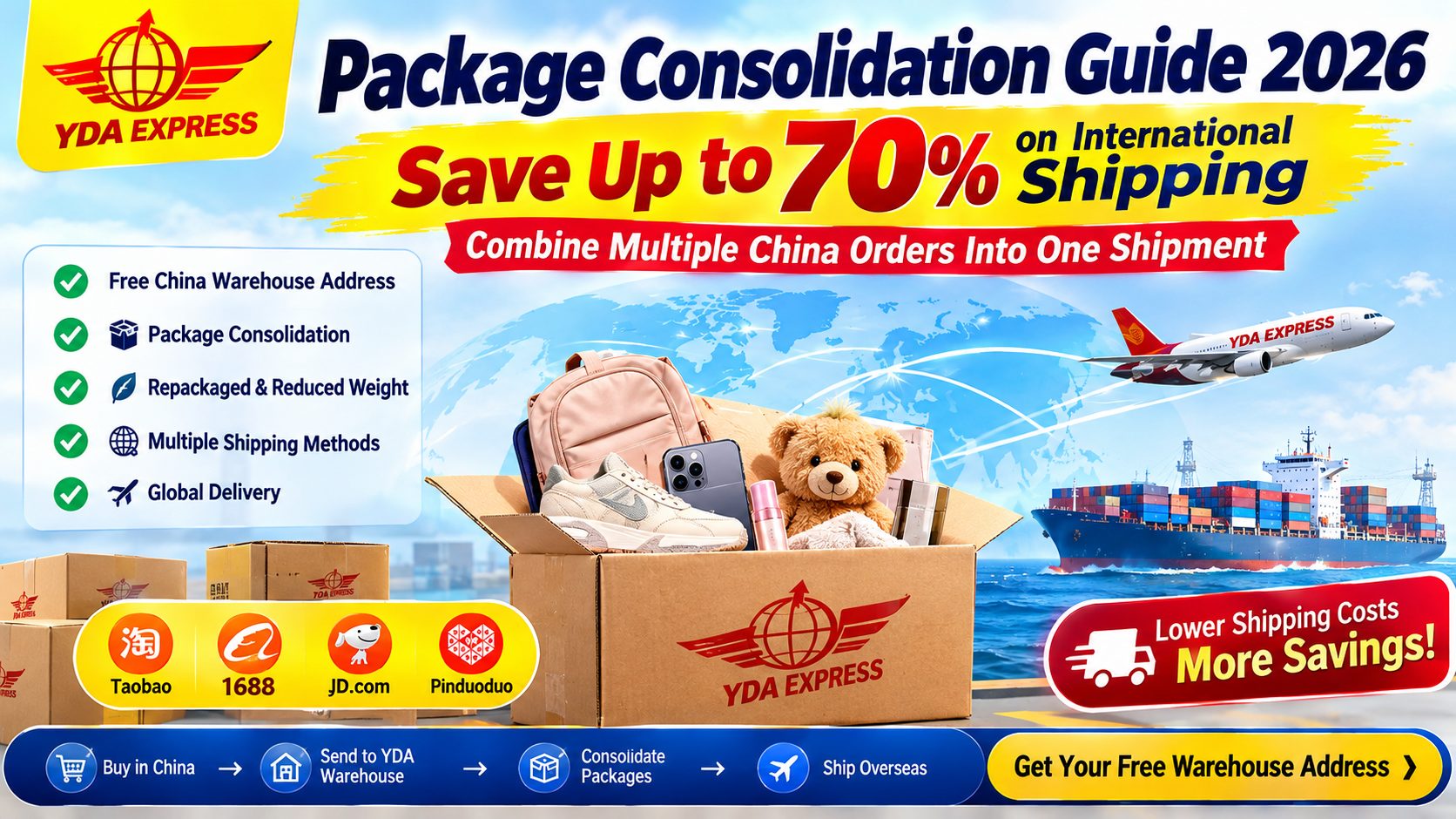
Enter package consolidation—or, in plain English, combining multiple packages into one box for overseas delivery. This strategy is a game-changer for anyone buying from China, whether you’re a solo shopper topping up your wardrobe or a small business importing goods. And when you get it right, you can slash your shipping costs by half or more.

Here’s the thing: international shipping costs are largely driven by the base rate per shipment and the chargeable weight. Every parcel sent individually triggers that base fee. Five parcels? Five base fees. Consolidate them into one well-packed box, and you pay that base fee just once. The per‑kilo rate usually gets cheaper as the total weight goes up, too. That’s pure savings, right off the bat.

What Exactly Is Package Consolidation?

Package consolidation is a service offered by freight forwarders and shipping agents—companies that specialise in moving goods across borders. They give you a local warehouse address (often in a Chinese logistics hub like Shenzhen or Guangzhou). You have your online purchases shipped there. Once your parcels arrive, they’ll store them for free for a set period. When you’re ready, they’ll take all those individual boxes, remove the unnecessary outer packaging, and repack everything into a single, stronger box that’s built for international travel. Then they ship it to your door, using whatever carrier makes the most sense—DHL, FedEx, a postal service, or a freight line.

This isn’t some complicated logistics trick only big businesses can use. Forwarders like YDA Express have made it dead simple for regular people. You just sign up for a free account, get your personal warehouse address, and use it as your shipping address when you check out on any Chinese shopping platform. It works with Taobao, 1688, JD, Pinduoduo, you name it.

Why You Should Bother Consolidating

Let’s break down the real reasons consolidation makes sense.

1. The Cost Drop Is Immediate and Noticeable

I’ve seen people save anywhere from 30% to 70% on shipping just by putting everything into one box. A shipment of 12 small packages from different Shenzhen suppliers—each weighing under a kilo—would cost about $15 to $25 each if sent by express. That’s easily $200 or more. Consolidate them into a single 10kg package, and you’re looking at maybe $60 to $90 all in, depending on destination and speed. That’s a solid chunk of money back in your pocket.

2. Customs Gets a Whole Lot Simpler

Every international package has to clear customs. When you’ve got five separate parcels floating through the system, that’s five separate customs declarations, five duty assessments (if applicable), and five attempts by the carrier to deliver. One consolidated shipment means one set of paperwork. A good forwarder will help you list the contents clearly, assign the right HS codes, and mark the parcel in a customs-friendly way. Less chance of a random hold-up, less paperwork to chase, and fewer surprise fees.

3. Tracking One Parcel Is Easier Than Tracking a Fleet

Honestly, keeping an eye on a single tracking number is far simpler than juggling five. You know exactly where your stuff is, and if there’s a delay, you’ve got one number to give to the carrier or your forwarder. Plus, the major couriers like DHL and FedEx often hand off to local partners once it reaches your country (think Parcelforce in the UK, USPS in the States). A consolidated shipment typically gets handed off as one unit, so delivery day is a single event, not a week-long parade of packages.

4. You Can Hold Items and Ship When It Suits You

Most forwarders offer free storage—anything from 30 days to 90 days. That means you can spread your shopping over a month, gather everything at the warehouse, and then ship it all together when you’re ready. It’s brilliant if you’re waiting for pre-orders, or if you want to combine orders from different sales events. Some people even use it to batch purchases for a single monthly shipment to keep costs ultra-low.

5. Packaging Gets an Upgrade

Ever received a parcel from a Chinese seller wrapped in a flimsy plastic bag with a bit of tape? Now imagine that going through 10,000 miles of conveyor belts and cargo holds. Consolidation services typically repack your goods properly: sturdy cardboard boxes, plenty of cushioning, and waterproof wrapping if needed. For delicate items, they’ll add bubble wrap or even build a small wooden crate. Your stuff arrives in the condition it left, which is more than you can say for some individual seller shipments.

How the Whole Process Actually Works

It’s not nearly as complicated as you might think. Here’s a straightforward walkthrough.

Step 1: Sign up with a forwarder. Pick a reliable China-based forwarder with good reviews and a clear pricing page. You’ll get a unique warehouse address—usually a street address in Shenzhen or another logistics city, complete with your name and a suite number or ID code that links the parcel to your account.

Step 2: Go shopping. Shop as you normally would on any Chinese platform. At checkout, enter the warehouse address as your delivery address. The seller ships domestically (often for free or cheap) to that warehouse.

Step 3: Give your forwarder a heads-up. Most platforms let you log incoming parcels yourself. Just paste the tracking number and a brief description. This helps the forwarder know what to expect and match it to your account when it arrives.

Step 4: Wait for everything to land. You can keep an eye on your account dashboard. As parcels arrive, they’ll be logged and stored. Some forwarders send photos of the outer packaging or even do a quick weight check.

Step 5: Request consolidation. When you’re ready, select the parcels you want to combine. Usually you can leave a note like “remove all shoeboxes” or “pack clothes in a vacuum bag.” The warehouse team then breaks everything down, discards excess packaging, and builds one solid shipment box.

Step 6: Choose your shipping method. You’ll typically see a few options: express (DHL, FedEx, UPS), which takes 3–7 days but costs more; air freight, which is a bit slower but cheaper for heavier boxes; and economy lines or sea freight for truly large or non-urgent loads. Pick whatever balances speed and cost for you.

Step 7: Pay and ship. You pay the shipping fee (and any optional insurance or extra services), and your box is on its way. Within a day or two you’ll have a tracking number you can use all the way to your doorstep.

Things to Keep an Eye On

Consolidation isn’t magic, and there are a few practical limits.

Weight and size caps. Carriers have maximums—DHL Express, for example, usually caps a single piece at 70kg and 120cm on the longest side. If your combined stuff exceeds that, the forwarder might split it into two boxes. That’s still cheaper than shipping everything separately, but it’s good to know.

Prohibited and restricted items. Batteries, liquids, powders, and certain electronics need special handling. Some carriers won’t touch them at all. Always check with your forwarder before buying anything iffy. They’ll tell you which lines can carry what.

Customs value and duty thresholds. Many countries have a de minimis value under which no duty or tax is charged. For example, the US threshold is $800; in the UK it’s £135 for most goods. If your consolidated shipment’s declared value pushes you over that line, you’ll owe import fees. A good forwarder can help you structure the declaration sensibly, but you should never undervalue items to dodge taxes—that’s illegal and can get your package seized.

Mixing incompatible items. A 30kg bag of ceramic tiles and a silk dress don’t belong in the same box without serious thought. Forwarders will pack carefully, but you need to be clear about fragile items so they can be protected properly.

When Not to Consolidate

This is just as useful. If you’ve got one item that’s time-sensitive—say a part for a repair that needs to arrive this week—don’t hold it up waiting for other parcels. Ship it alone. Same goes for very high-value goods: sometimes splitting them up reduces risk. And if you’re buying from platforms that already offer an affordable direct shipping line (like AliExpress Standard Shipping), the saving from consolidation might be minimal. Run the numbers.

Practical Tips from the Warehouse Floor

At YDA Express, we’ve seen what works and what doesn’t after handling thousands of consolidations. Here are a few insights:

  • Ask for vacuum packing. For clothing, bedding, or soft items, sucking the air out can drop the volume by half. Since many carriers charge by volumetric weight (the space your box takes up, not just the actual weight), this can save you a bundle.
  • Ditch the retail packaging. Those shoeboxes, fancy gift boxes, and individual plastic clamshells eat up space and add weight. Unless you’re a collector who needs the box, ask the forwarder to remove them.
  • Combine items with different densities. Heavy things sink to the bottom, light things cushion the top. A good packer will put books or tools at the base, then stack clothes or plushies on top. It makes the package more stable and often reduces the overall dimensions.
  • Insure the shipment. When you’ve got a box worth a few hundred dollars, insurance is cheap peace of mind. Most forwarders charge a tiny percentage of the declared value.
  • Take advantage of free storage windows. If you order in the first week of the month, wait until the end of the month to ship. That way you catch any late deliveries and maximise your consolidation.

Real Numbers: A Quick Cost Comparison

Let’s do a rough example. Say you bought five items from five different Taobao sellers heading to the UK:

  • Item 1: 1.2kg, shipping quoted directly by seller: ¥120 (about $17)
  • Item 2: 0.8kg, seller shipping: ¥95 ($13)
  • Item 3: 2.1kg, seller shipping: ¥185 ($25)
  • Item 4: 0.5kg, seller shipping: ¥80 ($11)
  • Item 5: 1.0kg, seller shipping: ¥110 ($15)

Total seller shipping: ¥590 ($81). That’s not even counting any customs handling fees each might incur.

Now consolidate: Forwarder receives all five, strips out seller packaging, and ends up with a 4.5kg package. Using an express line like DHL to the UK, the forwarder might charge ¥280–¥350 ($38–$48). You’ve just saved nearly half the cost, and you’ll get one box in 5 days instead of five staggered deliveries.

If you weren’t in a rush and used an economy air line, the price could drop to ¥200 ($28) and take 10–14 days. That’s a no-brainer for non-urgent restocks.

Is Consolidation Only for China Shoppers?

Not at all. The same principle applies if you’re buying from multiple sellers in any country and need to ship overseas. Some forwarders in the US, UK, or Europe offer similar services. But because China is the world’s largest source of affordable manufactured goods, the demand for Chinese package consolidation is enormous. Services like YDA Express have refined the process to be incredibly efficient, with fully bilingual staff, online dashboards, and deep carrier relationships that get you rates a one-off customer would never see.

Getting Started Without the Headache

Here’s the bottom line: if you’re buying from more than one Chinese seller in any given month, you’re almost certainly overpaying for shipping if you don’t consolidate. The setup takes ten minutes, and after your first consolidated shipment lands, you’ll wonder why you didn’t do it sooner.

A good forwarder does more than just throw things in a box. They help you navigate shipping options, flag potential customs issues before they happen, and keep your costs transparent. At YDA Express, we offer free package consolidation, 30 days of free storage, and a pricing page that shows exactly what you’ll pay before you commit. No hidden service fees, no surprise surcharges.

To be fair, consolidation isn’t for every single purchase. But for the vast majority of cross-border buyers—whether you’re stocking a small Etsy shop, refreshing your warehouse inventory, or just treating yourself to a big multi-store haul—it’s the closest thing to a shipping cheat code.

Ready to stop paying for five boxes when one will do? Visit ydaexpress.com to create a free account, or reach out on WhatsApp at +86 16666169028 to ask questions. Our team handles the nitty-gritty so you can focus on finding your next great buy.