A sample-to-bulk approval process for Guyanese businesses buying on 1688, covering supplier evidence, importer TIN, eSAD documents, licences and landed cost.
A Guyanese business buying from 1688 for resale should not approve a bulk order on price alone. Before payment, the buyer needs two linked files: a supplier-and-product file in China and an importer-and-clearance file for Guyana. If either file is incomplete, the safer decision may be a smaller sample order, a different product or no order.
This article is for a small business that has identified a potential 1688 supplier and is deciding whether a sample is ready to become a commercial shipment. It produces a sample-to-bulk approval record, not a generic platform tutorial.
For a broader supplier due-diligence process, first use the 1688 supplier verification checklist. Then apply the Guyana-specific gates below.
Gate 1: define the importer before negotiating freight
Decide who will be the legal importer or consignee and who will work with the customs broker. Do not leave this until the goods are ready to depart China.
The Guyana Revenue Authority states that commercial cargo is processed through ASYCUDA World. The importer or customs broker completes an electronic Single Administrative Document (eSAD) and attaches supporting documents. Its general mandatory list includes a bill of lading or airway bill, invoice, Taxpayer Identification Number (TIN), applicable permits or licences and other valuation support.
This changes the buying sequence. A freight quotation does not solve importer registration, product admissibility or document responsibility. Before paying a deposit, record:
- legal importer/consignee name and TIN;
- customs broker or person responsible for the declaration;
- intended port or airport and proposed transport mode;
- party responsible for permits and product-specific approvals;
- person authorised to answer valuation or classification questions.
Policy check: 28 September 2026. Confirm current requirements on the GRA imports page and with the appointed broker.
Gate 2: make the supplier identity consistent with the transaction
Capture the supplier’s Chinese legal name, business registration details, store name and the entity shown on the quotation or invoice. Ask for an explanation when the payment recipient, manufacturer and invoicing party are different.
A registered company is not automatically a capable factory, and a trading company is not automatically unsuitable. What matters is whether the supplier’s stated role, product evidence, order terms and payment path are consistent enough for the risk of the order.
Do not rely on a store badge, sales count or copied product photographs. Ask product-specific questions and keep written answers. For a customised item, define who approves artwork, materials, dimensions, tolerances, packaging and the production sample.
Gate 3: turn the sample into an approval standard
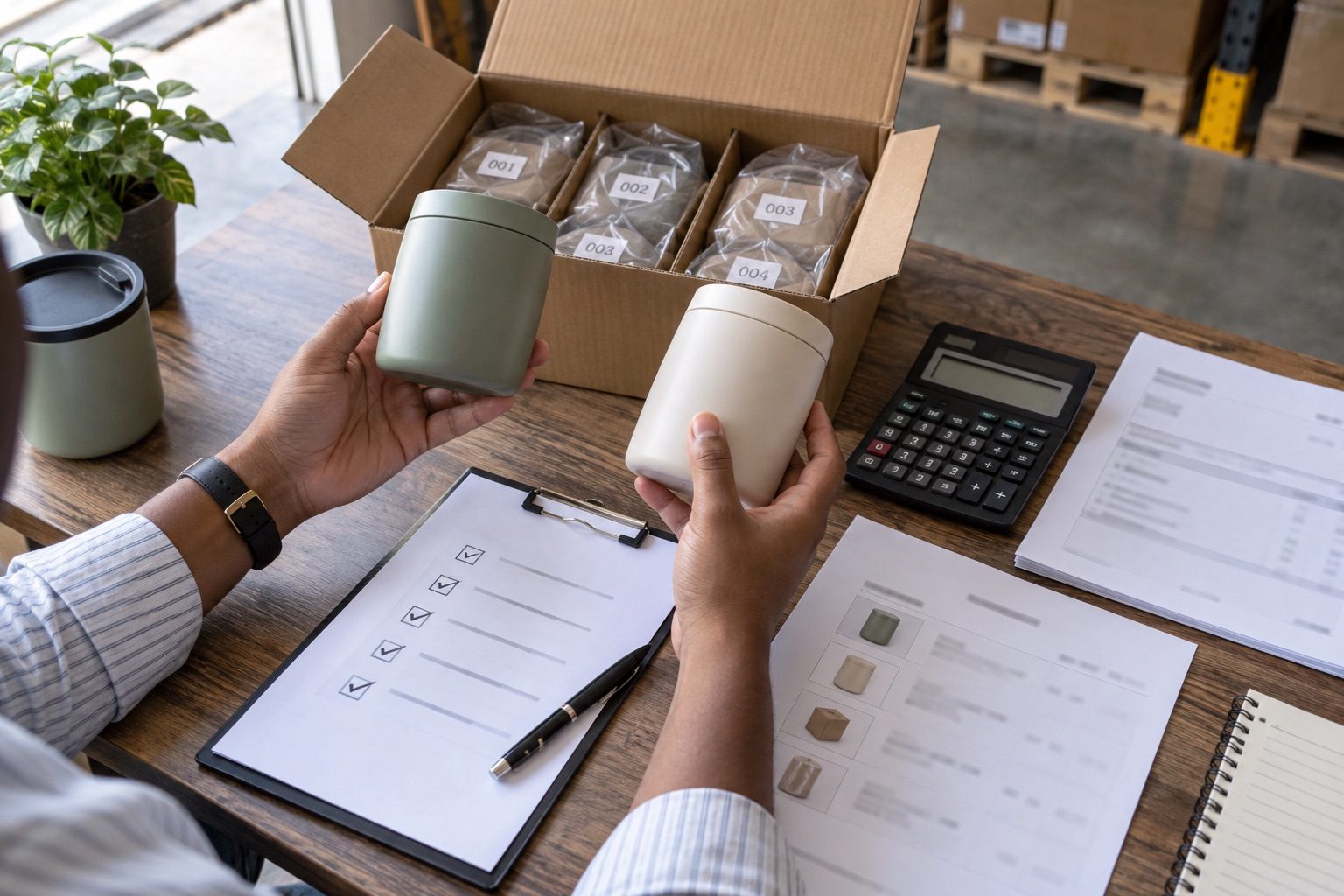
“Sample approved” is too vague for repeat production. Build a comparison sheet with measurable fields:
| Check | Sample evidence | Bulk requirement | Result |
|---|---|---|---|
| Material/model | Photo, marking or specification | Exact agreed specification | Pass / clarify / fail |
| Dimensions | Recorded measurement | Tolerance stated in writing | |
| Quantity per carton | Sample packing | Bulk packing plan | |
| Labels/manuals | Actual sample | Required language and content | |
| Visible workmanship | Defined defects | Acceptance limit |
Basic warehouse photos can confirm visible model, quantity and exterior condition when the agreed service is available. They cannot certify compliance, hidden components, durability or laboratory performance. Regulated goods may require evidence from an appropriate test or certification body.
If the product changes after the sample—material, battery, plug, packaging, branding or included accessories—repeat the relevant approval. The China warehouse receiving guide can help you plan identification and basic receiving checks.
Gate 4: screen licences and restrictions before the bulk payment
Guyana’s import requirements vary by commodity. GRA lists restricted imports and publishes tariff headings that require an import licence. Its commercial guidance also identifies product-specific documents in some cases, including requirements connected with pharmaceuticals, cosmetics, chemicals and other controlled goods.
Therefore, “the supplier can export it” does not prove “the Guyanese importer can import it.” Before payment:
- describe the product accurately, including material, function, power source and intended use;
- obtain a preliminary HS-classification review from the importer or broker rather than copying the supplier’s code as final;
- check whether a licence, certificate, label or agency approval applies;
- confirm whether the proposed transport route accepts the product;
- stop if a required approval cannot be obtained before shipment.
Use the GRA commercial import guidance and its current import-licence notices as starting points. The final classification and permission decision belongs to the relevant Guyanese authority, importer and broker.
Gate 5: build documents from one product-data sheet
Create a master product-data sheet and use it to prepare the purchase order, commercial invoice, packing list and shipping instruction. It should contain:
- buyer and seller legal names;
- specific product description and model;
- material and function;
- quantity, unit price and line total;
- currency and agreed trade terms;
- carton count, net weight, gross weight and dimensions;
- country of origin;
- marks or model numbers that identify the goods;
- supporting permits or technical documents when applicable.
Check consistency before dispatch. If the invoice says 500 units, the packing list should not describe 480. If the product name changes between the order and the airway bill, resolve it. “Parts” or “general merchandise” is not a useful substitute for a true description.
GRA notes that Customs may seek valuation support and may use additional valuation procedures if a declared value is disputed. Keep quotations, payment evidence, purchase orders, freight charges and any relationship between connected parties available. Do not ask a supplier or forwarder to reduce the invoice value.
Gate 6: calculate landed cost before approving volume
The decision figure is not the 1688 unit price. Calculate a range that includes:
- sample and product cost;
- China domestic freight;
- purchasing-agent cost, when used;
- inspection or testing selected by the buyer;
- China warehouse handling, consolidation and export packing;
- international freight based on final chargeable weight or volume;
- insurance, when selected;
- duties, taxes, brokerage and destination handling;
- delivery from the arrival point to the business in Guyana;
- an allowance for defects, delays or quantity variance based on the buyer’s own risk policy.
Do not invent a duty rate before the product is classified. The international shipping cost guide explains freight inputs, but the importer or broker should confirm the Guyana tax and clearance assumptions.
Compare at least three volumes: sample, first commercial order and repeat order. A low unit price may be offset by a high minimum quantity, bulky packaging, licensing work or slow-moving inventory.
Gate 7: issue a written release or stop decision
Approve the bulk order only when all critical rows are resolved:
- importer and broker roles confirmed;
- supplier identity and payment path consistent;
- sample specification accepted;
- product description and preliminary classification reviewed;
- licences or approvals confirmed where applicable;
- invoice and packing data available;
- route eligibility checked;
- landed-cost range commercially acceptable;
- defect, delay and dispute terms recorded in writing.
Use needs clarification for an item that can be corrected before payment. Use fail when a legal requirement, product identity or payment inconsistency cannot be resolved. Several unresolved points are a reason to reduce the test order, compare another supplier or stop.
What YDA Express can and cannot do
YDA Express may assist with China purchasing, domestic payment support where available, seller communication, warehouse receiving, available photos or agreed basic checks, package management, eligible storage, consolidation, repacking and comparison of available shipping options.
YDA Express does not certify supplier honesty, guarantee mass-production quality, perform professional compliance testing, determine Guyana’s final HS code, obtain the importer’s licences, set the tax assessment or guarantee customs release. The Guyanese importer remains responsible for the declaration and legal import requirements.
When requesting support, send the product link, supplier quotation, sample requirements, expected quantity, carton information and any technical documents. A complete file allows the logistics review to happen before the bulk payment rather than after the goods are finished.
📲 Download the YDA Express App
Use the YDA Express App to place China purchasing orders, view product check photos, manage packages, and arrange consolidation and international forwarding.