
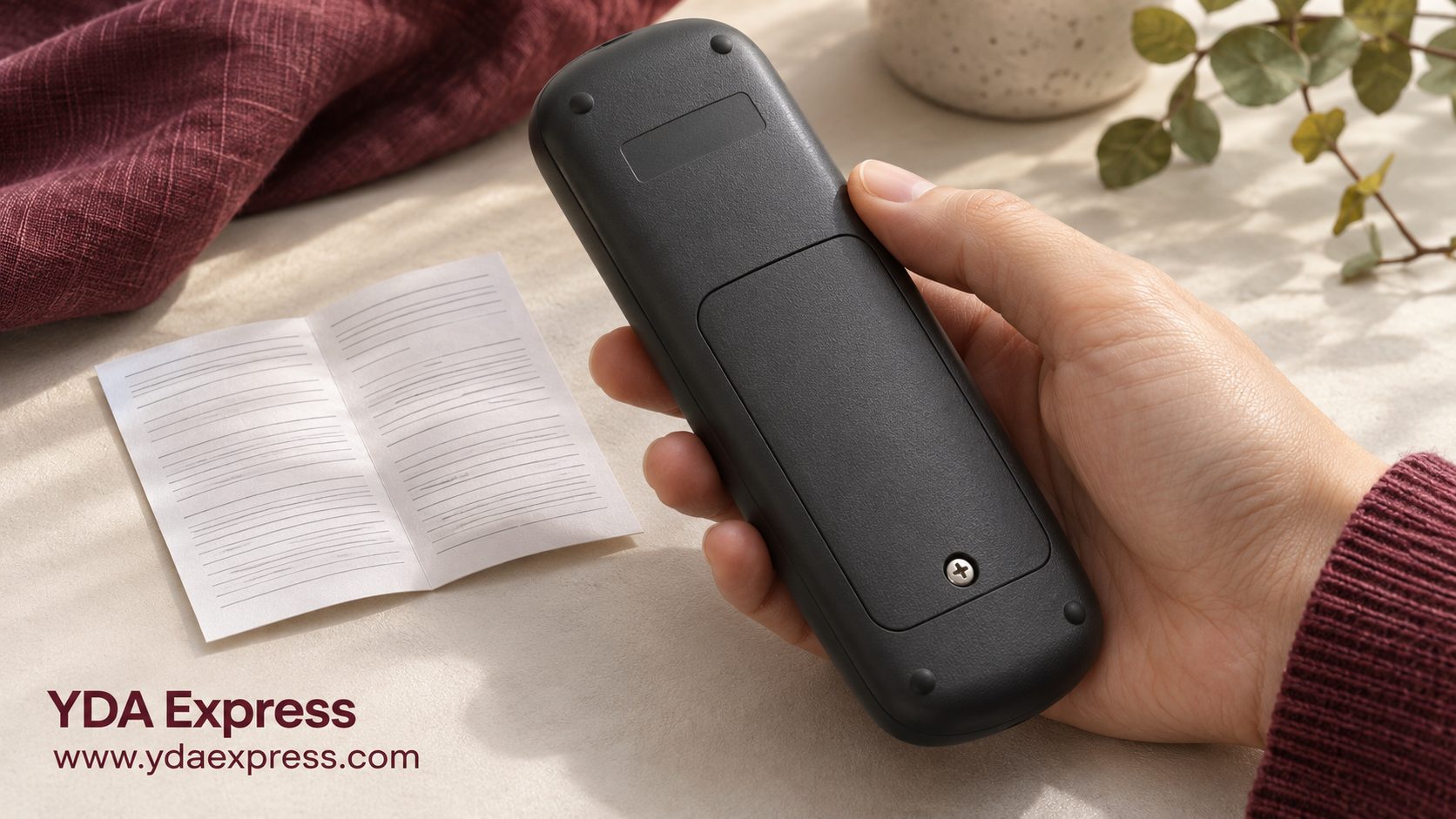
Identify the exact toy and accessories, request battery-compartment and warning evidence, and compare warehouse arrivals before deciding on return, replacement or dispatch.
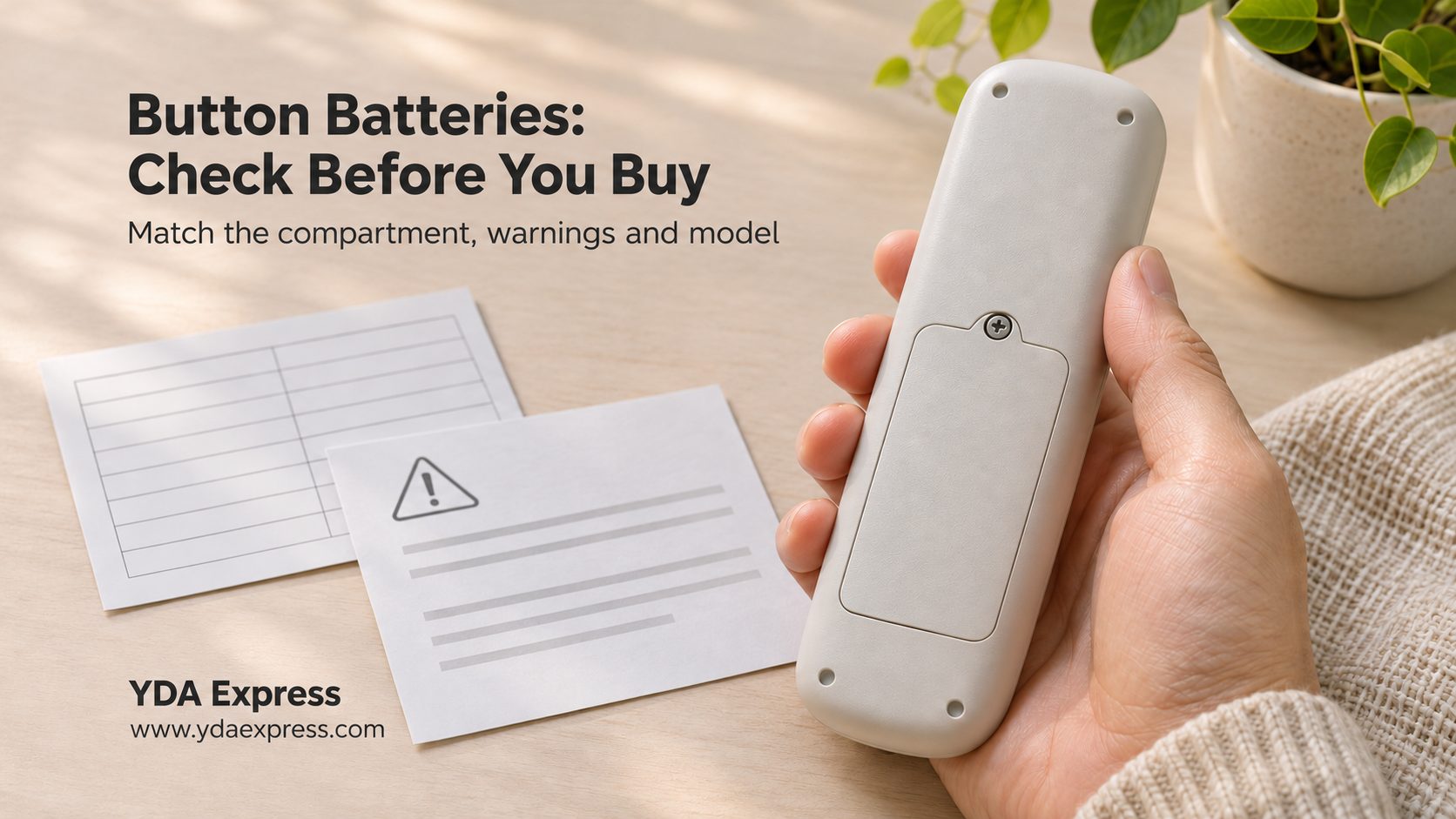
A light-up toy from a Chinese marketplace may arrive exactly as pictured and still leave an important question unanswered: can a child reach the button battery? The same question can apply to the remote control supplied with the toy, a musical card or a small household gadget.
Before paying, identify the battery arrangement and ask for evidence for the exact product. When the parcel reaches a China warehouse, compare the item with that evidence before authorising packing and international dispatch. The aim is to find unanswered questions while you can still discuss them with the seller.
Source check: ACCC Product Safety guidance reviewed on 7 November 2026. This is a purchasing and observable-check workflow, not a product safety assessment or an assurance of Australian compliance.
Start with the product, accessories and intended use
If children live in or visit your home, the ACCC consumer guide recommends choosing alternatives without button batteries where possible. If you still need such a product, use the checks below to identify unresolved questions.
Ask whether the product contains, or is intended to contain, a button or coin battery. Do not stop at the main unit: a controller, detachable light or accessory may use a different battery. “Batteries not included” does not answer how the compartment is designed.
Save the selected version, brand, model, quantity and intended user. If one listing offers several versions, ask the seller to identify which one the photographs and documents cover.
Then decide whether the purchase is for your household or for supply in Australia. A personal buyer needs a safe product; someone preparing stock for sale also needs to establish the applicable supplier obligations. A seller's assurance that “Australian customers buy this” answers neither question.
The ACCC mandatory safety standard covers consumer goods containing or intended to contain these batteries, with listed exclusions. It requires secure compartments and compliance testing. For stock intended for supply, ask a suitably qualified adviser what evidence is needed for the exact model before purchasing.
Ask for useful evidence before payment
A photograph of the toy's front is rarely enough. Request:
- the product and retail box, showing the model or other identifying details;
- the battery type and location, including batteries in accessories;
- clear images of the compartment, its cover and fastening arrangement;
- packaging warnings and any accompanying instructions;
- the condition and packaging of any spare batteries;
- the seller's return process if the delivered version differs.
Ask how the compartment opens. If a screw is used, request a clear view of the fastening arrangement rather than accepting the word “screw-secured”. A screw visible in one image does not establish durability or compliance.
For a toy for a very young child, age suitability also matters. The standard for toys for children up to and including 36 months can apply despite an older-age label if the toy is commonly recognised as suitable for that younger group. Do not treat a seller's “3+” sticker as the final answer.
Check the warnings as well as the battery cover
Ask for readable packaging and instruction images, not just a seller's typed translation. The ACCC information standard addresses warnings on packaging, accompanying instructions or unpackaged goods, depending on the product. It also recommends prominent online warnings.
The practical question is whether the material you receive belongs to the selected model and will accompany the product. A warning in a chat message is not evidence of what is printed on the box.
Do not ask a warehouse to create a warning label to make an uncertain product appear compliant. Missing or inconsistent information should go back to the seller and, where appropriate, a product safety specialist.
Send the seller a specific request
You can adapt this message:
Please confirm whether this version or any included accessory uses, or is designed to use, a button or coin battery. Send clear photographs of the model details, battery compartment and cover, fastening arrangement, retail packaging warnings and instructions. Please identify the version these materials cover and explain the return process if a different version arrives.
If you intend to supply the product in Australia, add a separate request for applicable test and compliance documentation covering that model. Check the relationship between the report, manufacturer, model and version; a report cover page or a document for another item does not resolve the question.
A seller who cannot provide the information may still offer a cheaper price. That discount does not close the evidence gap. Consider another product or a supplier able to answer the questions.
Make warehouse checks answer the remaining questions
Agree the scope and cost before requesting inspection. Ordinary receiving photographs can document visible differences; they cannot reproduce laboratory tests.
A useful photo brief names the order and warehouse reference, then asks for:
- an overall view of the product and included accessories;
- the product and box identifiers;
- a clear view of the battery cover and any visible fastening;
- visible damage, missing components or a cover that appears loose;
- the packaging warnings and included instructions.
Request access to the compartment only if it can be done safely under the agreed service. Do not request forced opening, drop tests, crush tests or improvised child-resistance testing. Opening a product may also affect its condition or return arrangements, so confirm the seller's instructions first.
The ACCC consumer guide advises checking battery-compartment security when an online purchase is delivered. An earlier warehouse check can help identify visible problems, but it does not replace that arrival check or establish that the item is safe for a child.
If the order includes a mains-powered charger, use the separate Australia charger and electrical-goods checklist for that component.
If the item differs, hold that parcel before consolidation
For example, the seller may have shown one remote control while the box contains another with a different battery cover. Record the difference precisely and keep the affected parcel separate.
Preserve the listing, selected version, seller replies, domestic tracking number and warehouse photos. Ask for a written hold instruction to be acknowledged before authorising removal of retail packaging or consolidation. Our wrong-item and missing-parts guide explains how to connect that evidence to a seller remedy.
Possible next steps include requesting clarification, arranging an accepted replacement or return, or cancelling further shipment while the issue is assessed. A partial refund does not make an unresolved safety concern acceptable. Do not ask the warehouse to remove the battery and treat that as proof the product is outside the standard.
For a Taobao return, confirm the seller's deadline, return address, domestic postage and any handling deductions. The Taobao return-cost guide helps separate a product refund from the other costs already incurred. Seller acceptance and refund outcomes depend on the order.
Keep the release decision tied to the actual item
Before giving a packing instruction, record which model arrived, what was checked, what remains unresolved and who is deciding the next action. Recheck a replacement instead of carrying forward the first item's approval.
Ask YDA Express which receiving photos, seller communication or domestic return coordination can be arranged for your order. These tasks do not amount to product certification. Carrier acceptance and border requirements must also be checked separately; a photo review does not guarantee transport or clearance.
If the evidence remains incomplete, keep the decision open. Authorise the next step only after the product question—not merely the shipping price—has been addressed.
📲 Download the YDA Express App
Use the YDA Express App to place China purchasing orders, view product check photos, manage packages, and arrange consolidation and international forwarding.