Match the original model of a nui sold in Japan to a Chinese cotton-doll clothing pattern. Use named Japanese sizing examples, compare openings and reconfirm any changed version before the balance payment.
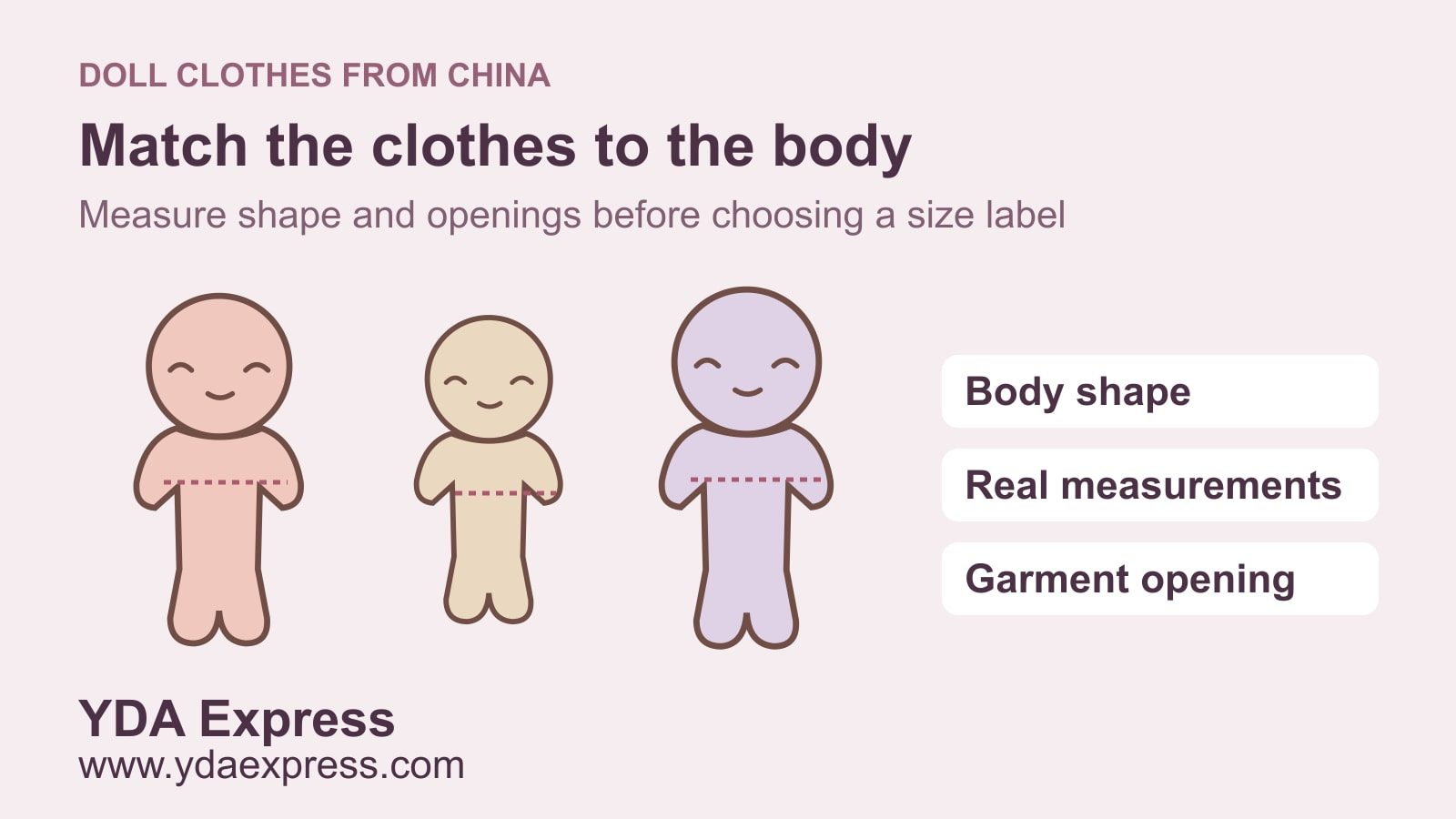
Before buying Chinese clothes for a nui—a plush collectible sold through Japanese shops—find its exact original model and version. Match that record to the seller's cotton-doll pattern. A shared “15cm” label cannot establish compatibility. The useful result is a confirmed pattern and opening design for your own doll, or a decision to leave that outfit unbought.
Shop information and import rules checked: 8 November 2026. This comparison is for an adult collector whose doll stays in Japan.
Start with the Japanese product record
Keep the original Japanese listing, model name and version, plus photos of your own doll. Japanese retailer Moremagic explains that its cm labels refer to cotton-doll sizing and do not fit every plush toy. Treat a China seller's matching cm label as an unconfirmed pattern, not a size conversion.
Two named 15cm models show what changes
Japanese doll-clothing maker pinna's model records make the difference concrete. Its くまちゃんTae and うさちゃんKook both have a 25cm head circumference, but their necks are 10cm and 12.5cm, and widest bellies 14.5cm and 15.5cm respectively. Pinna recommends its own 15cm S romper for the first and M for the second.
Those are that maker's examples, not Chinese-seller size recommendations. A matching head measurement does not settle the body fit. If your exact model is absent, measure your own doll rather than borrowing one of these records.
Ask the China seller to compare the two patterns
Send one compact comparison:
- Your original model/version and front, side and back photos; note fixed ears, tail and whether the head is removable.
- The China listing's exact garment option and the doll model used in its fitting photos.
- The neck or head opening, widest body area and torso length that matter for this outfit; ask for finished garment dimensions, stretch and closures.
Have the seller distinguish full circumference from flat width. Do not convert the Japanese model into “normal” or “chubby” cotton-doll sizing without that comparison. Ask whether the clothes go on from the head, feet or an open back. Never pull off a fixed head to make the purchase work. If the seller cannot identify a compatible opening and body pattern, choose another design.
Keep the confirmed version through payment and arrival
For a presale, attach the selected pattern, colour and included pieces to the deposit record. Before the balance payment, check that production still uses that version. If it changes, request the new dimensions and agree the available remedy before paying more; do not assume a universal refund or forfeiture rule.
Ask YDA about available photos of the received label, opening, closures and the few measurements used in your comparison. A different pattern or opening should trigger the wrong-item or missing-parts check before export. The doll remains in Japan: warehouse photos cannot prove fit or test colour transfer. Keep the maker's care instructions with the outfit.
Fit confirmation is separate from import eligibility
For branded or character goods, retain genuine purchase or licensing evidence. Japan's counterfeit-import rules cover trademark/design-infringing goods sent by overseas businesses even for personal use; removing labels does not resolve rights.
If the actual product is designed for children under three, check whether METI's infant-toy rules apply. For adult collectibles bought for resale, obtain a separate commercial-import review based on the real category and intended age; resale alone does not make them infant toys.
Duty depends on the actual garment's classification and origin. Standard import consumption tax is 10%, based on customs value plus duty and applicable excises; carrier fees are separate. The ¥10,000 customs-value exemption has exceptions and aggregation rules. Use the Japan personal-parcel check for that next decision. Recheck current rules and route acceptance before dispatch; YDA cannot guarantee classification, clearance or fit.
📲 Download the YDA Express App
Use the YDA Express App to place China purchasing orders, view product check photos, manage packages, and arrange consolidation and international forwarding.