
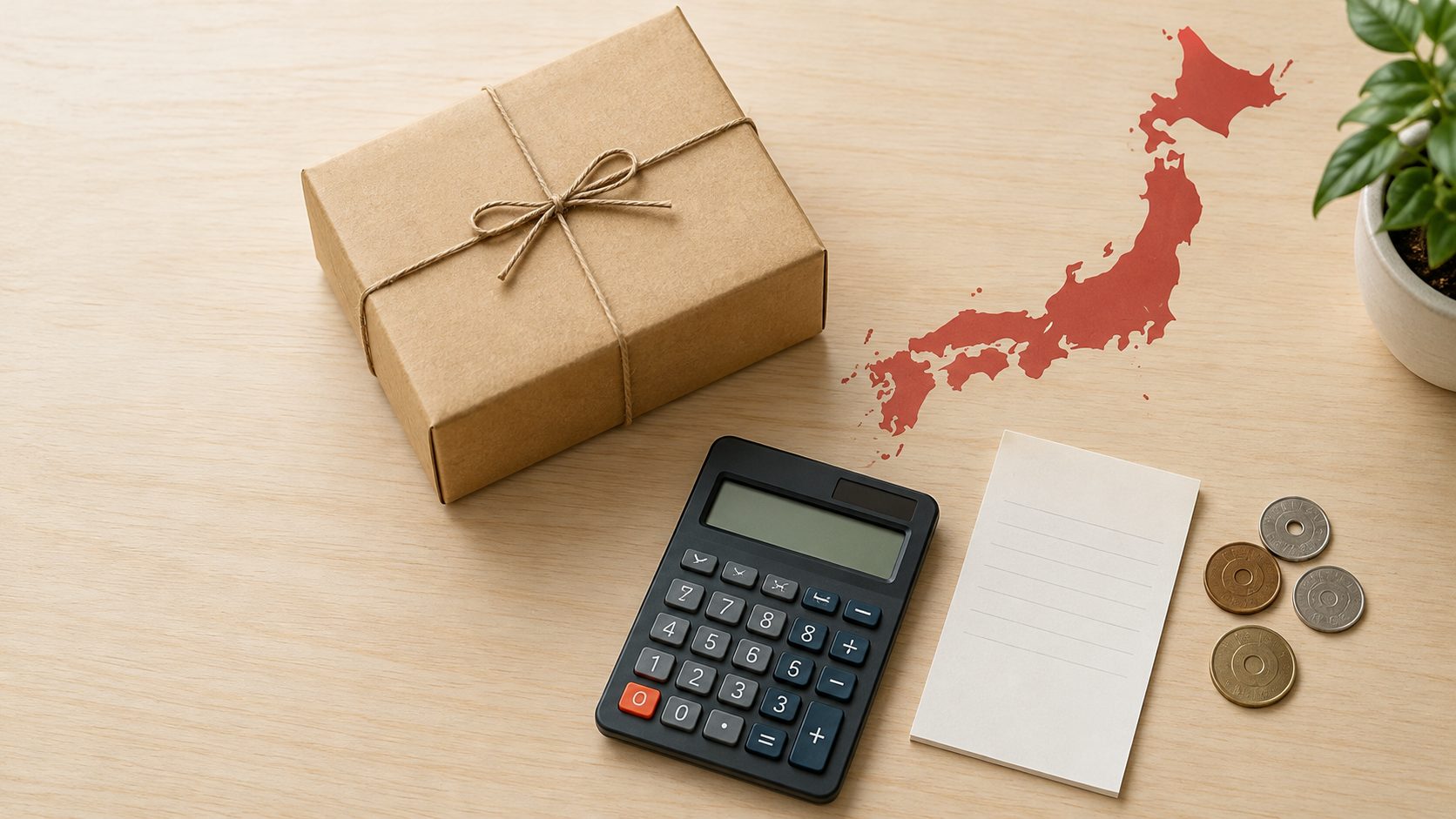
A decision check for personal purchases from China before dispatch to Japan: identify the import route, keep the evidence, and pause when the goods or value need a closer review.
China to Japan: Decide Before You Ship a Personal Purchase
Before a China purchase leaves the warehouse, answer one practical question: can the recipient support the order details and accept the import process if Japan Customs asks? If the answer is unclear, pause before dispatch. This guide is for a personal purchase going to Japan, not for resale stock or a tax quotation.
Policy check: 23 October 2026. Customs rules, carrier conditions and product controls can change. The final decision and any tax assessment belong to Japan Customs and the route operator.
Use this five-minute decision check
1. Is it really a personal purchase?
Japan Customs describes personal import generally as an individual directly buying foreign goods for personal use. A repeated quantity, goods intended for resale, or an order placed for a business may need a different process. Do not relabel a commercial purchase as personal use simply because the parcel is addressed to an individual.
Write down the intended use, exact quantity and recipient before you arrange shipping. If several people’s purchases are combined, keep a list showing which items belong in this particular parcel.
2. Can you prove what is inside and what was paid?
Keep the order confirmation, item description, quantity, seller invoice or listing, and payment record. The declared description and value should match the actual items. A generic line such as “gift” or “accessories” is not a substitute for accurate product information.
If the parcel may later need tracking help, keep the YDA parcel number and international tracking number as well. Our arrival-in-Japan tracking guide explains how to use the active carrier’s number after handover.
3. Which route are you using?
The process is not identical for postal parcels and commercial couriers. Japan Customs explains that personal imports can arrive by international post, international courier or general cargo. For courier shipments, a customs broker normally clears the goods and may charge its own service fee; confirm that cost with the courier before dispatch.
For postal parcels, Japan Customs states that customs value of ¥10,000 or less is generally exempt from duty and tax, but this does not apply to every product. Alcohol, tobacco and leather products are examples of exclusions. Treat this as a postal-import rule, not a promise that every low-value purchase has no cost or no customs check.
If a postal parcel has a customs value above ¥200,000, Japan Customs says a general import declaration is required. The recipient receives a Japan Post clearance notice and must prepare the invoice and other documents; a broker may be used, or the recipient can declare personally. The ¥200,000 figure is a procedure threshold, not a fixed bill.
4. Does the product need a specialist check first?
Stop before dispatch if the product is food, medicine, cosmetics in quantities beyond ordinary personal use, a battery product, an animal or plant product, branded merchandise, or another regulated item. Import legality, carrier acceptance and warehouse acceptance are different questions. A product can be legal to import but unavailable on a particular air route, or it can be accepted by a carrier while still needing a licence or other approval in Japan.
Send YDA the product link, material or ingredient details, quantity, battery specification if relevant, and intended use. YDA can record what was provided and compare available shipping options. YDA cannot decide the final HS classification, grant an import licence, guarantee tax, or guarantee Customs release.
5. If Customs later asks, do you have a reply pack?
Make one folder before dispatch containing:
- order and payment evidence;
- item description, variant and quantity;
- the address and recipient contact details used for shipment;
- packing record or photo references where available;
- the international tracking number.
For a parcel already held in Japan, use the separate postal customs notice document checklist. That page covers replying to an existing notice; this page helps you decide whether to send before one exists.
A simple go / pause / change-route result
Go ahead when the purchase is genuinely for personal use, the product is suitable for the intended route, and the order, payment and parcel details agree.
Pause and clarify when the declared value cannot be supported, the quantity appears commercial, the product description is vague, or you do not know whether a product restriction applies.
Change the plan when a courier needs documents you cannot provide, a product cannot travel on the selected route, or the recipient needs advice from a customs broker or the relevant Japanese authority before importing.
Japan Customs notes that postal items can still be inspected and assessed even where a simplified or low-value process applies. Keep the records until delivery is complete. Do not promise a recipient that a threshold, a seller statement or a warehouse note settles the final outcome.
📲 Download the YDA Express App
Use the YDA Express App to place China purchasing orders, view product check photos, manage packages, and arrange consolidation and international forwarding.