A Luxembourg-specific cost and consolidation guide for Pinduoduo parcels, covering IOSS, 17% VAT, the €3-per-item-type duty, POST handling fees and the documents to keep before dispatch.
Yes, a Pinduoduo order can be forwarded from China to Luxembourg, but the decision should be based on the landed cost rather than the product price alone. For a private buyer, the important questions are whether Luxembourg VAT was collected through IOSS, how many different item types are inside the parcel, whether POST must complete customs formalities, and whether any product needs a restricted-goods route.
This guide is a pre-dispatch cost worksheet for ordinary personal purchases. It does not promise customs release or a final tax amount. Rules and public fees were checked on 27 September 2026.
First check the real place of dispatch
A listing may look international while the seller still delivers only inside China. Record the seller, selected variation, quantity, domestic tracking number and the Chinese warehouse address before paying. If the order will be sent to a forwarding warehouse, use the Pinduoduo tracking-status guide to separate seller delivery, warehouse receipt, international movement and Luxembourg delivery.
For Luxembourg customs, the relevant question is where the goods physically enter the EU from. Goods dispatched from China are imports from outside the EU even if the marketplace page, payment channel or seller profile looks European.
Build the landed-cost worksheet before consolidation
Write down each cost as a separate line. Do not treat “VAT paid” as meaning “nothing else can be due.”
Product price and any China domestic delivery charge.
Purchasing assistance, agreed inspection, repacking or storage charges, if used.
International freight based on the packed actual or volumetric weight used by the selected route.
Luxembourg import VAT when it has not been validly collected and transmitted through IOSS.
The temporary customs duty that applies to relevant low-value e-commerce consignments from 1 July 2026.
Carrier or postal customs-handling fees.
Any product-specific duty, excise, permit, return or disposal cost.
The Luxembourg Customs and Excise Agency explains that imported goods have a customs value supported by the invoice. The VAT base can include the customs value, duty, excise and other charges. A vague description or artificially low value is therefore not a safe cost strategy.
The €3 rule changes how mixed parcels should be planned
From 1 July 2026, online goods sent from outside the EU in a consignment worth no more than €150 are subject in Luxembourg to a €3 customs duty per type of item in the parcel. POST Luxembourg’s current customs page gives a practical distinction:
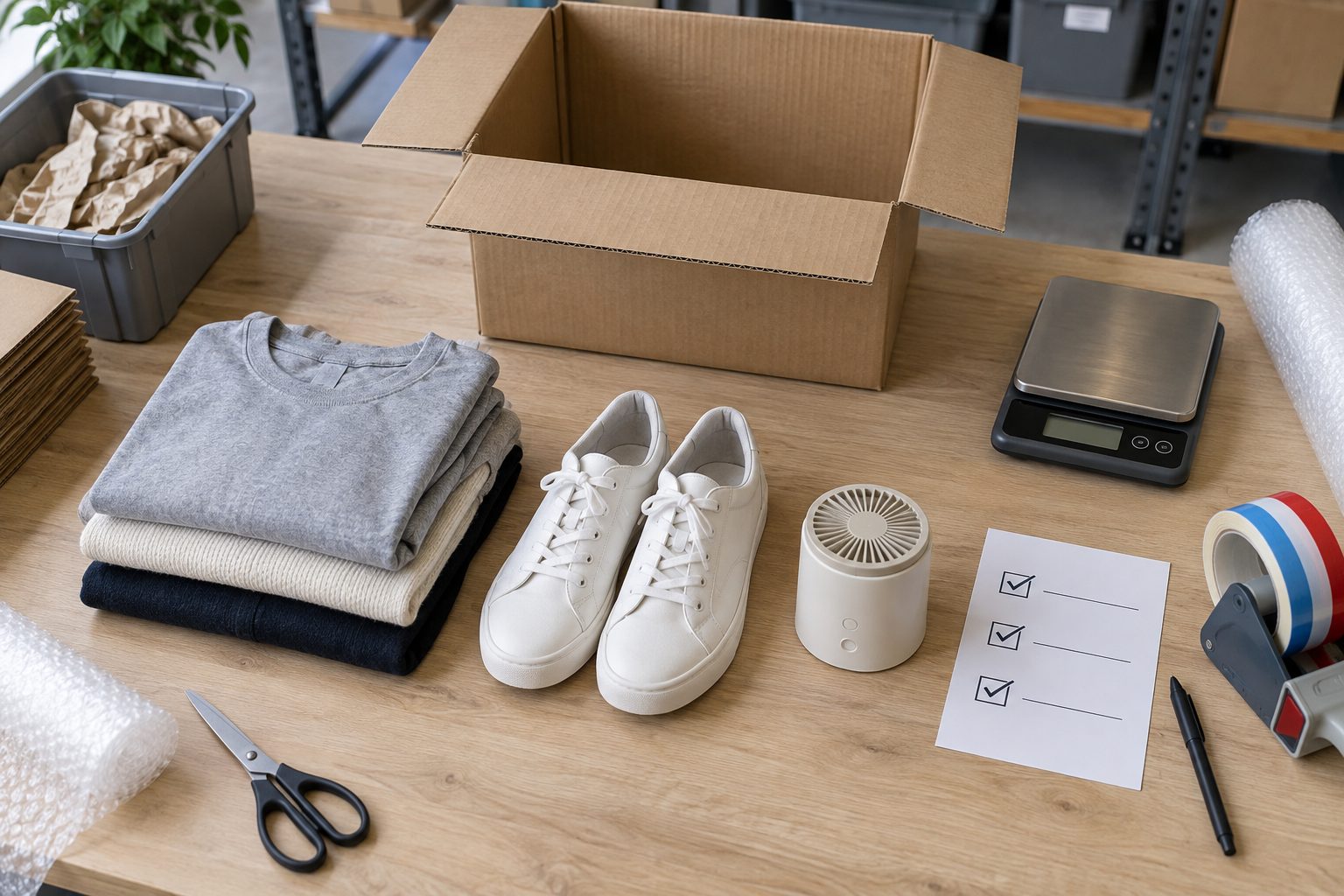
one T-shirt, one pair of jeans and one pair of shoes represent three item types and €9 of duty;
one T-shirt and two pairs of jeans represent two item types and €6 of duty.
The duty can apply even when VAT was already paid online. This means consolidation is no longer a simple “one parcel is always cheaper” decision. Combining parcels may reduce duplicate packaging or separate handling events, but it does not automatically remove the duty attached to the item types inside the final consignment.
Choose the correct tax path
Path A: no more than €150 and IOSS is correctly transmitted
If the seller or marketplace used IOSS, VAT should be collected at checkout. For the import VAT relief to work, the valid IOSS identification number must also be included in the electronic customs declaration. Keep the order invoice and proof showing that Luxembourg VAT was collected. The IOSS number itself is not normally a number the buyer should publish or copy into messages.
The €3 item-type duty and a carrier’s customs-handling fee can still apply. IOSS deals with VAT collection; it does not make every other charge disappear.
Path B: no more than €150 but IOSS is absent or not transmitted
Luxembourg import VAT may be collected on arrival. The standard Luxembourg VAT rate is 17%, although reduced rates can apply to qualifying goods. If VAT was already charged by the seller but the IOSS number was missing from the electronic declaration, Luxembourg Customs says it will not issue the refund after clearance; the consumer must request repayment from the foreign supplier. Keep both the checkout evidence and the import-payment receipt.
Path C: the consignment exceeds €150
Do not plan the parcel as an IOSS low-value shipment. Import VAT and any applicable customs duty are handled at import, and the documentation and clearance process may differ. Ask for a route and clearance check before approving dispatch.
Path D: the contents are restricted, excisable or commercial
The €150 value alone does not make the goods eligible for simplified handling. Batteries, liquids, cosmetics, food, supplements, branded goods, wireless devices and larger quantities can trigger carrier restrictions or destination requirements. Use the Pinduoduo pre-shipping restrictions checklist before buying or consolidating these products.
POST fees can outweigh the price of a small order
When POST Luxembourg must carry out customs formalities for a private customer, its published handling fees are €6 for a parcel valued at €22 or less and €18 for a parcel valued above €22 and up to €150. Amounts still due can be paid at delivery or collection according to POST’s procedure.
These are POST handling fees, not YDA Express freight charges and not the same as VAT or the €3 item-type duty. A courier may use a different clearance process and fee schedule, so confirm the actual final-mile and customs operator before dispatch.
Prepare one evidence sheet for the final box
Before the warehouse combines anything, make one line for each product type:
specific product name and intended use;
quantity, material and model or variation;
seller invoice or order screenshot;
amount paid and evidence of VAT collected at checkout;
battery, liquid, powder, magnetic, food or branded attributes;
domestic tracking number and warehouse parcel number;
recipient name, Luxembourg address, postcode and contact details;
proposed customs description and truthful value.
If two listings are really the same item type, describe them consistently. If they are different products, do not hide the difference to reduce a fee. Customs and the carrier control the final treatment.
Decide whether to combine, split or stop
Combine ordinary compatible goods when the packed weight and dimensions improve and the final documentation remains clear. Split goods when restricted attributes require different routes, packaging or declarations. Stop before international dispatch when the product cannot use an available route, the seller evidence is incomplete, the landed cost no longer makes sense, or an import permit must be confirmed first.
YDA Express may assist with purchasing, seller communication, China warehouse receipt, agreed photo checks, eligible storage, repacking, consolidation and comparison of available international routes. A basic warehouse check is not authentication, laboratory testing or regulatory approval. YDA Express cannot set the final Luxembourg classification, guarantee tax, obtain an import licence for the recipient, guarantee customs release or promise a delivery date.
Your dispatch decision
Approve international shipping only when you can answer all five questions:
Was Luxembourg VAT collected, and is there evidence of the IOSS path?
How many item types will be counted in the final low-value parcel?
Who will complete customs formalities, and what handling fee may apply?
Are all contents accepted by the selected route and lawful to import?
Does the full landed cost still justify the order?
If any answer is unclear, keep the goods at the China warehouse while the seller, forwarding provider, carrier or Luxembourg authority confirms the missing point. That is usually cheaper than discovering the problem after export.
📲 Download the YDA Express App
Use the YDA Express App to place China purchasing orders, view product check photos, manage packages, and arrange consolidation and international forwarding.