Buying a Taobao coffee machine for your home in Japan? Match the exact model to 100V and your local 50Hz or 60Hz supply before paying, and separate plug, transformer and PSE questions.
A coffee machine rated only for 220V should not be treated as ready for a normal 100V home outlet in Japan. A seller’s “Japan plug” option does not change the machine’s electrical rating. Before paying on Taobao, obtain the exact version’s rating-label photo and check both voltage and frequency for the place where you will use it.
This guide is for a Japan resident choosing one new machine for home use. It does not approve a particular product or cover café use or resale. Electrical and policy sources checked: 2 November 2026.
Put the place of use beside the rating label
Japan’s domestic supply is generally 100V, with 50Hz in the east and 60Hz in the west. Kansai Electric supplies 100V/60Hz and explains the regional boundary in its electricity guide. Write down your actual city and the utility’s frequency; “Japan” alone is not enough when the appliance is limited to one frequency.
For example, compare a home in Tokyo’s 50Hz area with one in Osaka’s 60Hz area. The same 100V machine can give different answers if its label says only 50Hz. If the location is near the boundary, check the actual utility supply instead of guessing from the prefecture name.
Ask the seller for a clear photo of the machine’s own label, showing the full model suffix, rated input voltage, frequency and power. Match it to the selected Taobao variant and the instruction manual. A stock image from another voltage version cannot settle this order. If the machine has a separate external power supply, obtain its input and output labels too; do not read an accessory charger’s 100–240V rating as the coffee machine’s rating.
How three illustrative labels change the purchase
These are invented teaching examples, not real products, customer records or operating approvals.
| Illustrative machine label | Decision for an ordinary Japanese home supply |
|---|---|
| AC 220V, 50Hz | Does not match normal 100V supply in either area; hold this version. |
| AC 100V, 50Hz only | Voltage matches, but 60Hz use in Osaka remains unresolved; request a suitable version or the manufacturer’s answer. |
| AC 100V, 50/60Hz | Matches those basic supply figures in both examples; still check the exact model’s instructions, plug, grounding and installation conditions. |
A 100–240V marking, if genuinely present on the actual machine, includes 100V; it does not by itself answer frequency, grounding or every condition of use. Do not assume a heating appliance has the same wide input range as a phone charger.
“We will include an adapter” needs a second question
Ask what the seller means by adapter. A plug adapter changes the connection shape, not the voltage, as Kashimura’s manufacturer guidance explains. A 220V-only label therefore remains a mismatch for a normal Japanese 100V outlet even when the pins fit.
A voltage transformer is different, but it is not a universal fix. Transformer manufacturer Nissyo explains that a transformer does not change frequency. In the Osaka example, adding one does not turn the local 60Hz supply into the 50Hz specified by the second illustrative machine. Its own guidance also distinguishes converter types; coffee makers are among the products it excludes from its electronic-converter category.
Do not buy a converter merely because its advertised wattage looks large enough. Send the coffee-machine manufacturer the full model, label, intended Japanese supply and proposed arrangement, and ask whether it permits that use. If the answer depends on an electrical alteration, a different circuit or unidentified equipment, pause this purchase and obtain qualified advice. This article does not specify a transformer, sizing multiplier, rewiring method or way to remove a ground connection.
A home may have a dedicated 200V circuit for certain appliances, but that does not make a 220V model automatically suitable. Do not select a machine on that assumption; the actual supply and the manufacturer’s conditions still need checking.
Ask for one answer tied to the Taobao variant
Send this before the seller takes payment:
I plan to use this machine at home in [city], Japan, on [confirmed voltage/frequency]. Please confirm the full model and selected variant, send its actual rating-label photo and manual power specification, and state whether the manufacturer permits that use. Explain exactly what any included adapter does. Do not substitute another voltage version without my approval.
Replace the brackets with checked information. A reply saying “works overseas” without identifying the version leaves the question open. Save the listing option, seller’s answer and manufacturer’s evidence together. Ask separately about after-sales support in Japan; a usable power rating does not establish local warranty coverage.
If YDA is assisting with the purchase, it can relay the agreed questions and record the selected option. That communication is not an electrical-safety assessment or a manufacturer’s approval.
Keep PSE and the tax quote separate from power compatibility
A PSE mark does not convert 220V into 100V. Japan’s product-law responsibilities also depend on the product and transaction. METI’s April 2026 explanation, pages 11–12 describes rules effective from 25 December 2025 for overseas businesses directly selling regulated products to consumers in Japan, including a domestic administrator. Do not accept “you are buying personally” as a blanket answer to the seller’s obligations. Ask the seller to explain the applicable Japanese product-safety arrangement for the exact model; commercial resale needs its own review.
Import cost is another check. Japan Customs lists a 10% standard consumption-tax reference, calculated on customs value plus applicable duty and other relevant excises. Its ¥10,000 exemption concerns total customs value, with exclusions and aggregation rules; it is not a CNY checkout-price allowance or a safety exemption. The final classification, valuation and duty for this unselected model are not confirmed here. Separate carrier charges from government tax.
Turn the answer into a purchase instruction
Choose the confirmed version when the actual label and manufacturer’s instructions support your Japanese supply and the other purchase questions are resolved. Request another version when the seller offers a documented Japan-suitable alternative. Leave the order unpaid when the rating or permitted use remains unclear.
If the goods later reach a China warehouse, request any agreed visible label, model and plug photos before sealing; photographs cannot verify hidden wiring or certify safety. A short China-side power-on check would not establish suitability on your Japanese supply. Resolve substitutions within the seller’s confirmed return terms.
Stop and clarify suspected copied branding as well; Japan Customs lists intellectual-property-infringing goods among its prohibited imports. Warehouse photos are not authentication.
After choosing the appliance, compare the available Taobao delivery and consolidation options for Japan. Before international dispatch, use the Japan personal-purchase shipping check for truthful records and route acceptance. Wi-Fi, batteries or added consumables require separate checks; a compatible voltage is not their clearance. YDA cannot guarantee product safety, classification, tax, customs release or delivery time. Recheck the current Japanese requirements, platform terms and carrier conditions before dispatch.
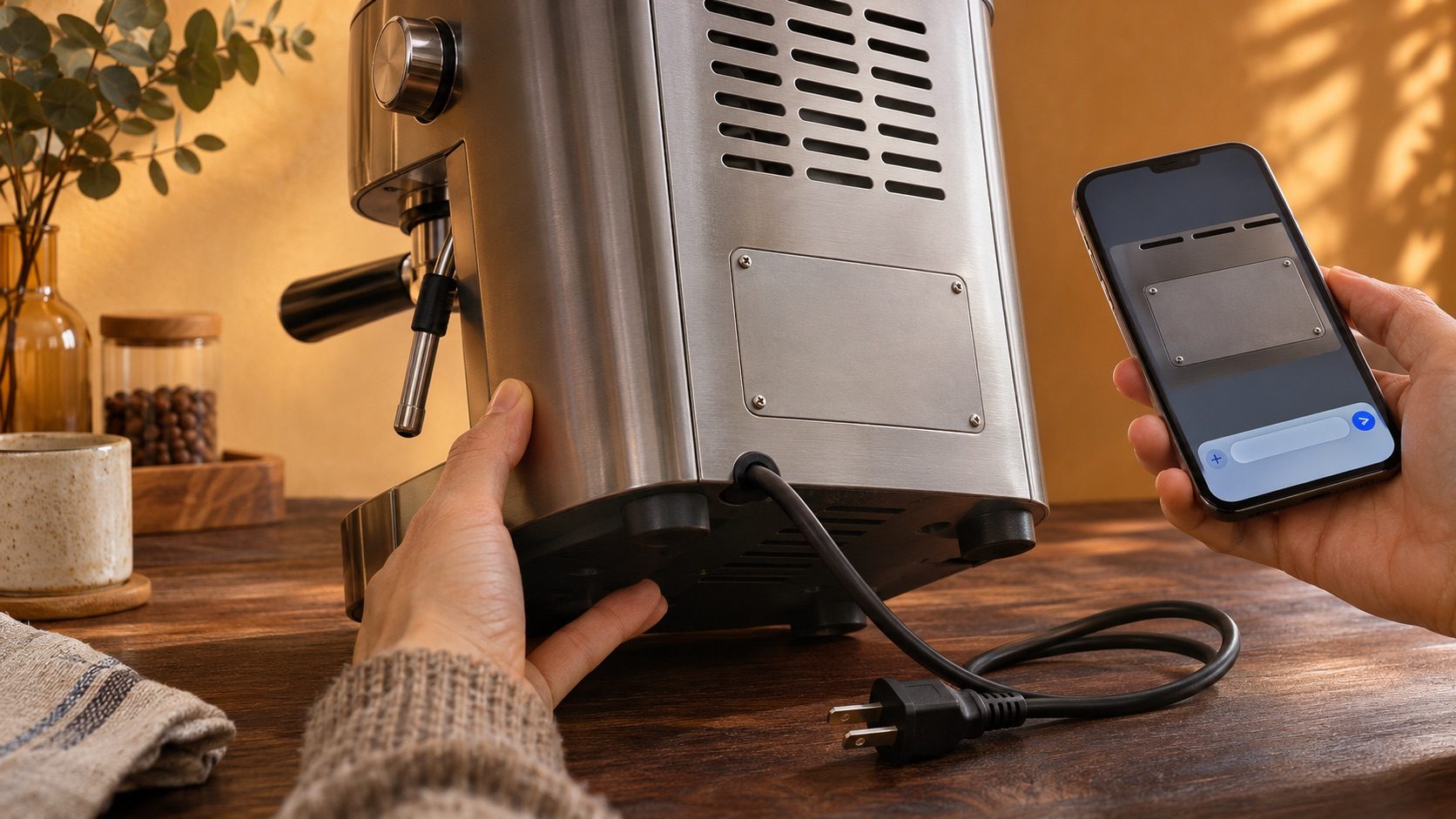
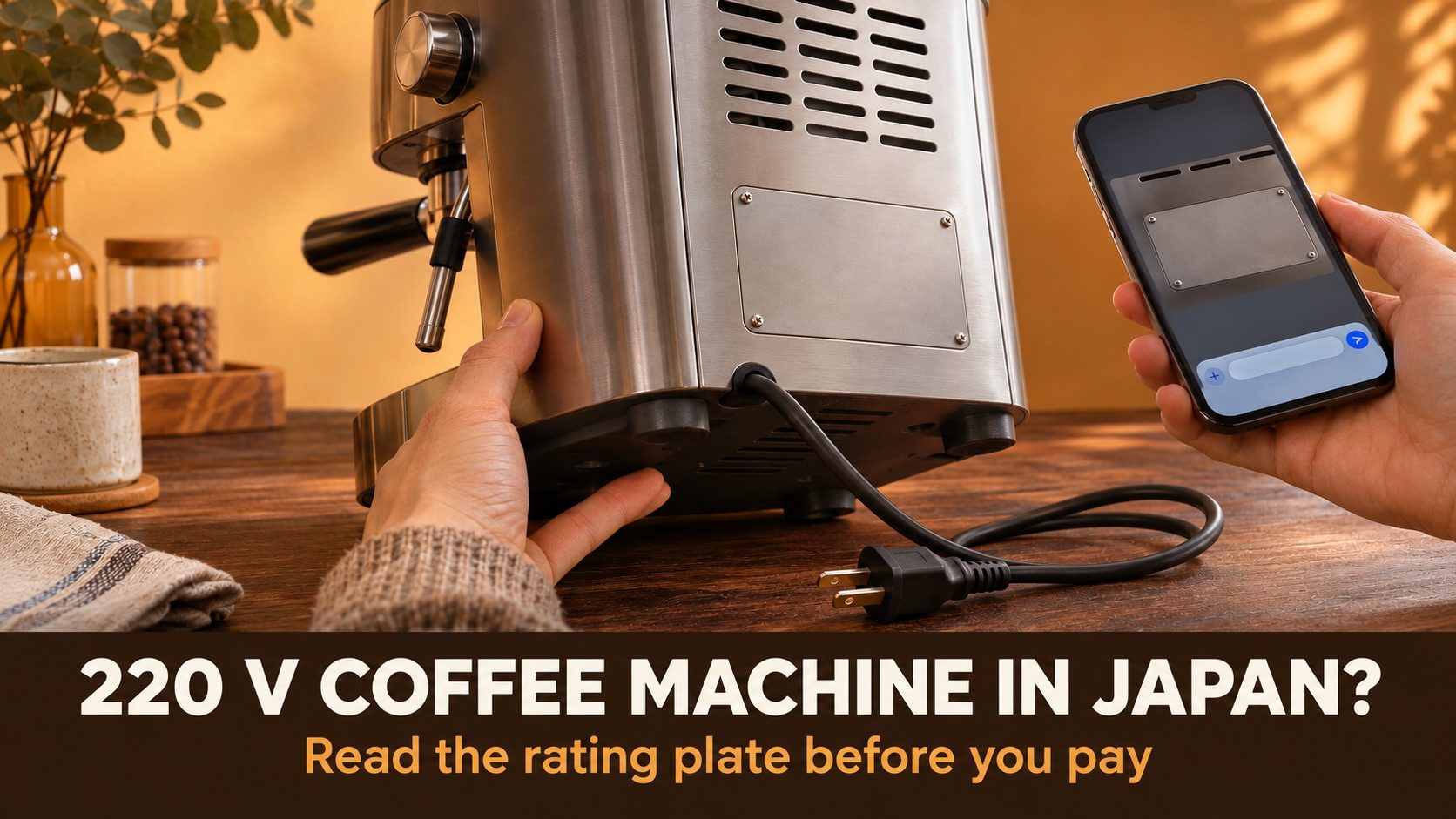
The title image is an AI concept illustration, not a tested appliance or a real customer’s rating label.
📲 Download the YDA Express App
Use the YDA Express App to place China purchasing orders, view product check photos, manage packages, and arrange consolidation and international forwarding.