
A China shipping estimate can change after warehouse packing because the final carton, actual weight and volumetric weight are not known until the shipment is prepared. Learn how to check the numbers before dispatch.
A China shipping estimate can change after warehouse packing because the final carton has not yet been measured when the first estimate is prepared. The seller’s product weight, domestic parcel data, and a pre-purchase estimate are useful for planning, but the final international quote normally depends on the packed shipment: its actual weight, exterior dimensions, product type, destination, and available route.
This guide is for overseas buyers whose Taobao, 1688, JD.com, Pinduoduo, or other China purchases are being received and prepared by a China warehouse. It explains which numbers are estimates, which numbers become final only after packing, and what to check before approving dispatch.
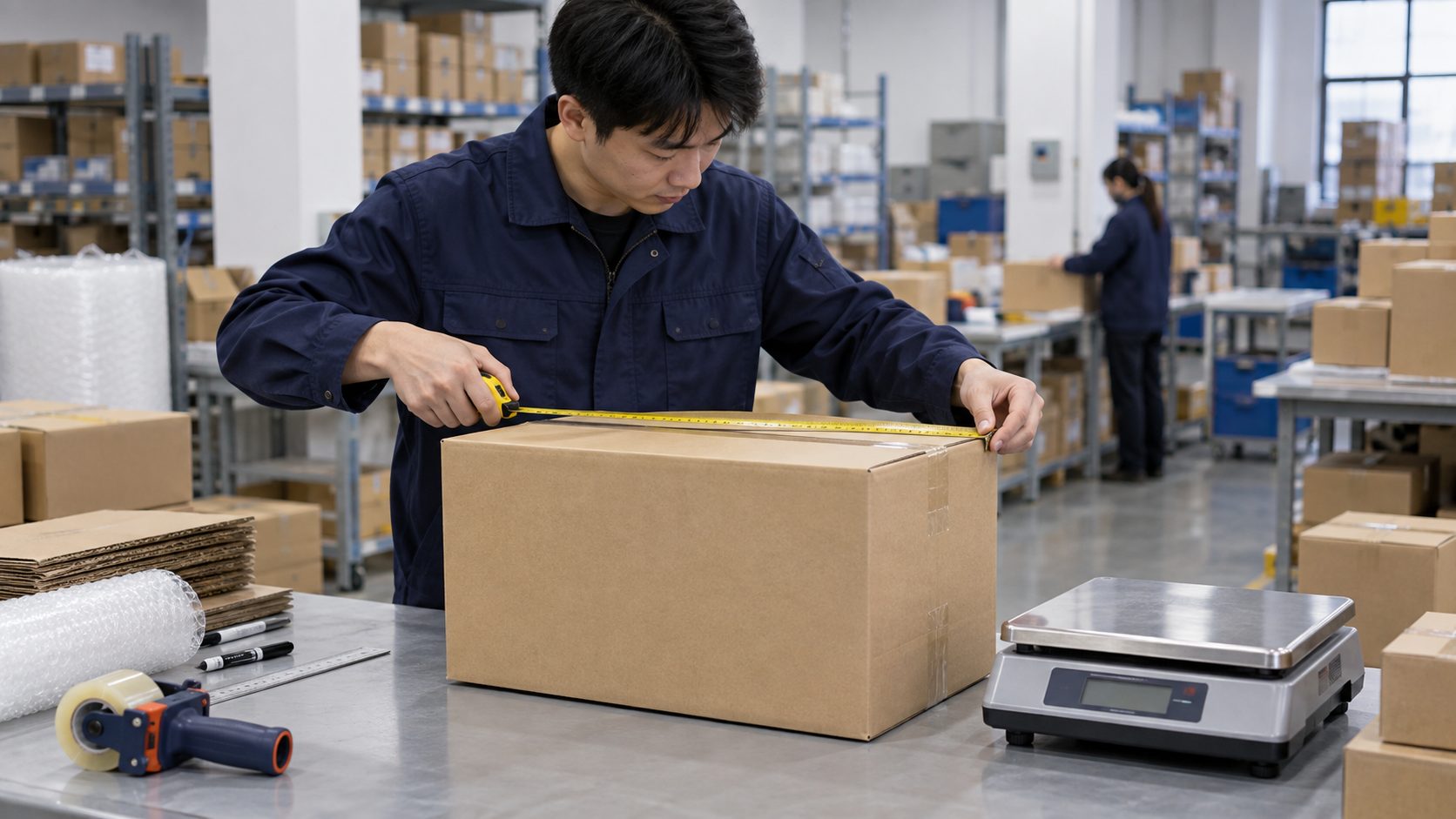
Warehouse packing scene illustrating final carton measurement before quote confirmation.
Three different numbers can appear during one shipment
A customer may see several weights during the process, and they do not necessarily describe the same thing.
- Product weight is the seller’s stated weight for an item. It may exclude the retail box, protective material, domestic courier bag, or accessories.
- Warehouse arrival weight describes the parcel as received from the seller. It may include oversized domestic packaging that will not be used for international transport.
- Final packed weight and dimensions describe the international carton after approved consolidation, repacking, protection, or removal of unnecessary outer packaging.
The final international quote should be checked against the last set of measurements, not only the seller’s listing or the first domestic parcel scan.
If you are receiving orders from several sellers, the package consolidation guide explains how suitable parcels can be received, stored, checked, and prepared together before international shipping.
Actual weight and volumetric weight answer different questions
Actual weight is measured on a scale. Volumetric weight represents the amount of transport space occupied by the carton.
For the calculation used in this guide:
Volumetric weight (kg) = Length (cm) × Width (cm) × Height (cm) ÷ 5000
Compare the result with the actual packed weight. The higher number is the chargeable weight for the quotation, subject to the selected route’s current rules and rounding method.
A dense carton may be charged by actual weight. A large carton containing light goods may be charged by volumetric weight. This is why shoes in retail boxes, plush toys, pillows, helmets, baskets, and protective packaging can produce a higher chargeable weight than the scale reading alone suggests.
A hypothetical calculation after packing
Assume a completed carton has exterior dimensions of 50 × 40 × 30 cm and an actual weight of 8 kg.
50 × 40 × 30 ÷ 5000 = 12 kg
The volumetric weight is 12 kg, which is higher than the 8 kg actual weight. The quotation would therefore use 12 kg as the chargeable weight under this calculation.
This is a calculation example, not a YDA Express freight quotation. The applicable rate, rounding, route availability, surcharges, taxes, and other charges still depend on the destination, product information, service, and current operating conditions.
Why the first estimate can be lower or higher
Before the goods arrive, an estimate may rely on product links, seller information, quantity, and expected packaging. Those inputs can change.
The final carton may be larger because fragile items need cushioning, retail boxes must be retained, products cannot safely share one carton, or the route requires specific packaging. It may become smaller when unnecessary domestic outer boxes can be removed, clothing can be folded more efficiently, or several small parcels can use one suitable carton.
The result is not automatically cheaper after consolidation. Consolidation reduces repeated parcels and can remove wasted space, but combining items can also require a larger carton or additional protection. The decision should be based on the finished package rather than a guaranteed saving.
For a broader view of the cost components beyond weight, read the real cost of shipping from China.
Repacking changes dimensions, but protection still matters
Reducing empty space can lower volumetric weight, but the smallest possible carton is not always the safest choice.
Before asking the warehouse to remove packaging, decide which items need:
- their original retail box;
- corner, screen, or edge protection;
- separation from heavy products;
- waterproof or crush-resistant packing;
- a different route because of batteries, liquids, powders, magnets, food, or other restrictions.
Warehouse photos and basic checks can help identify visible issues, but they are not professional quality certification or authenticity verification. Give specific packing instructions and ask whether they are compatible with the goods and route.
What to verify before approving the shipment
Ask for or review the following information after packing:
- The final exterior length, width, and height of each carton.
- The final actual weight shown for the packed parcel.
- The calculated volumetric weight using length × width × height ÷ 5000.
- The chargeable weight used in the quotation.
- Whether the route applies a particular rounding rule, minimum weight, size limit, or surcharge.
- Which product categories are included in the carton.
- Whether duties, taxes, remote-area charges, or destination fees are included or payable separately.
- Whether changing the packaging would affect protection or route eligibility.
Do not approve dispatch only because the price per kilogram looks low. Confirm which weight is being priced and what the quotation includes.
When it makes sense to wait before packing
If other purchases are still on the way, packing too early may create another international parcel or require the carton to be reopened. Eligible registered customers can use up to 180 days of free China warehouse storage for ordinary goods that meet current warehouse and shipping requirements.
Waiting can be useful when several sellers dispatch on different dates. However, storage time should not cause you to miss a seller’s return window or delay decisions about restricted, damaged, or incorrect goods.
The practical way to compare a revised quote
When a quote changes, compare the old and new inputs rather than only the total price.
Check whether the actual weight changed, the carton dimensions changed, the route changed, or the product information triggered different handling. If the final dimensions are correct, calculate the volumetric weight yourself and compare it with the chargeable weight shown.
A clear quote should allow you to understand the packed measurements, the selected service, and the charges included before you authorize international dispatch.
📲 Download the YDA Express App
Use the YDA Express App to place China purchasing orders, view product check photos, manage packages, and arrange consolidation and international forwarding.