
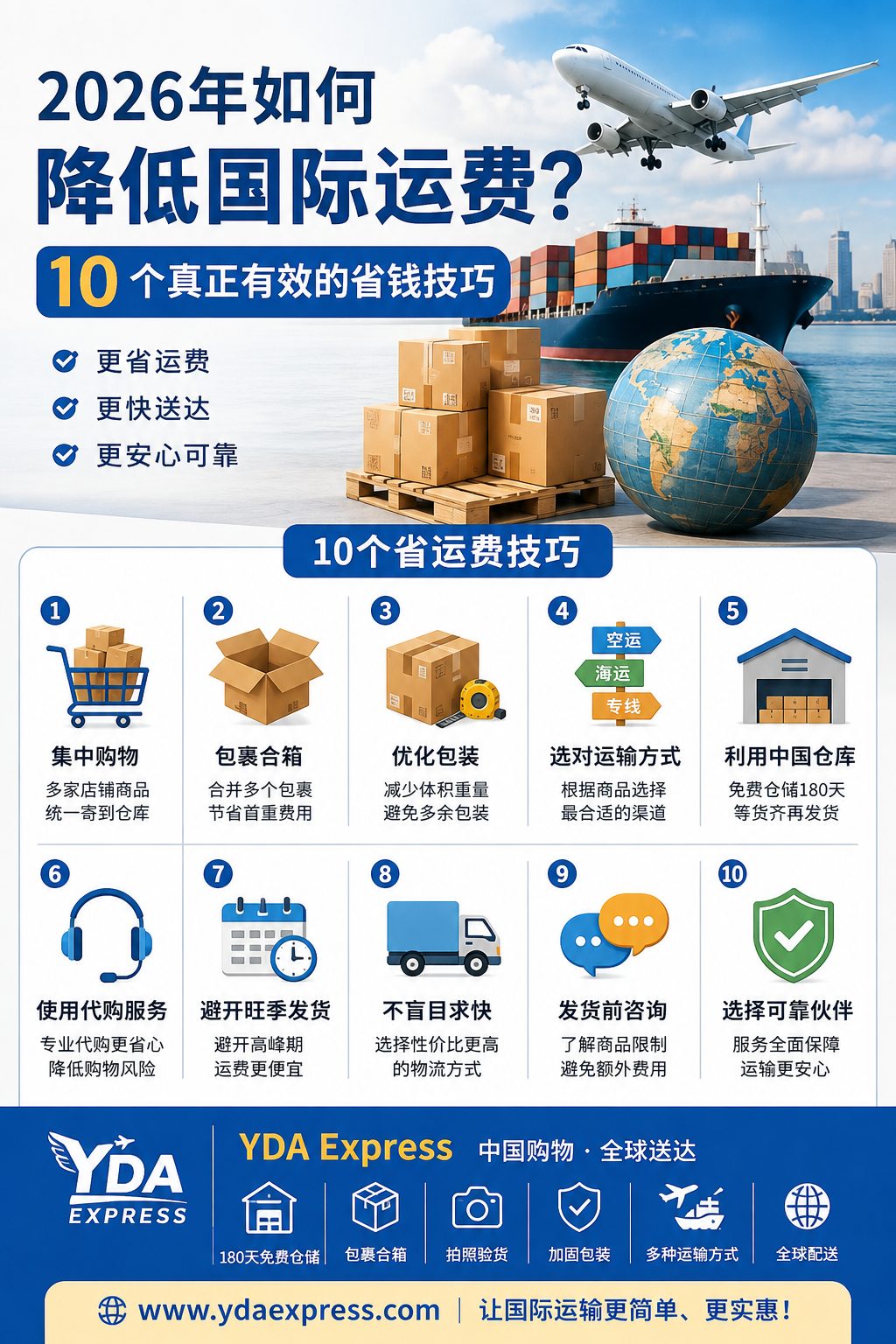
Buying from Taobao, 1688 or Chinese marketplaces but worried about expensive international shipping? Learn how overseas buyers can reduce shipping costs through package consolidation, China shopping agents, warehouse services and smarter shipping methods.
International freight can change the value of a Taobao or 1688 purchase. The practical way to reduce avoidable costs is to compare the complete shipment, its packaging and its timing, rather than rely on a guaranteed saving percentage.
These ten checks help US buyers plan orders and question a quote. They are decision tools, not customer results or fixed freight prices.
1. Compare consolidation with direct delivery
If you buy from several sellers, compare sending parcels separately with receiving them at one China warehouse first. A forwarding service can hold suitable goods, remove approved surplus packaging and prepare one or more consolidated cartons.
Consolidation may reduce repeated minimum charges, but direct delivery can still be better for some orders. Compare both using the same goods and service scope. Read the parcel consolidation guide before deciding what should travel together.
2. Get obsessive about package weight—and especially size
Ask for packed weight and dimensions, not product weight alone. Where a route uses volumetric weight, an oversized carton can increase the bill even when the goods are light. Confirm the divisor, rounding and minimum charge.
Ask about repacking or compression only where suitable. Retain protection for fragile goods and confirm any material or handling fees.
3. Choose the right international courier for your route (and stop defaulting to one)
Compare current quotes for the same destination, goods and packed dimensions. Check delivery scope, restrictions, surcharges and the definition of the transit estimate. Different service levels can have different costs and limits; no carrier is always the cheapest choice.
4. Leverage economy lines for non-urgent shipments
Non-urgent stock or household goods may justify comparing economy air or sea arrangements with express. Include destination handling and delivery costs in the comparison.
A split plan can be sensible: send urgent items separately and hold non-urgent goods for another shipment. Decide from the actual quote rather than assuming economy service guarantees a particular saving.
5. Ship during off-peak dates and avoid last-minute rushes
Ask sellers and the warehouse about dispatch cutoffs, holidays and expected departure dates. Allow time for checks, returns and packing instead of relying on a last-minute fastest-service quote.
Rates and capacity can change. Confirm quote validity and schedules before postponing a shipment solely in the hope of a lower price.
6. Understand customs and do the paperwork right the first time
Prepare accurate descriptions, quantities, purchase values and invoices. Confirm product classification and any necessary documents with the responsible party. Do not underdeclare values or assume a US tax-free threshold applies.
Ask who handles clearance and pays import charges, and whether the written quote includes final delivery. The customs responsibilities guide explains the roles to clarify.
7. Ask about documented terms for repeat shipments
If you ship regularly, ask whether a documented volume-based arrangement is available. Confirm eligibility, measurement period and any commitment before relying on a discount. Repeat orders do not automatically entitle you to lower prices.
Consistent records can also help the provider understand your packing preferences and flag recurring sources of cost.
8. Self-manage your supplier pickups and packaging instructions
Where you manage purchases yourself, coordinate domestic delivery and give sellers clear packing instructions. Keep tracking numbers and identify which original packaging must remain.
Confirm who arranges collection, what it costs and whether seller packaging is suitable for the next transport stage. Buying assistance is optional when you can handle these tasks independently.
9. Audit your invoices—mistakes happen more often than you'd think
Compare the invoice with the approved quote: carton count, dimensions, actual and chargeable weight, service level, handling and destination additions. Keep photographs or measurement records when available.
If something differs, request an explanation and supporting measurements. A changed packed shipment can legitimately change the price; an unexplained charge still needs clarification.
10. Consider multi-modal shipping for the best cost-speed balance
Some shipments use more than one transport mode or a different final-delivery provider. Ask which legs are included, who is responsible at each handoff and how tracking works.
For US-bound shopping orders, compare only services actually available for your goods and address. Do not apply an unrelated regional route's price or delivery estimate to your shipment.
Putting it all together: don't overcomplicate, just start with the big wins
Review your recent orders for unnecessary separate dispatches, excess packaging or incomplete cost comparisons. Start with the issue that actually affected your bill.
The China parcel forwarding guide explains the workflow. Send the goods list, packed measurements, US ZIP code and deadline when requesting the next quote.
📲 Download the YDA Express App
Use the YDA Express App to place China purchasing orders, view product check photos, manage packages, and arrange consolidation and international forwarding.