
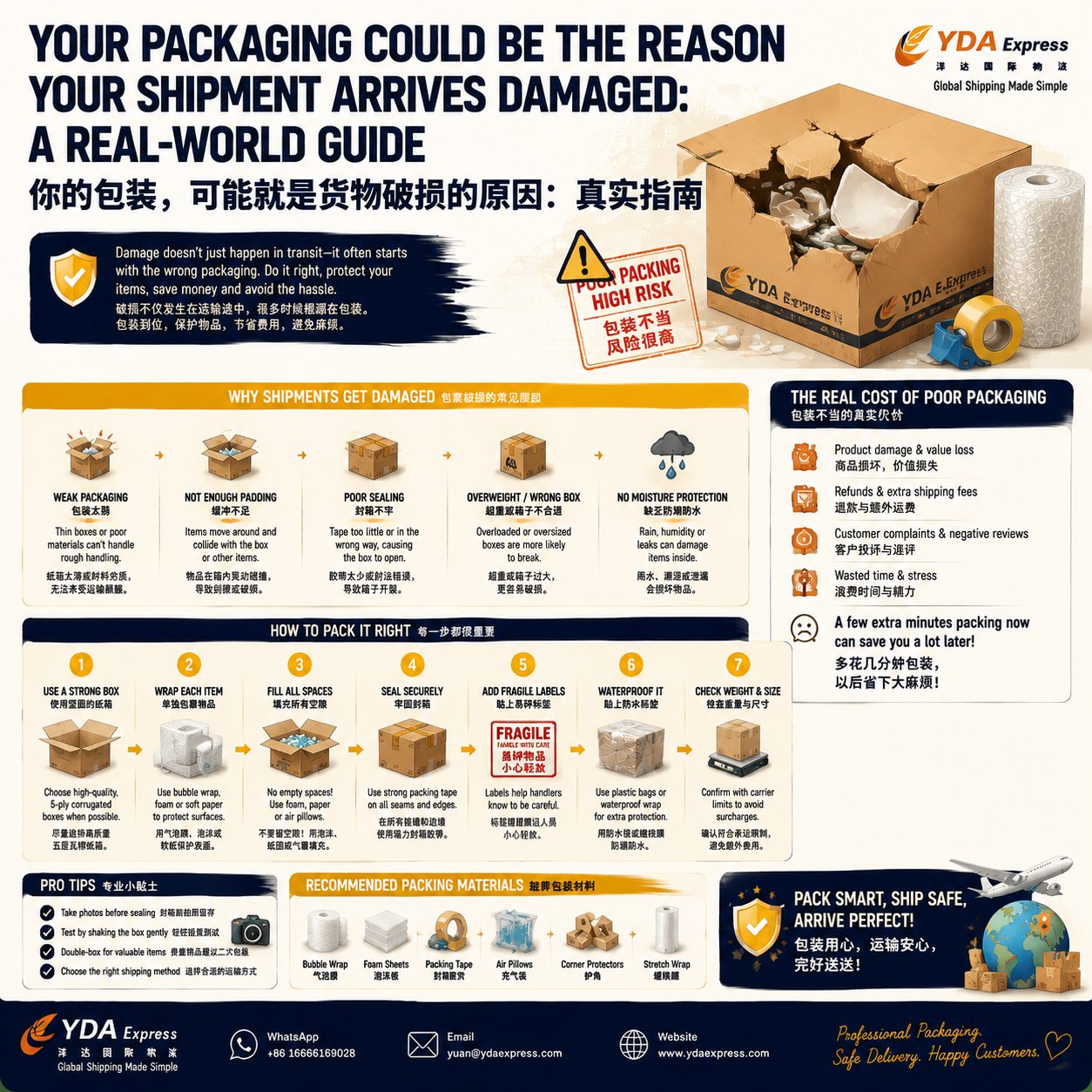
Learn why proper packaging is the unsung hero of international shipping. This guide covers real-world mistakes, the right materials, item-specific tips, and how a China forwarder can save your shipment from disaster.
Last month, a customer sent us photos of a smashed gaming console. The box looked like it had been through a war zone—crushed corners, gaping holes. The culprit? Not the courier. It was the packaging. Or rather, the lack of it. That console was wrapped in a single layer of bubble wrap and tossed into a flimsy shoebox.
Honestly, we see this all the time. People focus on the product, the price, the shipping speed—and forget that the package itself is going on a brutal journey. It’s not just riding in a van. It’s conveyor belts, sorting machines, maybe a forklift, definitely a customs officer poking around. If your packaging can’t handle that, your stuff shows up broken.
Here’s the thing: good packaging isn’t just about stuffing a box with peanuts. It’s about understanding the real stresses your shipment faces and making sure it arrives like you sent it. This guide is for everyday shippers—people buying from China, sending gifts abroad, or running a small e-commerce business. No jargon, just practical advice from someone who’s seen too many crushed boxes.
Why Packaging Matters More for International Shipments
International shipping is a completely different beast. Your package might cross oceans, clear customs in two countries, and get handled by three different carriers. Every transfer is a chance for damage. DHL, FedEx, UPS—they all have automated hubs where packages are literally flipped and dropped. A box that survives a domestic road trip might buckle on a long-haul flight because of pressure changes and rough baggage handling.
Customs adds another layer of risk. Officers have the right to open your shipment for inspection. They’re busy. They’ll cut tape, peek inside, maybe repack it hastily. If your inner packaging is a mess, they won’t care. When the box is resealed poorly, the contents shift around and get destroyed.
I’m not saying this to scare you. I’m saying it because the solution is simple: treat your package like it’s about to be thrown down a flight of stairs. Because sometimes it effectively is.
Retail Packaging vs. Shipping Packaging
Here’s a classic mistake: using the product’s original retail box as the shipping box. That sleek, colorful shoebox with a window lid? It’s designed to sit on a store shelf, not travel 6,000 miles. Retail packaging is thin, often has weak corners, and rarely survives the rigors of international transport.
When you buy from Chinese platforms like Taobao or 1688, many sellers default to minimal packaging to keep costs down. They’ll throw a pair of sneakers into a plastic bag and call it a day. That’s fine for domestic delivery within China, but it’s a disaster waiting to happen if it’s going overseas.
This is where a forwarder changes the game. At YDA Express, we receive items from multiple sellers, inspect the original packaging, and often repack everything into tougher, unified boxes. We strip out all those decorative inner boxes that add volume but no protection. The result? A consolidated shipment that weighs less, costs less to ship, and actually arrives intact.
The Materials That Actually Work
You don’t need expensive specialty materials. You do need the right ones and the right technique.
Boxes: Always use double-wall corrugated boxes for international shipments. They’re graded by bursting strength—look for something around 200-275 lbs per square inch. Single-wall boxes are okay for small, light items like a T-shirt, but for anything over a kilo or with sharp edges, double-wall is a must.
Inner cushioning: Bubble wrap is standard, but use the large-bubble kind, not the tiny ones. Wrap items individually with at least two layers. For heavy or dense things, foam sheets or foam-in-place systems work better. Loose-fill peanuts? Honestly, I avoid them. They shift during transit, leaving items pressed against the box walls. If you must use them, overstuff the box so nothing moves.
Void fill: Crumpled kraft paper, air pillows, or foam. The goal is zero movement inside the box. When you shake it, nothing should rattle.
Tape: Not all tape is equal. Use pressure-sensitive packing tape, at least 2 inches wide. The H-taping method—one strip along the center seam, two along the edges—seals it securely. Never use masking tape or duct tape; they don’t adhere well in cold or humid conditions and can peel off.
Waterproofing: For sea freight or unpredictable weather, consider a plastic liner inside the box or a poly bag wrapped around the item. Condensation inside shipping containers can soak cardboard and ruin electronics or fabrics.
How to Pack Different Types of Items
Each category has its own quirks. Here’s what I’ve learned from repacking thousands of parcels.
Electronics: Static is your enemy. Wrap items in anti-static bubble wrap or bags. Remove batteries if possible—lithium batteries have strict shipping regulations. Pack the device in its original form-fitting foam if available, then place that in a larger box with 2-3 inches of cushioning on all sides. Screens need rigid face protection; a piece of corrugated cardboard taped over the screen before wrapping does wonders.
Clothing and textiles: Soft items can be compressed to save space. Use vacuum-sealed bags if you’re shipping a lot. But don’t go overboard—some vac bags are sharp-edged when compressed and can cut through outer plastic. Better to use sturdy zip-lock style bags and roll out the air.
Fragile items (ceramics, glass, figurines): Double-boxing is the gold standard. Wrap the item in bubble wrap, place it in a small box with peanuts or foam, then put that box inside a larger box with more cushioning. This gives two layers of protection. Mark the outer box “FRAGILE” but know that carriers aren’t legally bound to handle it differently. Your packaging has to do the work.
Liquids: Leak-proof containers inside sealed zipper bags. If a bottle breaks, the bag contains the spill and saves the rest of the shipment. Also, check customs restrictions—some liquids are prohibited.
Mixed shipments: When combining different items, like electronics and cosmetics, separate them with dividers. A heavy item next to a delicate one will cause damage from vibration alone.
The China Angle: Why a Forwarder Can Be Your Best Friend
If you’re buying from multiple Chinese suppliers (say, a phone case from one store, a dress from another, and some stationery from a third), each comes in its own packaging. That’s three separate parcels, each with its own shipping cost and its own risk. A forwarder consolidates them into one box.
But consolidation isn’t just about throwing everything together. A good forwarder will:
- Remove excess packaging to reduce dimensional weight.
- Repack items properly with industrial materials.
- Check for obvious damage before shipping.
- Add commercial invoices and proper labeling.
At YDA Express, we offer a “repacking on request” service. When items arrive at our warehouse, our team assesses whether the original packaging is safe for the trip ahead. If it looks questionable, we’ll repack it at no extra charge—just the cost of materials. This has saved hundreds of shipments from arriving as a box of shards.
I remember a customer who ordered a delicate porcelain tea set from Jingdezhen. The seller shipped it in a beautiful wooden gift box, but that box had zero internal cushioning. When it reached us, the cups were clinking around. We wrapped each piece individually, added foam layers, and put the whole thing in a sturdy outer carton. It arrived in the UK in perfect condition. That’s the difference.
Customs-Friendly Packaging and Labeling
Packaging isn’t just about protection—it’s about information. The labels on your box determine how fast and smoothly it clears customs.
Every international shipment needs a commercial invoice, even if it’s a gift. That invoice should be accurate, with item descriptions that match the Harmonized System (HS) code. Avoid vague terms like “electronics” or “accessories.” Use “Bluetooth headphones” or “cotton T-shirts.”
The shipping label must be clear and scannable. Barcodes smeared by tape or wrinkled paper cause delays and returns. Use a transparent plastic sleeve for the label, or print directly on a sticker.
Marking the box with “GIFT” or undervaluing items to dodge duties? I wouldn’t recommend it. Customs officials see this all the time, and it can trigger inspections, fines, or even seizure. Instead, declare honestly and let your forwarder help you choose the right HS codes to minimize duties legitimately.
Also, consider the outer packaging appearance. A battered box covered in random stickers and Chinese characters might draw more scrutiny than a clean, professional-looking package. First impressions count.
Common Packaging Mistakes We See Regularly
To sum up what not to do:
- Using a used box that’s already soft or dented. (Corrugated loses strength with each use.)
- Filling the box completely with no room for cushioning. (Items need to be isolated from the outer walls.)
- Overpacking without securing — loose items rattling around.
- Wrapping items in paper that offers zero shock absorption.
- Not taping seams adequately. (Bottom flaps popping open mid-transit is a real thing.)
- Ignoring weight distribution: heavy items at the bottom, lighter on top.
- Forgetting to remove old labels or barcodes from reused boxes. This can confuse automated sorting.
Packaging for Different Shipping Methods
Air express (DHL, FedEx, etc.) generally has less exposure to moisture than sea freight, but packages are processed faster and handled more aggressively. Sea freight means long periods in a container, often with temperature swings, so moisture protection is critical.
If you’re shipping via a forwarder’s consolidation service, they’ll often load your box into a larger pallet or container with many others. That means your package won’t be tossed around individually, but it will be under pressure from stacking. Strong boxes matter even more here.
The Cost of Bad Packaging vs. Good Packaging
Some people skimp on packaging to save a few bucks. A double-wall box and some foam might cost $5 more. But if your $200 watch arrives broken, you’ve lost $200 plus the shipping cost, and maybe the customer relationship. Returns from overseas are a nightmare—expensive and time-consuming.
Insurance helps, but filing claims is a hassle. Carriers often deny claims if they deem the packaging “insufficient.” I’ve had claims rejected because a box wasn’t rated for the weight or the cushioning was inadequate. Your insurance is only as good as your packaging.
Getting Help from a Professional Forwarder
If you’re shipping from China, don’t leave packaging decisions to chance. A reliable forwarder can be your packaging expert. They’ll not only repack but also advise on the best way to ship your specific item.
When you work with YDA Express, here’s what happens: you send us your order details, we receive the packages, inspect them, and offer recommendations. We can take photos of everything before repacking so you know what’s happening. Once you give the okay, we pack it the right way, prepare shipping labels, handle customs paperwork, and dispatch it.
It’s a partnership, not just a transaction. We want your stuff to arrive safely because our reputation depends on it.
Practical Steps Before You Ship
Next time you’re about to send something internationally, do this quick checklist:
- Is the box sturdy and new-looking?
- Is there at least 2 inches of cushioning around every side of the item?
- Can you shake the box without hearing movement?
- Are all seams sealed with strong tape?
- Is the label clear and protected?
- Is the invoice accurate and attached?
If you’re buying from China, ask your supplier to send you a photo of the package before they dispatch it. Better yet, have it sent to a forwarder who will be your eyes and hands on the ground.
At the end of the day, good packaging is cheap insurance. It’s the one thing you can control in the chaos of international logistics. Don’t let a flimsy box be the reason your shipment ends up in a landfill.
Need help with your next shipment from China? Reach out to us at YDA Express. We’ll make sure your goods are packed like they’re our own.
Contact us today:
- WhatsApp: +86 16666169028
- Email: yuan@ydaexpress.com
- Website: https://www.ydaexpress.com
📦 China Parcel Forwarding & International Shipping Already placed your order? Send your purchases to our China warehouse for parcel receiving, photo inspection, up to 180 days of free storage, package consolidation, international shipping, and real-time tracking.
📲 Download the YDA Express App One app for shopping, purchasing assistance, package management, consolidation, international shipping, and worldwide delivery.
🌍 More Helpful Guides Explore practical guides on shopping from China, parcel forwarding, shipping costs, and customs clearance.