
Match the ceramic set you ordered with the pieces received in China, keep the real household purpose and paid records clear, and resolve errors before forwarding to Japan.
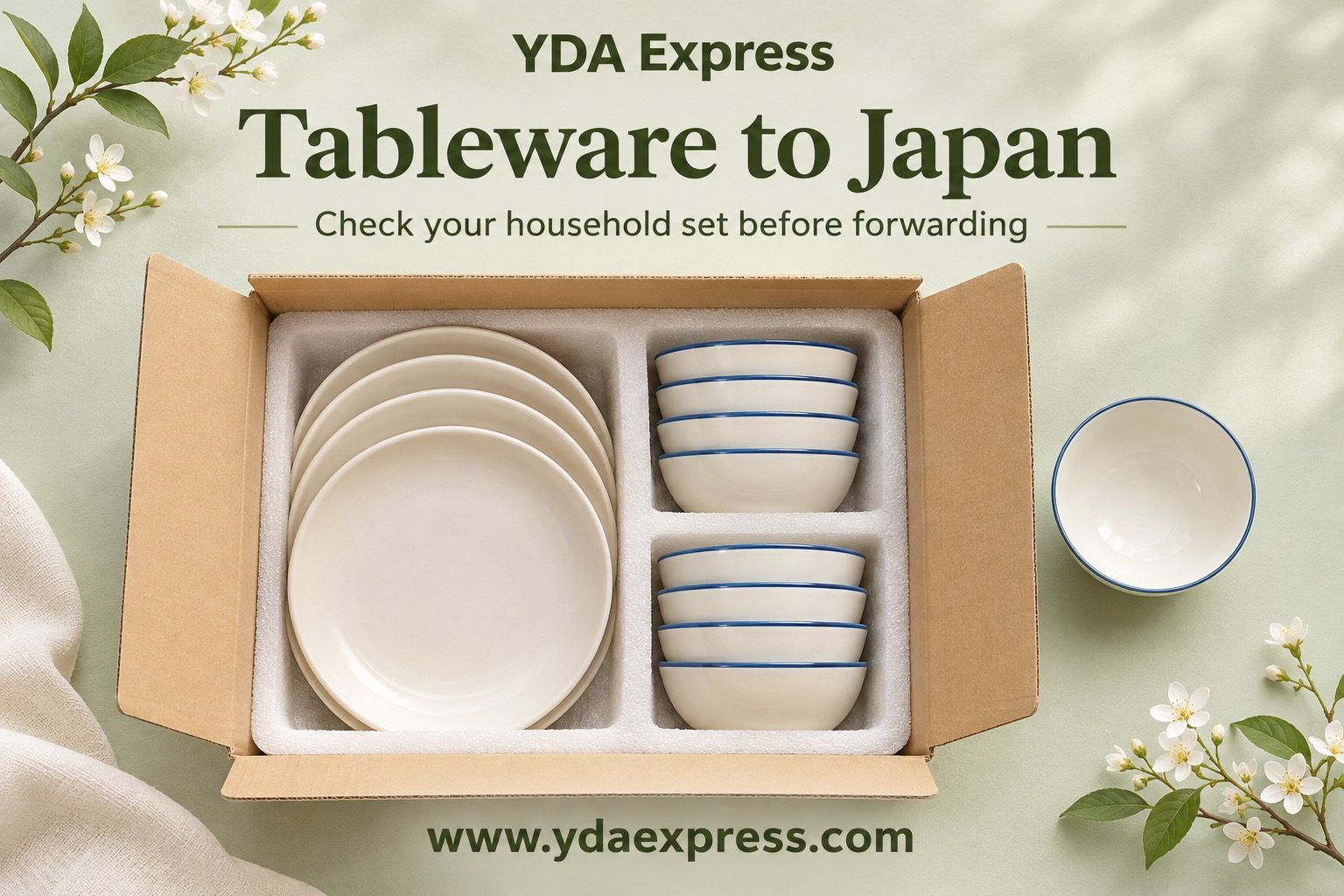
AI-generated editorial illustration.
Before forwarding a household ceramic set from Taobao or Pinduoduo to Japan, match the selected order option, actual pieces and final carton contents. Resolve the wrong pattern, a missing plate or visible damage while the goods are still in China, and keep the real intended use with the order records.
Genuine household use and serving customers in a café follow different Japanese food-import procedures. That difference is worth settling before buying, not after the parcel arrives. Official sources checked: 15 November 2026.
Is this set really for the household?
Japan’s MHLW import procedure exempts genuine personal-use imports from the food import notification described there. It does not certify that a cup is safe for food, waive customs tax or make an incomplete goods description acceptable.
Write down the actual purpose: for example, cups and plates for your own household meals. This is an order note, not an official exemption certificate. Keep it consistent with the goods and quantities; a seller’s “personal parcel” label does not settle the question.
If any pieces will be used to serve café customers or for resale, flag that before dispatch. Small quantity or postal delivery does not remove the business-use notification requirement. Use the existing Japanese café-cup evidence guide and consult the responsible Japanese quarantine station. This household check does not replace that business procedure.
Turn the selected option into a short receiving sheet
On Taobao, save the exact set option, sizes and pattern you selected. On Pinduoduo, check whether the actual option is a single piece, a set or an assortment, including any group-order or discount selection where offered. Count from the order’s description, not the number of dishes in its main picture.
Prepare a small sheet the warehouse can use:
| What to record | What to compare at arrival |
|---|---|
| Order and selected option | Seller parcel and received product |
| Pieces included in the set | Count of cups, plates and other pieces |
| Size, pattern and material | Visible features and base markings |
| Actual payment and true use | Retained purchase records and final contents |
List included lids, spoons or other components separately. A ceramic cup with a plastic lid is not accurately described by “ceramic” alone. If the seller cannot identify whether an item is intended for food contact, do not treat it as dinnerware just because it resembles a cup.
Give each discrepancy its own next action
Wrong size or pattern: save a photo beside the selected order option and ask the seller about the correct replacement or a return. Do this before mixing pieces from different orders.
Missing pieces: photograph the full received set and identify exactly which component is missing. Ask whether any separate domestic parcel is still on its way before treating the order as complete.
Visible chips or cracks: request close-up and whole-item photos, retain the receiving record and discuss the order-specific remedy before export. Do not assume international return postage will be covered.
On both platforms, check the current terms shown for that order and who controls the seller refund. A long warehouse-storage period does not keep a domestic return opportunity open.
A visible check cannot detect lead or cadmium migration or prove hidden material safety. A seller’s “food grade” phrase is not a substitute for reliable product information. If safety or intended food use remains unclear, stop rather than approving shipment from a photograph alone.
Keep Japan’s value calculation separate from the piece count
Counting pieces helps describe what is inside. It does not set the customs value. Keep the actual paid amount, discounts shown on the order, currency and any separately charged transport or packing records. Do not replace the purchase record with a lower number because a dish was cheap or marked for home use.
Japan Customs’ JPY10,000 relief rule uses customs value, with exceptions and aggregation conditions. The test applies per declaration and, for post, per package; multiple declarations for one invoice, or simultaneous split parcels from the same sender to the same recipient, can be assessed together under the stated rules. If the carton also contains leather shoes, leather bags or knitted clothing, check the designated exclusions for those goods separately; this household ceramic check does not extend relief to every item in a mixed parcel. It is not a JPY10,000 checkout-price promise. Ask the declarant about valuation rather than applying an unverified discount to the order yourself.
For eligible goods with a total customs value of JPY200,000 or less, the current simplified tariff lists ceramic products as duty-free. Check the classification of plastic lids, metal spoons and other mixed-material components separately; the ceramic cup does not make every item in the set duty-free. That does not remove consumption tax. The standard combined consumption-tax rate is 10%, generally on customs value plus duty and applicable other excise charges. General tariff treatment instead depends on the precise product, origin and applicable rules.
Neither tax relief nor a simplified tariff changes a food-business notification requirement. Keep taxes, carrier or clearance charges and any extra packing service separate when comparing a quote.
Approve the carton only after the records match
Once missing, wrong or damaged items have a clear outcome, ask how the pieces will be protected and mapped to the final carton. Keep enough original identification to connect the actual cups and plates to their orders. Use the fragile-packing explanation when agreeing dividers, cushioning and outer protection; reducing box volume should not remove necessary protection.
Consolidation changes the contents and value of the shipment presented to Japan. Approve it using the final item list, packed measurements, available route and included charges. Do not create artificial splits to claim a tax result. If a mixed household/business purpose emerges, hold and seek the appropriate Japanese advice before dispatch.
YDA Express may help receive and count the goods, take agreed visible photos, communicate an eligible domestic return and arrange suitable repacking and forwarding. It does not test food-contact safety, decide an exemption, obtain regulatory approval or guarantee unbroken arrival or customs clearance.
Before shipment, recheck the current Japanese rules and route against the real goods, materials and use. Send the selected options, receiving photos, unresolved differences and Japanese destination when asking for assistance; that gives the next person a specific order to review.
📲 Download the YDA Express App
Use the YDA Express App to place China purchasing orders, view product check photos, manage packages, and arrange consolidation and international forwarding.