
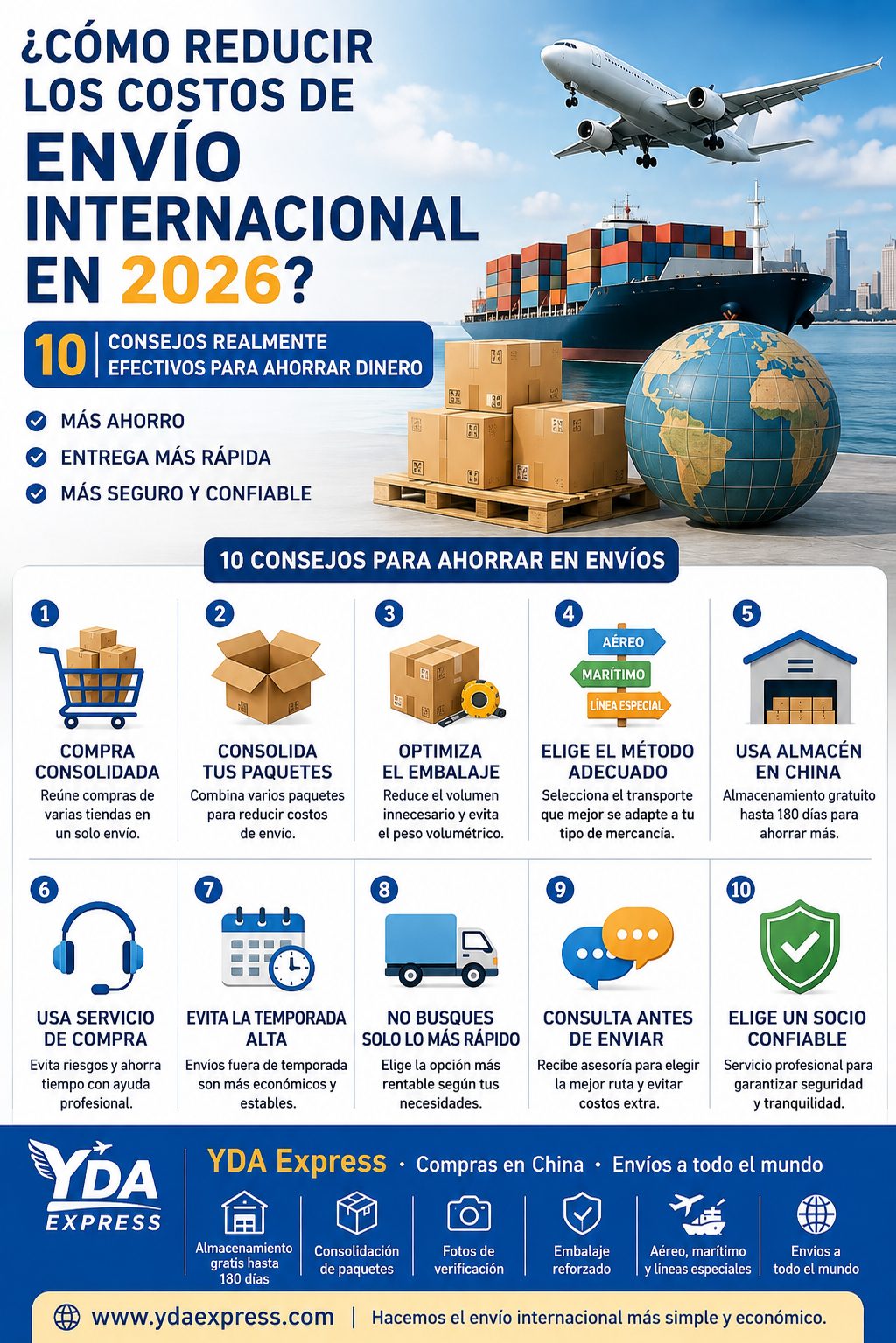
Compare consolidation, packaging and shipping methods before sending purchases from China. Learn which costs to include and when separate parcels make more sense.
International shipping can cost as much as the goods inside a parcel. The useful question is not simply which company advertises the lowest price per kilogram, but which packing and transport plan gives your order the most suitable total cost.
Weight, dimensions, destination, product restrictions and delivery requirements all matter. Consolidation and repacking may help, but neither guarantees a fixed percentage saving.
Why similar orders can have different shipping costs
Transport capacity, fuel surcharges, seasonal demand and route conditions can affect quotes. Two parcels with the same actual weight can also cost different amounts because their dimensions, contents or delivery addresses differ.
Start with a written quote that identifies the goods, destination and included services. Separate the product price and domestic delivery from warehouse work, international transport, clearance charges, import duties and taxes, and final delivery.
Understand chargeable weight before choosing a box
Depending on the service, the carrier may charge by actual weight, dimensional weight, volume or a minimum charge. Ask which method and rounding rules apply to your shipment.
A lightweight jacket in an oversized box can attract a higher charge than its scale weight suggests. This is why removing empty space may help more than removing a few grams of packaging. Do not remove protection needed to prevent damage.
The final packed measurements are necessary for a firm shipping calculation. Before buying, use estimated dimensions for planning and identify what could change the quote.
Plan purchases together, rather than dispatching each immediately
Buying clothes, shoes and household items on different days can create several international minimum charges if every order is dispatched separately.
A China warehouse receiving service lets you collect eligible orders in one place. Keep a list of sellers and domestic tracking numbers so the warehouse can identify what has arrived and what is still missing.
Do not wait indefinitely for one delayed item. Compare the cost of a partial dispatch with the storage time and urgency of the rest.
Use consolidation when the goods belong together
Consolidation means preparing multiple seller parcels as one shipping arrangement. It may use one box or several suitable cartons; it does not mean forcing everything into the largest possible box.
Ask for a packing plan before authorising dispatch. Check whether incompatible goods, fragile items or route limits make separate parcels preferable. The parcel consolidation guide explains how this decision affects the shipment.
Avoid comparing only the number of boxes. Compare the combined chargeable weight and every handling or repacking fee.
Remove unnecessary packaging, not essential protection
Ask the warehouse which changes are possible for your goods:
- Remove empty outer cartons and duplicate wrapping.
- Remove shoe boxes only with your approval.
- Use a smaller suitable shipping carton.
- Keep cushioning around fragile items.
- Add protection where the original domestic packaging is insufficient.
Retail packaging may matter for a gift, resale or a return. Tell the warehouse what must stay before repacking begins.
Match transport to the order
Air services may suit urgent purchases, samples and smaller parcels. Sea transport may be worth comparing for heavy or bulky goods when you can allow more time. Destination-specific services can be another option, subject to current availability and product acceptance.
Compare like-for-like delivery scope. A port-only price is not comparable to a quote including clearance and delivery to your address. Ask when the transit estimate starts and whether warehouse processing and final delivery are included.
Use storage deliberately
Storage can help you wait for several sellers, but check the eligibility, start date, excluded goods and charges after the free period.
YDA Express offers up to 180 days of free storage for eligible goods under its free storage policy. This does not make repacking, product costs or international shipping free.
Check the goods before sending them internationally
Clothing, footwear, household articles, office supplies and tools still need product-specific acceptance checks. Batteries, liquids, powders and other restricted contents require particular attention.
Send the exact product information before buying. Do not assume that a route accepting ordinary clothing also accepts cosmetics, battery-powered accessories or every type of tool.
Request appropriate product photos and quantity checks while a domestic remedy remains practical. Basic photo checks are not professional authentication, laboratory testing or a guarantee against hidden defects.
Do you need a purchasing agent?
If you can place and pay for the order yourself, warehouse forwarding may be enough. Purchasing assistance is useful when seller communication, product selection or payment is the obstacle, not automatically because it is your first order.
The China purchasing-agent overview helps distinguish buying assistance from forwarding.
Before you approve the shipment
Confirm the final contents, packed weight and dimensions, route, delivery address, exclusions, storage and handling fees, and who is responsible for import charges. Ask for the total payable amount rather than relying on a headline rate.
The goal is a suitable all-in plan, not an unsupported promise that consolidation will always be cheaper.
📲 Download the YDA Express App
Use the YDA Express App to place China purchasing orders, view product check photos, manage packages, and arrange consolidation and international forwarding.