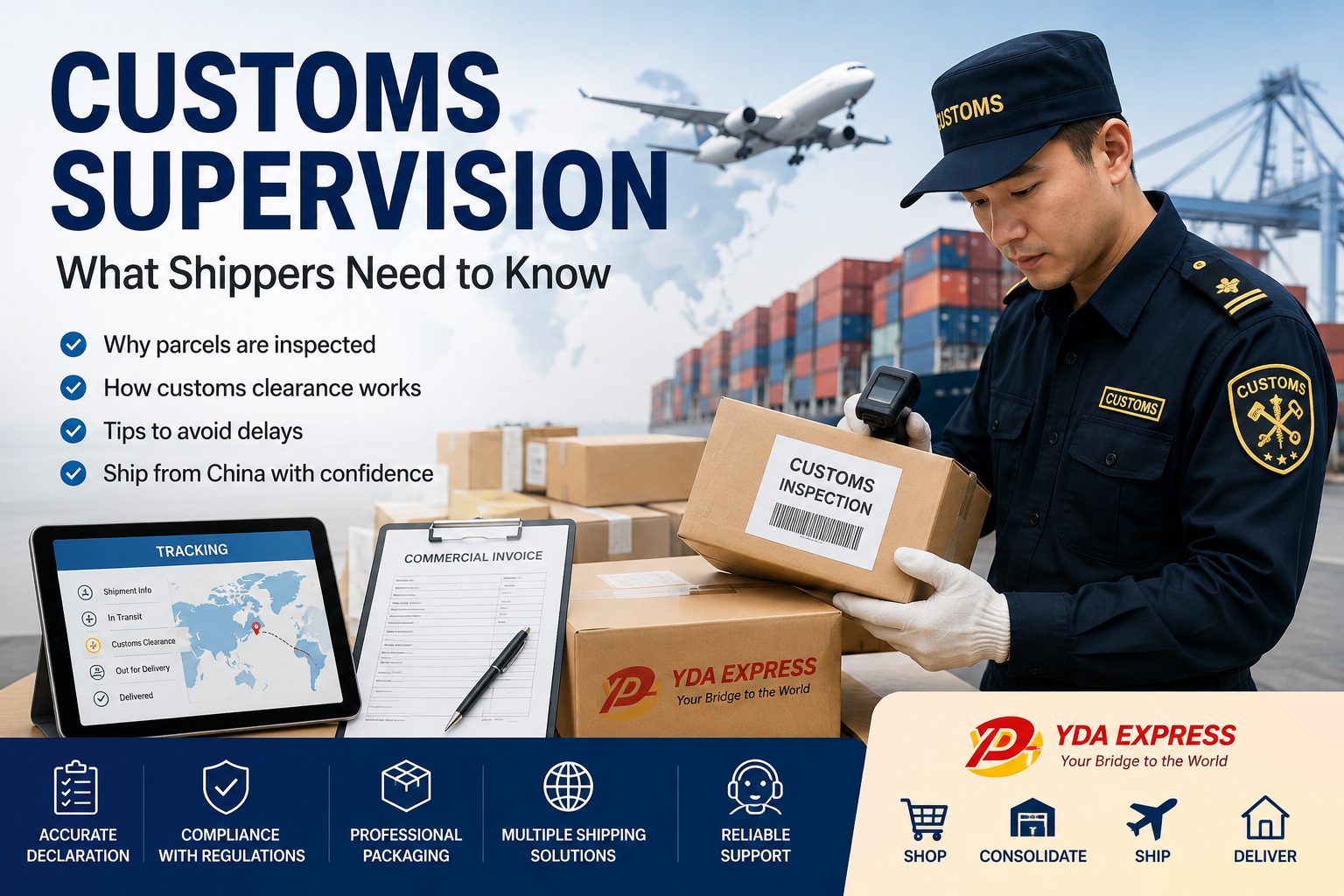
International customs supervision is a routine part of cross-border shipping, but many buyers misunderstand what it means. This guide explains why parcels are inspected, what happens during customs clearance, common reasons for delays, and practical ways to reduce customs risks when shipping from China.
Customs Clearance Guide: What Customs Supervision Really Means for International Shipments
International shipping has never been easier. Whether you’re buying products from Taobao, 1688, JD.com, Pinduoduo, or directly from Chinese manufacturers, your package can reach almost any country in the world within days. However, one stage of the journey often worries buyers more than any other—customs clearance.
Many people panic when they see tracking updates such as “Held by Customs,” “Under Customs Inspection,” or “Awaiting Customs Clearance.” They immediately assume that something has gone wrong or that their parcel has been seized.
In reality, customs supervision is a normal part of international logistics. Every country has customs authorities responsible for checking imported goods, collecting duties where required, preventing prohibited items from entering the country, and ensuring that shipments comply with local regulations.
For most parcels, customs clearance is completed automatically without the recipient even noticing. Only a small percentage of shipments receive additional inspection, and being selected for inspection does not necessarily mean there is a problem.
Understanding how customs works can help you reduce delays, prepare the correct documentation, choose suitable shipping methods, and avoid unnecessary expenses.
⸻
What Is Customs Supervision?
Customs supervision is the process through which government customs authorities inspect international shipments before allowing them to enter a country.
During this process, customs officers may verify:
- Product descriptions
- Declared customs value
- Quantity of goods
- Country of origin
- Import permits
- Applicable duties and taxes
- Product safety requirements
- Intellectual property compliance
Contrary to common belief, customs supervision is not a punishment or a sign that your shipment has failed inspection. It is simply one part of the international shipping process.
Every day, millions of parcels leave China for destinations such as the United States, Canada, Australia, the United Kingdom, Germany, France, and many other countries. Customs agencies cannot manually inspect every shipment, so they rely on automated risk assessment systems that randomly select some parcels while allowing others to pass directly through customs.
Even completely legal shipments may occasionally be inspected as part of routine customs procedures.
⸻
Why Are Some Shipments Selected?
Customs authorities evaluate each shipment using multiple risk indicators rather than random guesses.
A parcel may receive additional inspection because of factors such as:
- High declared value
- Incomplete commercial invoices
- Incorrect product descriptions
- Sensitive product categories
- Large shipment volume
- Unusual shipping patterns
- Random quality inspections
- Seasonal customs enforcement campaigns
For example, two customers may order exactly the same products from China on the same day. One parcel clears customs immediately, while the other receives a temporary inspection notice. This difference does not automatically indicate any mistake made by the seller or the logistics company.
Instead, customs officers simply require additional verification before releasing the shipment.Why Customs Inspections Happen
One of the biggest misconceptions about international shipping is that customs inspections only happen when something is wrong. In reality, inspections are a normal part of border control and are designed to protect consumers, collect duties, and enforce import regulations.
Customs authorities around the world use automated systems to evaluate incoming shipments. These systems analyze hundreds of data points before deciding whether a package should receive additional inspection.
Some of the most common reasons include:
- The declared value appears unusually low.
- Product descriptions are incomplete or too vague.
- The shipment contains products that require additional documentation.
- The package comes from a country or supplier selected for routine inspection.
- The parcel is chosen randomly as part of customs quality control.
Being inspected does not mean your shipment has been rejected. In most cases, customs simply needs to verify the information before releasing the package.
⸻
Which Products Are More Likely to Receive Customs Attention?
Although any shipment can be inspected, certain categories naturally receive more attention because they involve higher regulatory requirements.
Products that may receive additional customs review include:
- Food and dietary supplements
- Cosmetics and skincare products
- Medicines and health products
- Electronic devices containing lithium batteries
- Liquids, powders, and aerosols
- Brand-name goods protected by intellectual property laws
- Large commercial shipments
- High-value products
For example, shipping a few T-shirts purchased from Taobao is generally straightforward. However, sending multiple electronic devices with built-in batteries or a large quantity of beauty products may require additional customs verification depending on the destination country’s regulations.
Understanding these differences allows buyers to prepare proper documentation and choose suitable shipping methods before the parcel leaves China.
⸻
Customs Clearance in Different Countries
Every country has its own customs policies, tax thresholds, and inspection procedures. A shipping method that works well for one destination may not be ideal for another.
United States
The United States processes millions of parcels from China every year. Most personal shipments clear customs smoothly when the declared information is accurate and the goods comply with import regulations.
Packages may still receive random inspections, especially if they contain electronics, branded products, or unusually high declared values.
Canada
Canadian customs often pays close attention to declared values and imported product categories. Buyers may occasionally be asked to pay duties or taxes depending on the shipment value and applicable regulations.
European Union
Many EU countries require VAT collection on imported goods. Customs may request invoices or payment records before releasing certain shipments, especially for higher-value orders.
Australia and New Zealand
Biosecurity regulations are particularly strict. Products containing wood, seeds, plants, food, or animal materials may receive additional inspection before entering the country.
Although customs procedures vary between countries, the same principle applies everywhere: accurate declarations reduce unnecessary delays.
⸻
How to Reduce Customs Clearance Risks
While no logistics company can guarantee that customs will never inspect a shipment, buyers can significantly reduce the likelihood of delays by following a few best practices.
Before shipping from China, consider the following recommendations:
- Provide accurate product descriptions.
- Declare reasonable product values.
- Avoid combining unrelated high-risk products into one parcel.
- Choose a shipping service suitable for the type of goods being shipped.
- Confirm whether restricted products require additional documentation.
- Keep invoices or purchase records available if customs requests proof of value.
At YDAExpress, every shipment is reviewed before dispatch. Our team checks parcel information, packaging, and shipping methods to help customers choose the most appropriate logistics solution based on destination country, product category, and delivery requirements.
This preparation cannot eliminate customs inspections entirely, but it can greatly improve the chances of smooth customs clearance while reducing unnecessary delays.What Happens During Customs Clearance?
Once your shipment arrives in the destination country, it enters the customs clearance process before it can be handed over to the local delivery company.
Although the exact procedure varies by country, the process generally follows the same steps.
- Arrival at the Destination Country
After leaving China, your parcel arrives at an international airport, seaport, or customs processing center. At this stage, customs receives the shipment information electronically from the carrier.
⸻
- Customs Review
Customs officers review the shipment information, including:
- Product descriptions
- Declared value
- Shipping documents
- Destination
- Quantity
- Product category
Most parcels complete this step automatically without manual inspection.
⸻
- Possible Inspection
If additional verification is required, customs may:
- Scan the parcel
- Open the package for inspection
- Request additional documents
- Verify the declared value
Receiving an inspection notice does not automatically mean there is a problem. In many cases, customs simply needs additional confirmation before releasing the shipment.
⸻
- Duties and Taxes (If Applicable)
Depending on local regulations and the declared value of the shipment, customs may assess import duties, taxes, or processing fees.
If payment is required, the carrier or local delivery company will normally contact the recipient with payment instructions before final delivery.
⸻
- Release and Local Delivery
After customs clearance is completed, the parcel is transferred to the local delivery network for final delivery.
Depending on the destination country, the last-mile delivery may be handled by local postal services or commercial courier companies.
⸻
What Should You Do If Customs Delays Your Shipment?
Customs delays can happen for many reasons, and most are resolved without major issues.
If your tracking information shows that the parcel is being processed by customs, the best approach is to remain patient while monitoring updates.
If customs requires additional information, prepare documents such as:
- Purchase invoices
- Payment confirmation
- Product descriptions
- Identification documents (if requested)
Providing complete and accurate information usually helps customs complete the review more efficiently.
⸻
How YDAExpress Helps Reduce Customs Problems
International shipping involves much more than simply moving parcels from one country to another.
Before every shipment leaves our warehouse, the YDAExpress team carefully reviews parcel information, packaging, and shipping methods to help customers choose the most appropriate solution.
Our services include:
- China shopping assistance
- Parcel receiving
- Professional package consolidation
- Quality inspection
- Secure repacking
- Long-term warehouse storage
- Multiple international shipping options
- Real-time shipment tracking
By preparing shipments carefully before export, customers can reduce unnecessary customs issues and improve the overall shipping experience.
Although no logistics company can guarantee that customs inspections will never occur, accurate documentation, suitable shipping methods, and professional handling significantly improve the chances of smooth customs clearance.
⸻
Frequently Asked Questions
Does customs inspection mean my package has been seized?
No. Customs inspection is a normal procedure. Most inspected shipments are released after verification.
⸻
How long does customs clearance usually take?
Many parcels clear customs within one or two business days. If additional inspection or documentation is required, processing may take longer depending on local customs authorities.
⸻
Can customs open my package?
Yes. Customs authorities in most countries have the legal right to inspect imported shipments when necessary.
⸻
Will I always have to pay import duties?
Not necessarily. Whether duties apply depends on your country’s regulations, the declared value, and the type of goods being imported.
⸻
How can I reduce customs delays?
Provide accurate product descriptions, declare reasonable values, choose appropriate shipping methods, and avoid shipping restricted goods without confirming local regulations.
⸻
Conclusion
Customs supervision is an essential part of international shipping rather than something to fear. Understanding how customs works, preparing accurate shipment information, and choosing a reliable shipping partner can greatly improve your overall shipping experience.
Whether you’re purchasing products from Taobao, 1688, JD.com, Pinduoduo, or other Chinese marketplaces, proper preparation helps your parcels move through customs more efficiently.
At YDAExpress, we help customers simplify every step of the process—from purchasing and warehouse receiving to package consolidation, international shipping, and final delivery—making it easier to shop from China with confidence.
📲 Download the YDA Express App
Use the YDA Express App to place China purchasing orders, view product check photos, manage packages, and arrange consolidation and international forwarding.
🌐 Read more China shopping and shipping guides